Products


Stainless Steel Blind Hole Nuts With Threaded Inserts
Stainless steel blind hole M4 nuts are a type of stainless steel special-shaped fasteners, which refer to nuts with M4 metric threads (about 4 mm in diameter), made of stainless steel, and designed to provide internal thread connection in scenarios where bilateral operations are not possible. These products mostly refer to blind rivet nuts or insert nuts, which can be installed from only one side with special tools to form high-strength internal threads on thin plates, profiles or composite materials.
Send Inquiry
Product Description
Product introduction
Stainless steel blind hole M4 nuts are a type of stainless steel special-shaped fasteners, which refer to nuts with M4 metric threads (about 4 mm in diameter), made of stainless steel, and designed to provide internal thread connection in scenarios where bilateral operations are not possible. These products mostly refer to blind rivet nuts or insert nuts, which can be installed from only one side with special tools to form high-strength internal threads on thin plates, profiles or composite materials.
Product design and features
The core design of this type of product is to solve the problem of single-sided installation and thin material connection: anti-rotation design: the barrel is equipped with knurled teeth or designed in a hexagonal shape, which can be pressed into the base material during installation, providing strong anti-rotation ability, which is the key feature of this type of stainless steel special-shaped nut.
Blind installation structure: This is its fundamental feature. The internal design has a riveting or pressure riveting structure. Use a tool to pull/squeeze the deformation from one side so that it expands on the back of the material to form a reliable lock. Sealing design: The tail of the closed rivet nut is completely closed, providing IP66/67 waterproof and dustproof sealing, and is suitable for occasions with air tightness requirements. Special variants: For example, nuts for T-shaped slots are designed with a T-head shape that can be slid along the channel to any position for locking, facilitating modular assembly. Non-standard design: For special needs, non-standard stainless steel nuts can be customized, such as changing the full length, wall thickness, knurl pattern or head shape, making it a typical stainless steel special-shaped fastener.
Materials and application fields
Mainstream materials: The most commonly used are 304 (A2) and 316 (A4) stainless steel. Due to the addition of molybdenum, 316 stainless steel performs better in terms of corrosion resistance (especially chloride resistance) and is suitable for harsh occasions such as marine environments and chemical industries. Customized 304 non-standard nuts provide a good balance between cost and corrosion resistance and are widely used in general industry.
Core application: Mainly solves the problem of inability to process effective threads on thin-walled materials or profiles. Its application fields are very wide, covering almost all modern manufacturing industries.
Electronics and home appliances: casing assembly for mobile phones, computers, and white appliances.
Automobiles and transportation: body sheet metal, interior parts, new energy vehicle battery packs, rail transit interiors.
Industrial equipment: chassis cabinets, ventilation ducts, mechanical equipment guards.
Special industries: medical equipment, food equipment, ships, outdoor facilities and other fields that require hygiene or corrosion resistance.
Quality control and certification system
International standards: Production and inspection follow international standards such as ISO 3269 (fastener inspection), ISO 16426 (quality assurance system) and ISO 1891-4 (fastener acceptance vocabulary).
Performance testing: According to AS/NZS 4291.2 and other standards, comprehensive performance testing of the nuts is carried out, including hardness testing, guaranteed load testing, thread pass and stop gauge testing, salt spray testing (testing corrosion resistance), etc.
Corporate Certification: Regular manufacturers usually hold ISO 9001 quality management system certification. For industries with special requirements, compliance reports such as material certification or RoHS (Restriction of Hazardous Substances) may also be required.
Customized services
When standard products cannot meet demand, professional manufacturers can provide customized non-standard stainless steel nut services:
Customization scope: including non-standard sizes, special-shaped structures, special threads (such as fine threads), specific performance levels (such as high-strength 10.9) and special surface treatments, etc.
Customization process: Customers are usually required to provide drawings or clear requirements. After technical evaluation and material confirmation, sample production and testing are carried out.
Typical requirements: For example, a customized 304 non-standard nut with a lengthened or thickened barrel is required to adapt to ultra-thick plates or special sandwich materials. This type of service allows stainless steel profile nuts to be produced in almost any shape to suit a specific design.
FAQ
Q: How to install stainless steel blind hole nuts?
A: Special riveting and riveting tools are required. The basic steps are: pre-make a hole of suitable diameter on the base material; put the nut into the tool nozzle; insert the nut into the hole; start the tool, and the pull rod or mandrel will deform the tail of the nut so that it expands and locks on the back; finally, the tool automatically disconnects and the installation is completed.
Q: How to choose between 304 and 316 stainless steel nuts?
Q: Choose 304: It is suitable for most ordinary environments, such as dry indoors, general industrial equipment, home appliances, etc., and has high cost performance. Choice 316: Must be used in environments with humidity, high salt content (such as coastal areas, ships), chemically corrosive environments (such as chemical industry, electroplating), food processing or medical disinfection. Although the cost is higher, it can effectively prevent rust.
Q: Why are nuts of small specifications (such as M4) more likely to be damaged during installation?
A: Small size nuts have thin walls and relatively low strength. If the pre-holes do not match, the tools are misaligned, or excessive force is applied during installation, it is easy to cause thread deformation or barrel cracking. It is crucial to strictly follow the installation instructions and use high-quality tools.
Send Inquiry
Related Products
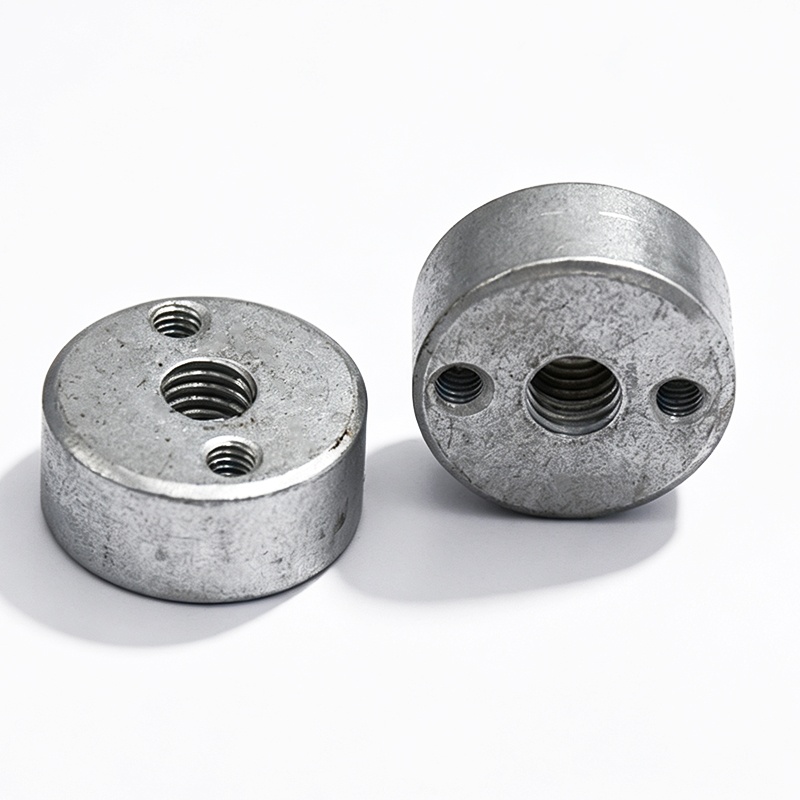 Three Hole Round Plate Nuts with Threaded Plate Fasteners for Metal and Machinery
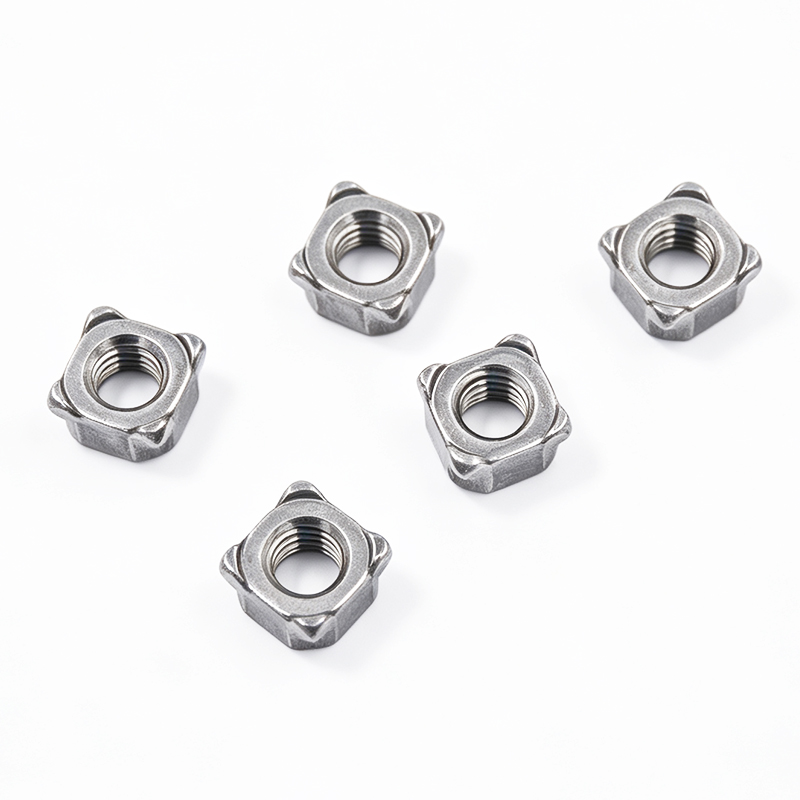 Carbon Steel Square Weld Nuts with Heavy Duty Threaded Nuts for Welding Applications
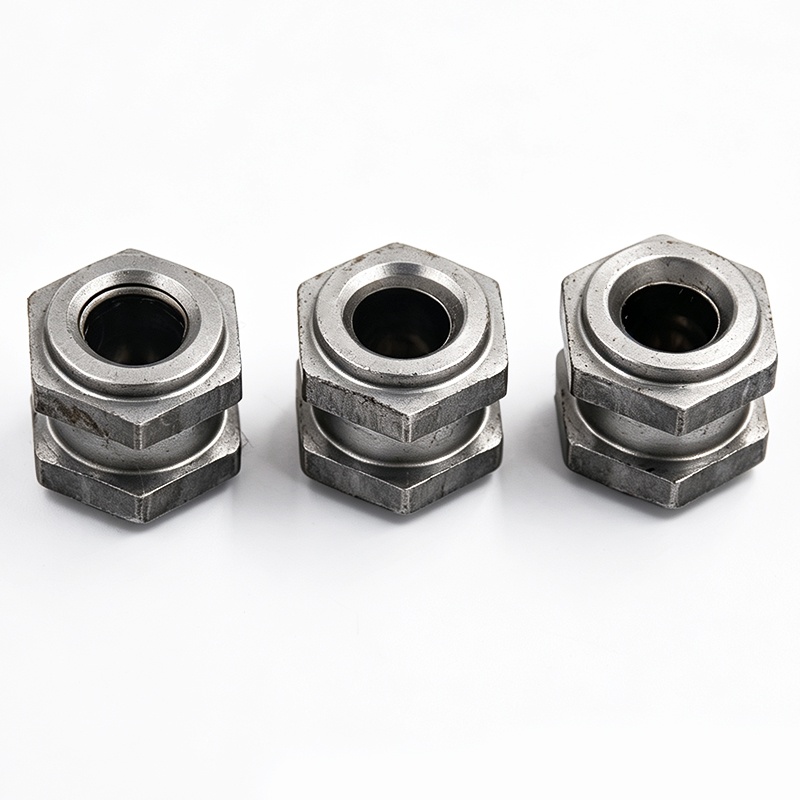 Non Standard Stainless Steel CNC Machined Special Shaped Nuts
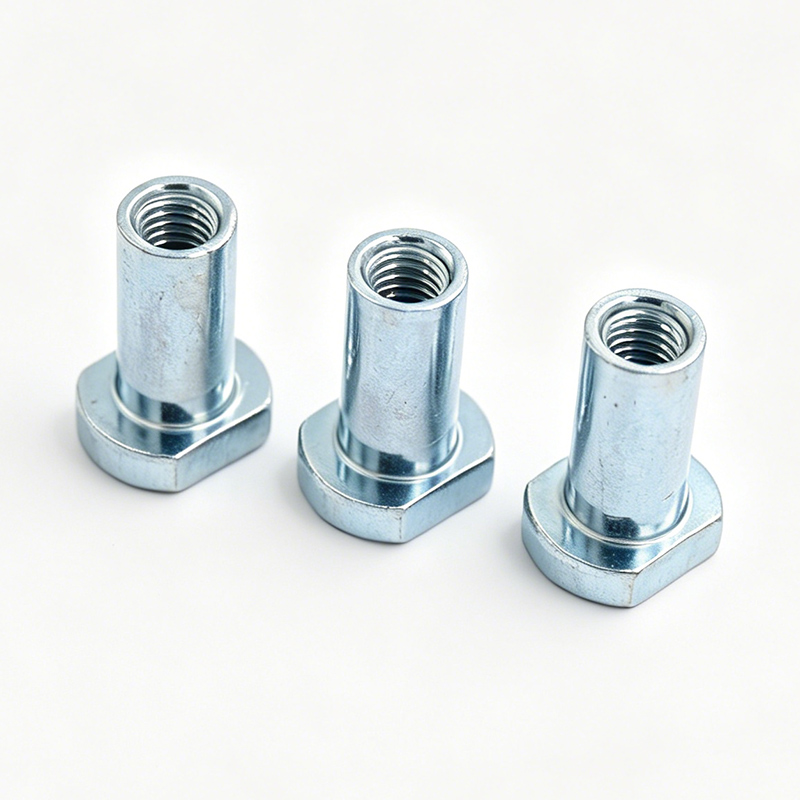 Non-Standard Special-Shaped Nuts
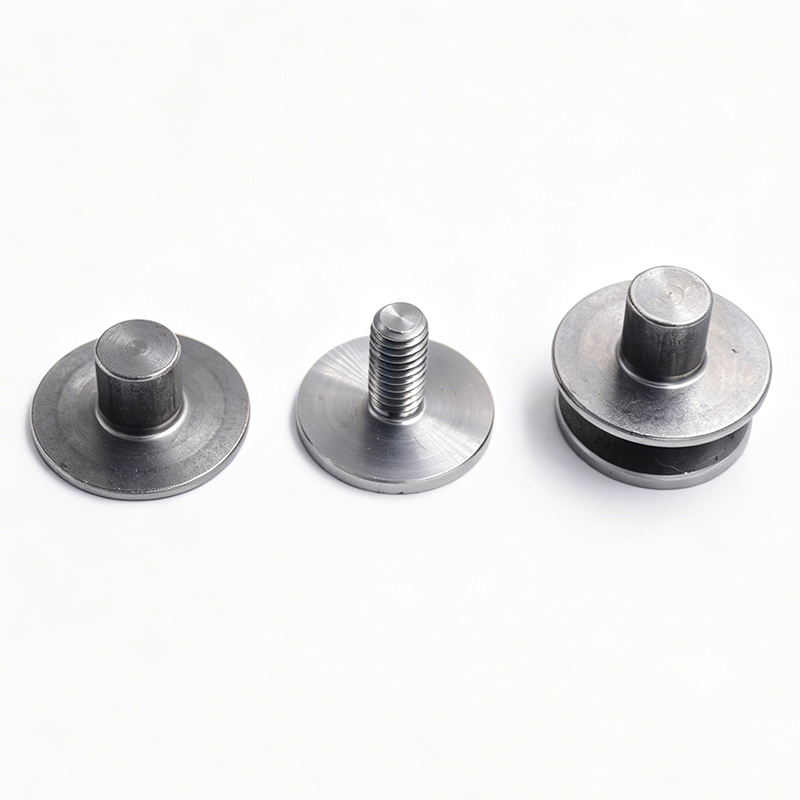 Knurled Cylindrical Or External Hexagonal Locking Screws And Nuts
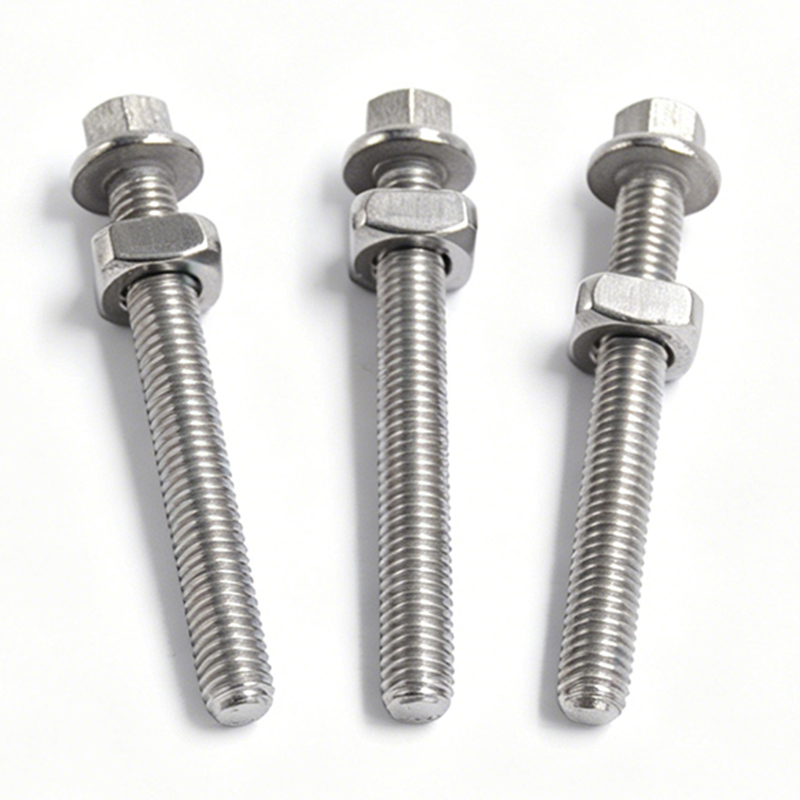 Flange Bolts With Square Nuts
Latest News
-
Cold Heading Components: High-performance Fastener Solutions from Wenzhou Riyi Standard Parts Co., Ltd
2026-09-29Cold heading processing shapes metal wire under strong pressure at room temperature without cutting raw materials. Unlike traditional CNC machining, this technology preserves the continuous metal grain flow inside cold heading parts.
-
Special-shaped Bolts and Stainless Steel Double-ended Bolts from Wenzhou Riyi Standard Parts Co., Ltd
2026-09-23In modern mechanical manufacturing, construction engineering and equipment assembly, high-quality fasteners are the invisible foundation that guarantees structural safety and product stability.
-
Precision Custom Fasteners from Wenzhou Riyi Standard Parts
2026-09-15Wenzhou Riyi Standard Parts is a reliable Chinese manufacturer focusing on custom non-standard fasteners, located in Wenzhou’s Binhai Economic Zone.
-
Aluminum Alloy Flange Bolts, Ball Head Studs & Dacromet Carriage Bolts – Reliable Fastener Startup Business
2026-09-08Fasteners are essential basic components widely used in machinery, automotive, engineering and equipment assembly industries.