Products


Stainless Steel Automobile Component Fasteners
Auto parts fasteners refer to the general name of various fastener products that are specially used in the field of automobile manufacturing and maintenance to realize the connection, fastening and fixation between parts.
Send Inquiry
Product Description
Product introduction
Auto parts fasteners refer to the general name of various fastener products that are specially used in the field of automobile manufacturing and maintenance to realize the connection, fastening and fixation between parts. It covers many types of bolts, screws, nuts, studs, washers, buckles, clips, etc. The automotive industry has extremely strict requirements for fasteners, which is determined by the properties of automobiles as safety-related products. A fastener used for body structure or critical safety parts usually needs to go through more than 20 laboratory testing processes from raw materials entering the factory to batch supply, and its verification cost is much higher than that of ordinary industrial fasteners. Therefore, automotive parts fasteners have become a highly specialized precision industrial product.
From a material perspective, this type of products widely uses stainless steel, carbon steel, aluminum alloy and other materials. Among them, stainless steel non-standard parts are widely used in scenes with strict anti-corrosion requirements such as engine peripherals, chassis, and battery packs due to their excellent corrosion resistance; customized auto parts reflect the high degree of matching between fasteners and vehicle platforms, and each product is tailor-made for specific models and locations.
Product design and features
Specialized designs for different systems: Automotive fasteners are not universal parts, but have specialized designs for different systems:
Engine system: Connecting rod bolts are dynamic high-stress bolts that require high fatigue strength and multiple tightening capabilities; valve adjustment bolts require precision cold-formed geometry and extremely tight tolerances.
Braking system: Brake caliper fixing devices are often coated with microcapsule adhesive to avoid loosening during operation and can withstand high temperatures during braking.
Wheel system: Wheel bolts require a special lightweight design, a dedicated coating system, and the highest requirements for re-tightening, thermal loosening properties and corrosion resistance.
Body and seats: Seat fixing bolts are often designed with threaded self-tapping screws, and the tips are induction quenched and matched with special lubricating materials.
Wide application of customized special-shaped screws: Customized special-shaped screws are widely used in automotive engineering to meet small space or specific functional requirements. For example, eccentric bolts are used to adjust the rear axle track and wheel inclination, and their flanges and threaded grooves require cold forming processing; ball head bolts have complex cold forming geometries and are manufactured using split mold technology.
Advanced thread design technology: For plastic connectors, a new generation of fasteners such as REMFORM®II adopts an asymmetric tooth profile, wide pitch, and arc guide tooth design. Its patented arc tip can reduce hoop stress and avoid cracking of the plastic boss caused by traditional sharp tooth shapes; the small-angle stress surface efficiently generates axial force to prevent internal thread slippage. This design is especially suitable for modern engineering plastic connection scenarios such as automotive interior parts.
Diverse material combinations: In addition to conventional carbon steel and stainless steel, aluminum alloy materials are also widely used in automotive fasteners to meet lightweight needs. For high-temperature scenarios such as exhaust systems, special high-temperature materials are used, and the working temperature can reach 650°C.
Materials and application fields
Core material:
Carbon steel: medium and low carbon steel, alloy steel (such as 10B21, SCM435), the most common material, which can reach strength level 4.8-12.9 after heat treatment; used for general connections such as body and chassis.
Stainless steel: 302, 304, 316, 410, 430 with excellent corrosion resistance; stainless steel special-shaped screws and special-shaped stainless steel screw parts are used around engines, battery packs, electronic appliances, etc.
Aluminum alloy: lightweight; used for interior and exterior decoration, lightweight body structure
Heat-resistant steel/alloy: High-temperature-resistant special material, heat-resistant up to 650°C; used for fixing turbochargers and exhaust manifolds.
Wide application areas:
Powertrain: connecting rod bolts, valve adjustment bolts, turbocharger fixing studs
Chassis and suspension: eccentric bolts, stabilizer ball pins, universal joint shaft bolts
Braking system: brake caliper fixing bolts, tie rod bolts
Wheels: wheel bolts, wheel nuts (typical representatives of customized auto parts)
Body and interior and exterior decoration: seat fixing bolts, seat belt fixing devices, ball head bolts, buckles
New energy system: special fasteners for battery packs and battery replacement systems
Electrical devices: Precision fasteners such as motor housing clamping screws and ball screws
Quality control and certification system
IATF 16949 quality system certification: This is the core quality management requirement in the automotive industry. Mainstream OEMs and first-tier suppliers generally require fastener products to pass the IATF 16949 quality management system audit. This system ensures quality control throughout the entire process from product design, manufacturing to supply.
Comprehensive laboratory testing: A safety-critical fastener needs to complete the following main tests:
Mechanical performance testing: tensile strength, yield strength, guaranteed load
Fatigue test: High-frequency fatigue testing machine simulates the connection state of the vehicle under long-term vibration conditions
Anti-loosening performance test: Junker vibration test bench verifies preload force retention ability
Hydrogen Embrittlement Risk Assessment: Preventing High-Strength Fasteners from Breaking in Use
Corrosion resistance test: Salt spray test to verify anti-corrosion capability
Dynamic vibration verification: simulating connection reliability under complex road conditions
Upgrading of testing capabilities: With the development of new energy vehicles, fastener quality control has shifted from "meeting factory standards" to "full life cycle reliability verification"-3. After automated inspection systems (such as machine vision and automatic sorting) are applied on mass production lines, the missed detection rate of defective products can be reduced by more than 50%.
Raw materials and process control: The production process is equipped with advanced equipment such as multi-station cold heading machines, thread rolling machines, and thread rolling machines, as well as testing equipment such as material testing machines, hardness testers, projectors, metallographic microscopes, flaw detectors, and salt spray test chambers to provide full-process guarantee for product quality.
Customized services
Geometry: Customized special shape screws, eccentric flange, ball head, structure with positioning pin, etc.
Dimensions: Metric M3-M30 or imperial; length and rod diameter can be customized as required
Material: carbon steel, stainless steel special shape screws, stainless steel non-standard parts, aluminum alloy, heat-resistant steel
Performance grade: carbon steel grade 4.8-12.9; stainless steel A2-70/A4-70
Surface treatment: phosphating, blackening, galvanizing, chromium plating, Dacromet and high corrosion resistant green coating, etc.
FAQ
Q: Why are automotive fasteners standards stricter than ordinary industrial fasteners?
A: The "strictness" of automotive fasteners is reflected in the wide testing dimensions, long verification cycle, and extremely low failure tolerance -3. A fastener used in critical safety parts needs to undergo more than 20 laboratory tests, including fatigue testing, hydrogen embrittlement risk assessment, dynamic vibration verification, etc. At the same time, it must pass IATF 16949 automotive quality management system certification.
Q: Where are stainless steel fasteners mainly used in automobiles?
A: Stainless steel special-shaped screws and stainless steel non-standard parts are mainly used in scenes such as engine peripherals, battery packs, electronic appliances, exhaust systems, etc. that require corrosion resistance or heat resistance-1-2. Mainstream materials include 302, 304, 316, 410, 430, etc. A2-1 is commonly used in Europe.
Q: What special requirements do new energy vehicles have for fasteners?
A: New energy vehicle (EV) fasteners need to meet requirements such as lightweight, high corrosion resistance and electrical safety. Battery packs and battery swap systems use a large number of aluminum alloy and stainless steel fasteners. At the same time, electrified platforms have put forward higher requirements for fasteners’ pre-tightening force retention capabilities and fretting fatigue resistance.
Q: What certifications do custom automotive fasteners need to meet?
A: Suppliers need to hold IATF 16949 automotive quality management system certification. At the same time, the product must pass a full set of laboratory tests (mechanical properties, fatigue, anti-loosening, hydrogen embrittlement, salt spray, etc.) and provide a complete test report.
Q: Why do plastic connectors need special thread-shaped fasteners?
A: Plastic parts such as automotive interiors use special threaded fasteners (such as REMFORM®II). Its asymmetric tooth profile, arc tip and wide pitch design can reduce hoop stress and avoid cracking of plastic bosses. At the same time, the small-angle stress surface can efficiently generate axial force and prevent internal thread slippage -1. Suitable for automotive interiors, consumer electronics equipment and other scenarios.


Latest News
-
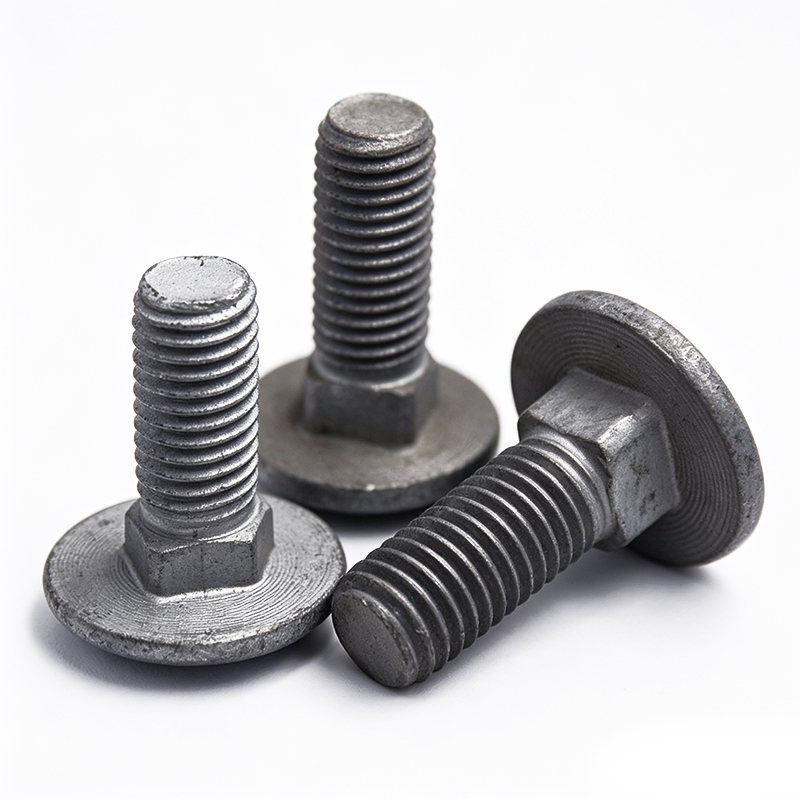
Precision Custom Fasteners from Wenzhou Riyi Standard Parts
2026-09-15Wenzhou Riyi Standard Parts is a reliable Chinese manufacturer focusing on custom non-standard fasteners, located in Wenzhou’s Binhai Economic Zone.
-
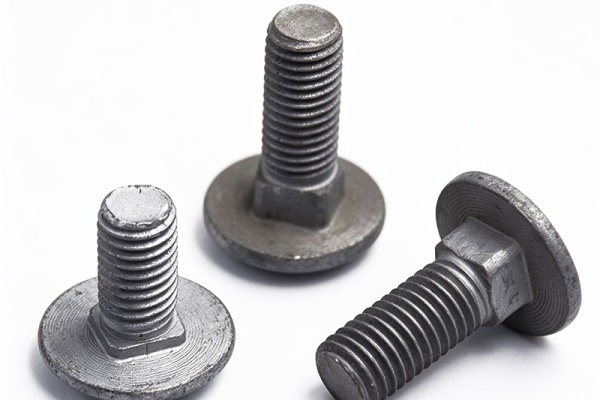
Aluminum Alloy Flange Bolts, Ball Head Studs & Dacromet Carriage Bolts – Reliable Fastener Startup Business
2026-09-08Fasteners are essential basic components widely used in machinery, automotive, engineering and equipment assembly industries.
-
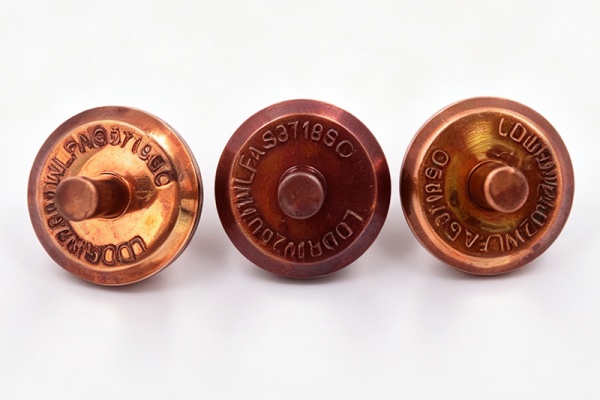
The Key Role of Precision Hardware Parts in Modern Mechanical Assembly
2026-09-04In the fast-developing field of modern mechanical manufacturing and equipment assembly, tiny hardware accessories are often the core factors that determine the stability, durability and safety of the entire device.
-
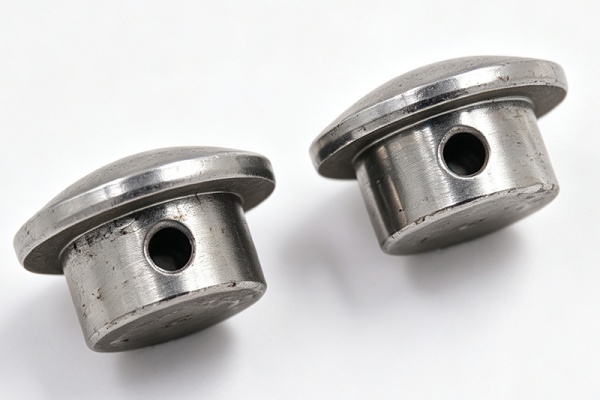
Two Practical Hardware Parts in Mechanical Assembly
2026-08-25Machine manufacturing and equipment assembly all rely on standard hardware parts. They make industrial equipment more stable and better positioned.