Products


Brass Step Bushing Fasteners
Brass step bushing is a bushing type part with a step structure of different outer diameters. It is usually used for positioning, spacing, guidance or wear-resistant support between the shaft and the hole.
Send Inquiry
Product Description
Product introduction
Brass step bushing is a bushing type part with a step structure of different outer diameters. It is usually used for positioning, spacing, guidance or wear-resistant support between the shaft and the hole. Its stepped structure can realize axial positioning and radial support functions at the same time, replacing the combination of multiple flat washers or ordinary bushings. In the classification of fasteners, brass step bushings are often classified as non-standard fasteners because they do not have the typical shape of a standard washer or nut, but are custom-sized according to specific assembly relationships. In some designs, the step bushing will also add a hexagonal socket or flange structure on the end face, evolving into a special-shaped fastener for easy installation and disassembly.
Product design and features
Design points:
Step structure: the large diameter end is used for axial limiting, and the small diameter end is used to match the inner diameter of the hole.
Inner and outer diameter tolerances: Usually the base shaft system or the base hole system is used, such as h7 or H8.
Chamfering and oil groove: The end chamfering facilitates assembly, and a lubricating oil groove can be added to the inner hole or outer circle.
Wall thickness control: Avoid being too thin and causing deformation or being too thick and increasing weight.
Product features:
Good self-lubrication: the friction coefficient is low when brass and steel shaft are matched.
Corrosion resistance: suitable for humid or weakly corrosive environments.
No damage to the wear parts: Compared with steel bushings, brass wears less on the shaft.
Dimensional stability: small deformation after heat treatment to relieve stress.
Materials and application areas
Material: Commonly used grades: H59, H62, H65, C3604 (easy-cutting brass). Optional treatments: passivated, tin plated or coated with molybdenum disulfide for enhanced lubrication.
Application areas:
Pneumatic and hydraulic components: valve core guide sleeve, piston rod support.
Office equipment: rotating shaft supports in copiers and printers.
Mold industry: guide column bushing, reset rod guide sleeve.
Instrumentation: Sliding fit of precision adjustment mechanisms.
Quality control and certification system
Quality Control:
Dimensional inspection: Use a projector or pneumatic measuring instrument to measure step height and inner and outer diameter coaxiality.
Roughness control: mating surface Ra ≤ 0.8μm, non-fitting surface ≤ 3.2μm.
Hardness testing: Vickers hardness HV to ensure wear resistance.
Material verification: Spectral analysis of copper content to prevent impurities from exceeding standards.
Certification system:
The general ISO 9001 system covers the production process.
RoHS certification is provided when exporting electronic equipment.
When supplied as non-standard parts, full-size inspection reports and material certificates can be provided.
Customized services
Size customization: non-standard step height, inner and outer diameter, length and chamfer angle.
Structural optimization: The inner hole has a spiral oil groove and the outer circle has an axial positioning groove.
Assembly: Bushing pre-assembled with sealing ring or dust cover.
Batch process selection: small batches are turned with CNC centering machines, and large batches are produced with cold heading non-standard parts technology or multi-station automatic lathes.
FAQ
Q: What is the difference between brass step bushings and bronze bushings?
A: Brass (copper-zinc alloy) has lower cost and good processability, and is suitable for light to medium loads; bronze (copper-tin alloy) has higher wear resistance and compressive strength, and is suitable for heavy loads or impact load situations.
Q: Can it be used in food machinery?
A: Ordinary brass may contain high levels of lead and is not recommended for direct contact with food. If it is used in non-contact parts of food machinery (such as drive shaft support), lead-free brass can be used and complies with FDA requirements.
Q: How do step bushings prevent rotation?
A: Keyways, flat surfaces or knurling can be designed on the outer circle of the bushing to make it a special-shaped fastener to cooperate with the anti-rotation structure on the shell. An interference fit (such as P7 or N7) can also be used to prevent rotation.
Q: Is lead-free brass available?
A: Yes. Choose low-lead or lead-free environmentally friendly brass such as HPb62-2 or C69300, which complies with RoHS and REACH requirements, but processing costs and material prices will increase.
Q: Can step bushings replace thrust washers?
A: Yes. When the step end face is machined flat and the roughness is low enough, it can function as both a radial bearing and an axial thrust bearing. At this time, they should be regarded as automotive parts fasteners or special functional parts for strength and wear life verification.


Latest News
-
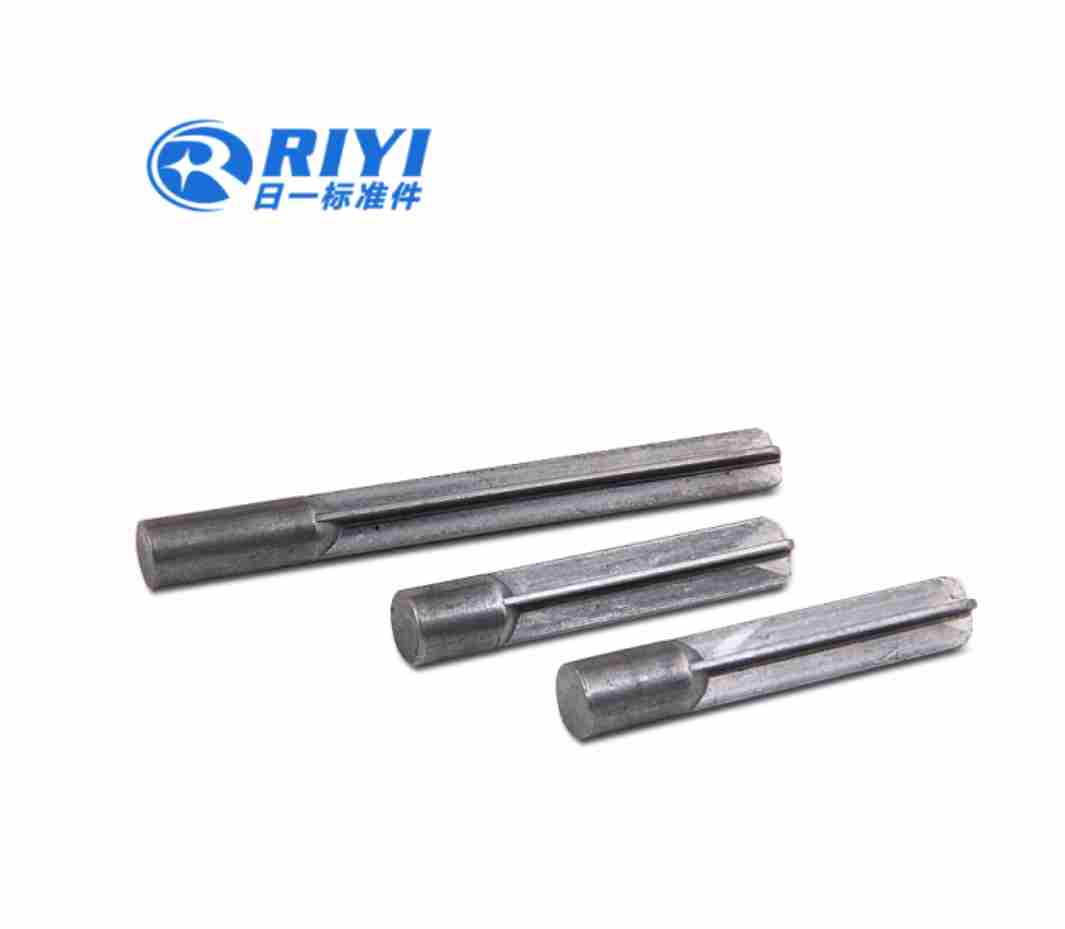
Cold Heading Components: High-performance Fastener Solutions from Wenzhou Riyi Standard Parts Co., Ltd
2026-09-29Cold heading processing shapes metal wire under strong pressure at room temperature without cutting raw materials. Unlike traditional CNC machining, this technology preserves the continuous metal grain flow inside cold heading parts.
-
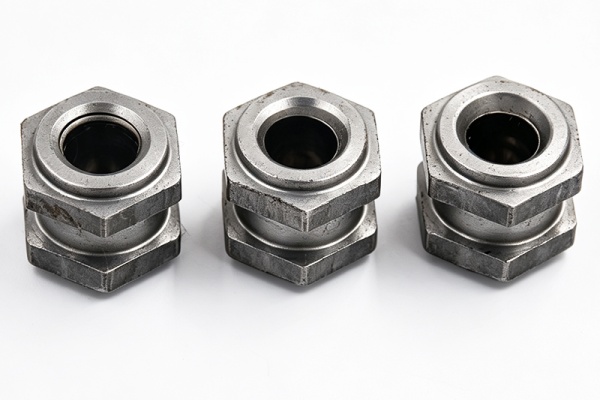
Special-shaped Bolts and Stainless Steel Double-ended Bolts from Wenzhou Riyi Standard Parts Co., Ltd
2026-09-23In modern mechanical manufacturing, construction engineering and equipment assembly, high-quality fasteners are the invisible foundation that guarantees structural safety and product stability.
-
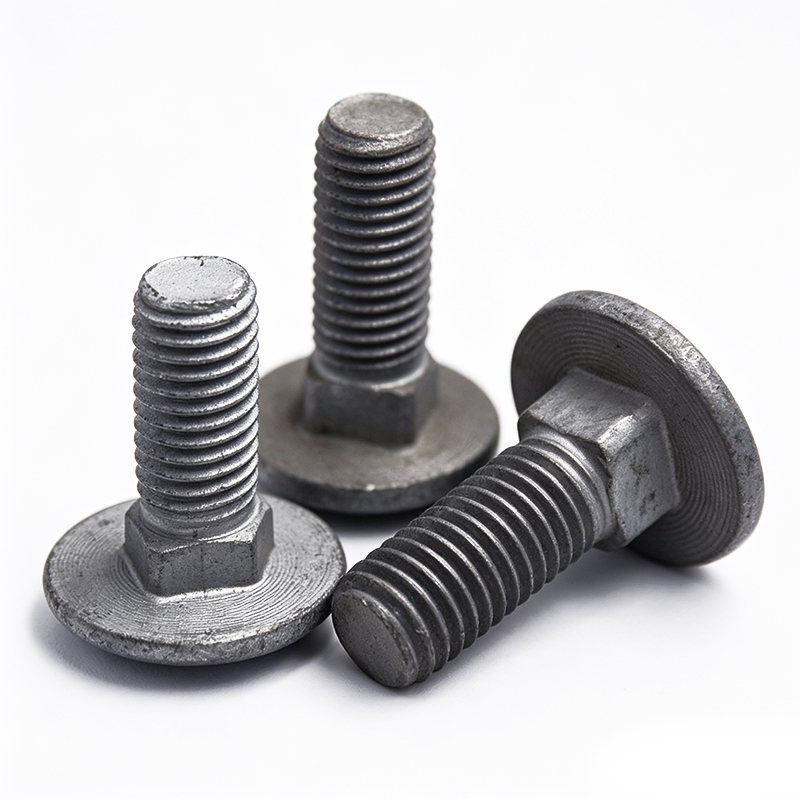
Precision Custom Fasteners from Wenzhou Riyi Standard Parts
2026-09-15Wenzhou Riyi Standard Parts is a reliable Chinese manufacturer focusing on custom non-standard fasteners, located in Wenzhou’s Binhai Economic Zone.
-
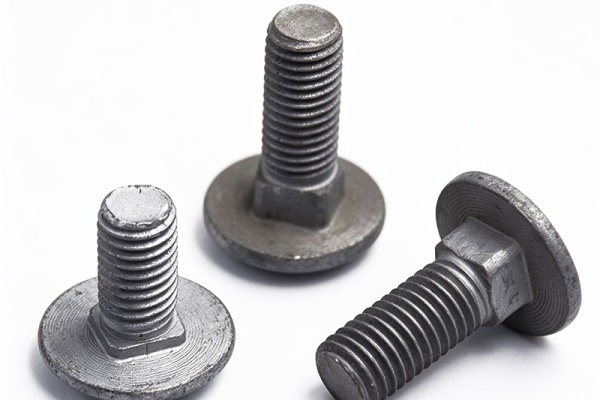
Aluminum Alloy Flange Bolts, Ball Head Studs & Dacromet Carriage Bolts – Reliable Fastener Startup Business
2026-09-08Fasteners are essential basic components widely used in machinery, automotive, engineering and equipment assembly industries.