Products


Anti-Loosening Stainless Steel Left-Hand Thread Fasteners
The stainless steel left-thread screw is a specially designed fastener and transmission element. Its core feature is that the spiral direction of the thread is counterclockwise (opposite to the common right-hand thread), and the main body material is stainless steel.
Send Inquiry
Product Description
Product introduction
The stainless steel left-thread screw is a specially designed fastener and transmission element. Its core feature is that the spiral direction of the thread is counterclockwise (opposite to the common right-hand thread), and the main body material is stainless steel. This type of screw usually falls into the category of non-standard fasteners or special-shaped fasteners because their design and functionality exceed the conventional applications of standard right-hand threads. From a functional point of view, this type of product mainly plays two major roles: connection and fastening: As a key type of stainless steel fastener, it is crucial in mechanical connections that need to be anti-loosening or paired with right-hand threads to achieve two-way locking. Movement and transmission: As a screw, its core function is to accurately convert rotational motion into linear motion. The left-hand design is often paired with a right-hand screw to achieve synchronous opposite or reverse movement. It is widely used in fixtures, adjustment mechanisms, valves and precision platforms.
Its unique rotational design solves the problems of anti-loosening, synchronous adjustment and spatial layout under specific working conditions. It is an important member of stainless steel precision mechanical parts.
Product design and features
Left-hand thread design: This is the most fundamental feature. This design is contrary to the conventional "tight on the right and loose on the left" and follows the principle of "tight on the left and loose on the right". This counter-intuitive operating characteristic makes it an ideal anti-loosening solution on rotating equipment (when the equipment spindle rotates normally, the left thread will become tighter and tighter).
Diverse thread types: According to different application requirements, left-hand threads can be processed into a variety of tooth types:
Large pitch/high lead threads: such as the dryspin® series, with pitches ranging from 2.4 to 100 mm. Optimized for fast, efficient linear motion, this design is non-self-locking and highly efficient, making it ideal for automated applications requiring rapid feeds.
Trapezoidal thread: complies with DIN 103 and other standards, and has good force performance and transmission accuracy.
Metric thread: complies with standards such as DIN 13 and is mainly used for fastening connections.
Fully threaded design: The entire shaft is covered with threads, providing fully adjustable flexibility.
Integrated and high-performance structure: Advanced designs tend to be integrated, integrating connection caps, mating layers and other structures to enhance connection strength and integrity and extend service life. Cold heading non-standard parts manufactured through cold heading and other processes have complete metal streamlines and can provide higher mechanical strength and fatigue life.
Materials and application areas
The commonly used materials of stainless steel left-thread screw directly affect its performance and price.
Austenitic stainless steel 1.4301 (AISI 304): The most versatile choice, offering a good combination of corrosion resistance, formability and strength, suitable for most industrial environments. Martensitic/precipitation-hardened stainless steel 1.4057: Higher strength can be obtained by heat treatment and is often used where high dynamic loads are required, such as rod ends in special-shaped fasteners.
Other stainless steels: Depending on special needs (such as higher corrosion resistance, non-magnetic), materials such as 316 (1.4401) and 416 (1.4034) may also be used.
Application areas
High-end equipment and automation: precision optical adjustment platforms, 3D printers, and two-way synchronous drive mechanisms for robot end effectors.
Medical and food equipment: Stainless steel fasteners are an indispensable choice among regulatory and transmission components that require cleanliness and resistance to frequent cleaning and disinfection.
Marine engineering and chemical equipment: connection and adjustment of ship components, offshore platforms, chemical valves and pipeline systems, taking advantage of its excellent resistance to salt spray and chemical corrosion.
Special vehicles and aerospace: used for critical connection points that require extremely high reliability and anti-loosening properties, as well as for the adjustment of landing gear, hatches and other mechanisms.
Precision instruments and testing equipment: As non-standard fasteners responsible for precise positioning in microscopes, measuring instruments and other equipment.
Quality control and certification system
Geometric dimension inspection: Use a comprehensive thread measuring instrument and a three-dimensional coordinate measuring machine (CMM) to ensure that the thread pitch diameter, pitch, tooth profile angle and geometric tolerance (such as straightness) meet strict standards (such as ±0.005mm level accuracy).
Mechanical performance test: Test the tensile strength and yield strength through a universal testing machine (for example, performance level A2-70 requires a tensile strength of 700MPa), and conduct a hardness test.
Material and surface analysis: Use a spectrometer to analyze the chemical composition and confirm the stainless steel grade; check the surface roughness (Ra value), passivation film quality or uniformity of special coatings (such as DLC coating, which can significantly extend life).
Function and durability testing: Conduct a salt spray test (NSS) to evaluate corrosion resistance; test the tightness and torque consistency of the thread fit; for the transmission screw, its transmission efficiency and wear-resistant life also need to be tested.
Follow international standards: Production should comply with DIN (German standard), ISO (international standard), GB (national standard), etc. For quality assurance systems, ISO 16426 is an important standard specifically for fastener manufacturers and distributors. It aims to reduce defective products and achieve the goal of near-zero defects through systematic management.
Industry certification: In addition to ISO 9001 quality management system certification, responsible companies will ensure that products comply with environmental regulations such as RoHS (Restriction of Hazardous Substances) and REACH (Registration, Evaluation, Authorization and Restriction of Chemicals) to meet global market access requirements.
Customized services
Dimensions and specifications: Customized non-standard diameter, length, specific pitch and lead. You can even customize a special lead screw with double left-hand rotation or one end with left-hand rotation and one end with right-hand rotation.
Structure and processing: Customized end processing according to assembly requirements: such as wrench opening (for applying torque during installation), processing of shaft shoulder (for installing bearings), metric ISO thread (for connecting other components), or chamfering and deburring to facilitate assembly.
Materials and performance: Based on 304, 316, etc., higher strength precipitation hardened stainless steel or special alloys are selected. Specify a special heat treatment condition to achieve specific hardness and strength.
Surface treatment: In addition to standard passivation, you can choose electrolytic polishing to achieve a mirror effect (suitable for food and medical applications), or DLC diamond-like coating to greatly improve wear resistance.
Customization process suggestions
Provide clear requirements: Provide detailed drawings or 3D models as much as possible, indicating dimensions, tolerances, materials, performance requirements and final use scenarios.
Conduct manufacturability design review: Communicate with supplier engineers to optimize the design to adapt to cold heading non-standard parts or other processing processes to strike a balance between performance and cost.
Sample confirmation: Be sure to ask the supplier to provide samples and conduct strict physical testing (size, fit, function), and then proceed to mass production after confirmation.
FAQ
Q: How to distinguish between left-hand thread and right-hand thread?
A: The most intuitive way is to observe the spiral direction of the thread. Hold the screw upright. If the thread winds from the lower left to the upper right (similar to the middle stroke of the letter "R"), it is right-handed (common). On the other hand, if the thread winds from the lower right to the upper left, it is left-handed. You can also try to screw in the nut by hand: clockwise rotation is right-hand; counterclockwise rotation is left-hand.
Q: Are there any special tools or techniques when installing a left-thread screw?
A: The key to installation is to always remember "tighten left and loosen right". Left-hand taps and dies engraved with the "L" mark can be used for repair processing. When installing, if using a wrench, turn it counterclockwise to tighten. To avoid confusion, it is recommended to clearly mark the assembly drawings or physical objects.
Q: What factors affect the price and delivery time of customizing a batch of non-standard left-thread screw rods?
A: The main influencing factors are:
Process complexity: whether special tooth types, special-shaped structures or ultra-high-precision grinding are required.
Materials and Treatments: Specialty stainless steels and advanced surface treatments such as DLC can significantly increase costs and lead times.
Order quantity: The larger the batch size, the lower the unit cost. For cold heading non-standard parts, the mold fee is the main initial cost.
Generally speaking, the lead time for complex special-shaped fasteners ranges from weeks to months, and small batch customization (1-24 pieces) may be as short as about a week, while high-volume production requires a longer lead time.


Latest News
-
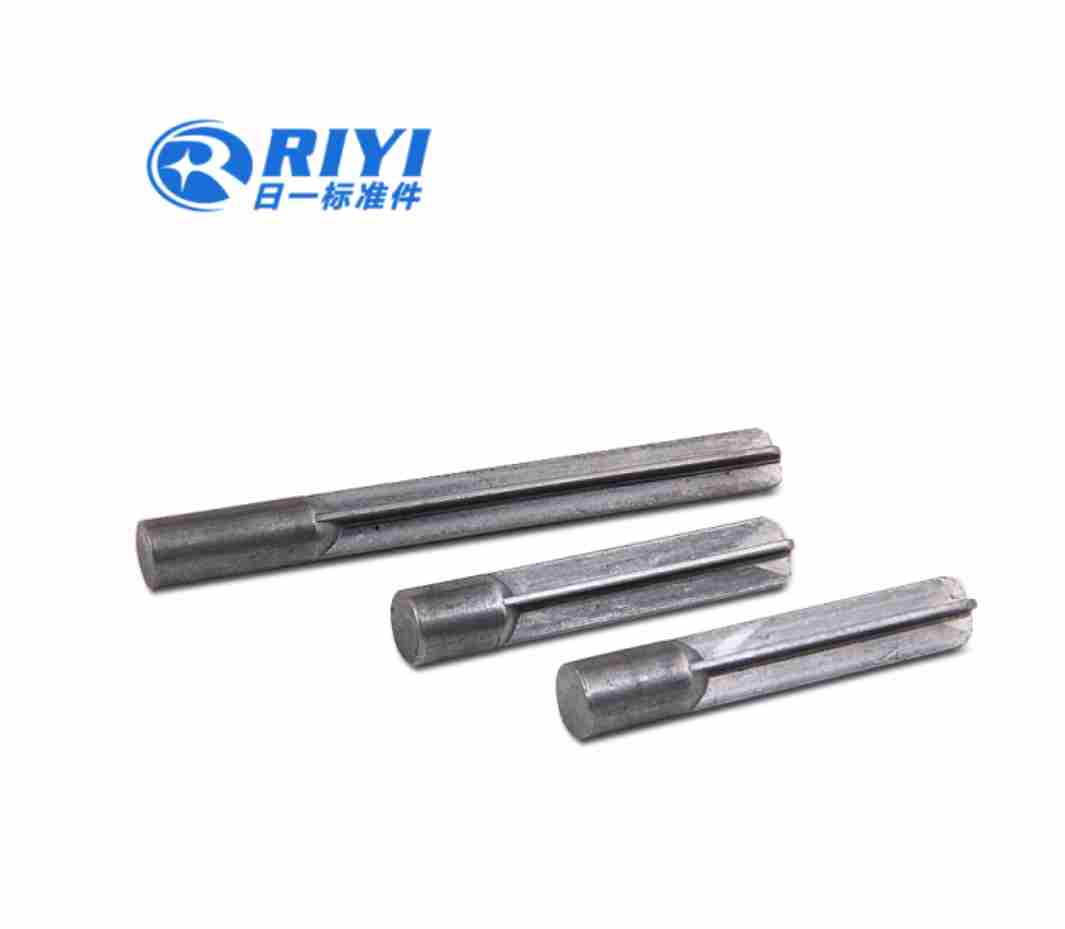
Cold Heading Components: High-performance Fastener Solutions from Wenzhou Riyi Standard Parts Co., Ltd
2026-09-29Cold heading processing shapes metal wire under strong pressure at room temperature without cutting raw materials. Unlike traditional CNC machining, this technology preserves the continuous metal grain flow inside cold heading parts.
-
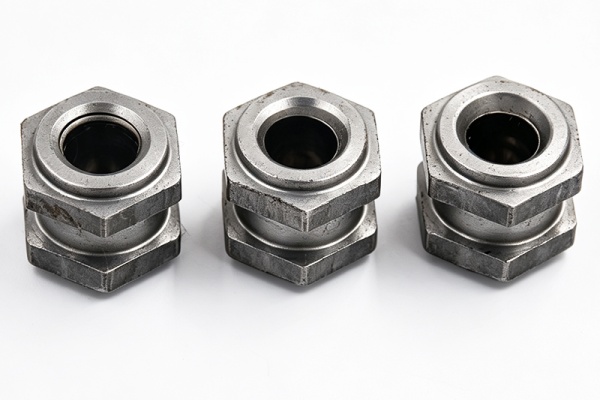
Special-shaped Bolts and Stainless Steel Double-ended Bolts from Wenzhou Riyi Standard Parts Co., Ltd
2026-09-23In modern mechanical manufacturing, construction engineering and equipment assembly, high-quality fasteners are the invisible foundation that guarantees structural safety and product stability.
-
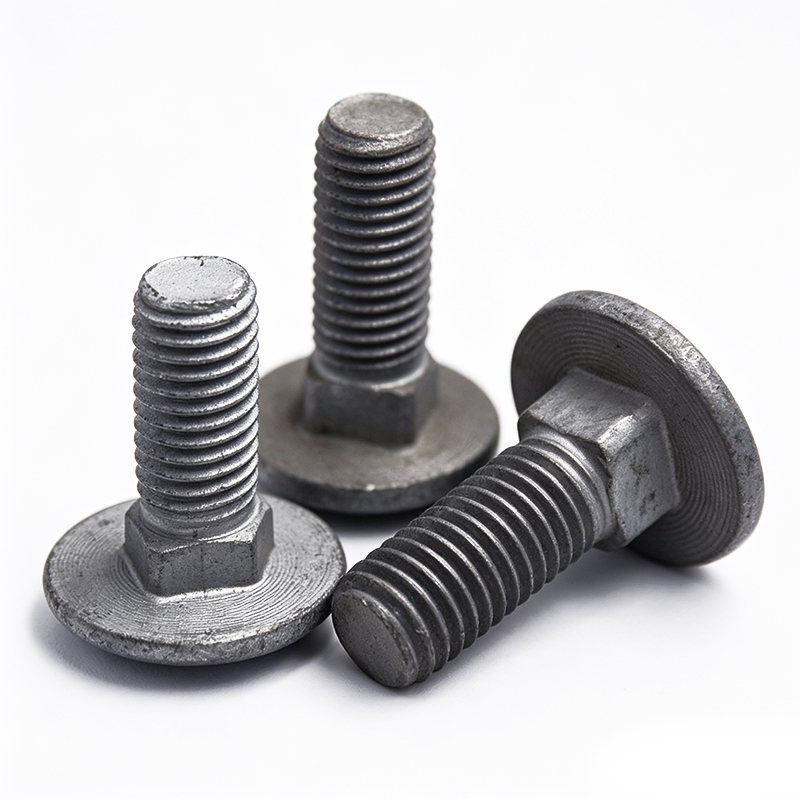
Precision Custom Fasteners from Wenzhou Riyi Standard Parts
2026-09-15Wenzhou Riyi Standard Parts is a reliable Chinese manufacturer focusing on custom non-standard fasteners, located in Wenzhou’s Binhai Economic Zone.
-
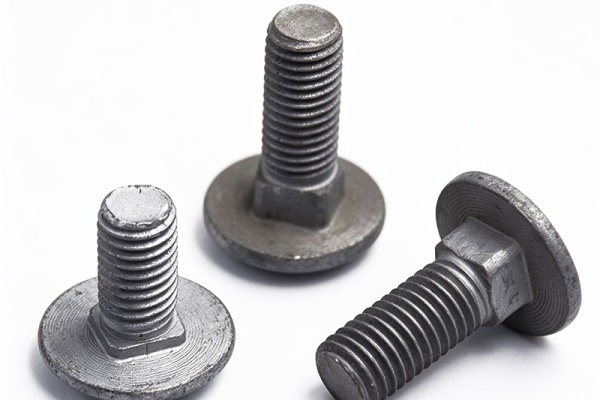
Aluminum Alloy Flange Bolts, Ball Head Studs & Dacromet Carriage Bolts – Reliable Fastener Startup Business
2026-09-08Fasteners are essential basic components widely used in machinery, automotive, engineering and equipment assembly industries.