Products


Stainless Steel Flange Nuts Fasteners
Stainless steel flange nuts are functional stainless steel fasteners that combine a standard hex nut with an integral flange washer. The "flange" refers to a wide-sided disc that is integrally formed or machined on the side of the nut's bearing surface.
Send Inquiry
Product Description
Product introduction
Stainless steel flange nuts are functional stainless steel fasteners that combine a standard hex nut with an integral flange washer. The "flange" refers to a wide-sided disc that is integrally formed or machined on the side of the nut's bearing surface. It is usually equipped with anti-skid teeth to increase the contact area with the surface of the connected part. Compared with the traditional combination of "nut + independent washer", this integrated design provides a more reliable connection solution. Its design and production follow such standards, but when faced with special engineering needs, it will also evolve into highly customized non-standard fasteners. Its core value is that it utilizes the corrosion resistance of stainless steel materials and the high pre-tightening force retention and excellent anti-loosening and anti-vibration properties brought by the flange structure to provide long-lasting and stable protection for key structural connections. It is especially suitable for assembly scenarios that need to deal with vibration, dynamic loads and long-term exposure to corrosive environments.
Product design and features
The design of stainless steel flange nuts is the source of their functional advantages. The main features are reflected in their structure, surface and functional integration:
Integrated flange structure: This is the core feature. The one-piece flange replaces separate flat washers, eliminating the risk of lost or misaligned washers and simplifying the assembly process. Its increased pressure-bearing area can effectively reduce the compressive stress on the surface of the connected parts (especially soft materials such as aluminum and plastic) and prevent surface collapse. The anti-skid tooth pattern on the flange surface can "bite" into the contact surface and provide additional anti-rotational friction, which is the key to preventing loosening.
Standard hexagonal nut body: The nut body connected to the flange is in a standard hexagonal shape and can be tightened using a universal wrench or socket. Its thread accuracy is consistent with standard nuts, ensuring a good fit with bolts.
Enhanced anti-loosening function: In addition to relying on the friction and anti-loosening of the flange surface teeth, some high-performance flange nuts will also integrate nylon embedded rings (nylon lock nuts) in the threaded part or use technologies such as all-metal deformation threads to form double mechanical locking, making it an efficient and special-shaped fastener designed for vibration environments.
Craftsmanship and lightweight considerations: High-quality flange nuts are usually formed by cold heading, and the material is dense and high in strength. For applications with lightweight requirements (such as aerospace, high-end automobiles), they will be designed with weight-reducing holes or thin-walled structures. This type of design also makes them customized non-standard fasteners.
Materials and application areas
304 (A2), a general-purpose austenitic stainless steel with good corrosion resistance. Suitable for most daily and general industrial environments, it is a cost-effective choice of stainless steel fasteners. Typical application areas: indoor and outdoor general mechanical equipment, building curtain wall supports, furniture, peripherals of general chemical equipment, and non-core contact areas of food processing.
316 (A4), containing molybdenum (Mo), significantly improves its resistance to chloride ion corrosion and pitting corrosion, and is the first choice in harsh corrosive environments. Typical application areas: coastal and marine engineering (dock facilities, ships), chemical and pharmaceutical factories (exposed to acid and alkali atmosphere), desulfurization equipment, swimming pools and desalination devices, outdoor infrastructure in high salt spray areas.
316L, a low-carbon version, has stronger resistance to intergranular corrosion and is especially suitable for connecting components that cannot be integrally heat treated after welding. Typical application areas: petrochemical pipelines, heat exchangers, and equipment that may have welding heat-affected zones.
Core application areas
Automobiles and transportation: It is widely used in the connection of high-vibration and high-heat areas such as engine mounts, suspension systems, and exhaust manifolds. It is a key automotive stainless steel fastener.
New energy and electricity: Wind turbine towers, solar photovoltaic brackets, electrical cabinets and other connection points that are exposed to the changing outdoor climate for a long time have extremely high requirements for anti-loosening and weather resistance.
High-end equipment and precision instruments: Medical equipment, semiconductor manufacturing equipment, food packaging machinery and other equipment that require frequent cleaning, disinfection or in a clean environment, their connection points must be pollution-free and corrosion-resistant.
Special engineering: When the size, flange diameter or locking method of the standard flange nut cannot be met, such as on rail transit or deep-sea equipment, non-standard fasteners with specific performance need to be customized.
Quality control and certification system
Certification and compliance system:
Management system certification: Good manufacturers need to have an ISO 9001 quality management system. If the product is used in the automotive industry, IATF 16949 certification is usually required to ensure full process traceability and continuous improvement capabilities.
Product standards compliance: Products must declare compliance with specific standards such as GB/T 6177, DIN 6923, ISO 4161, etc., which specify all of their critical dimensions, tolerances and mechanical properties.
Key performance test items: Mechanical performance test: According to standards such as GB/T 3098.2, guarantee load test (to ensure that the nut thread does not trip or break) and hardness test (to ensure that it matches the bolt strength).
Anti-loosening performance test: For types with nylon rings or all-metal locking types, a lateral vibration test (such as DIN 65151) is required to quantify its ability to resist vibration loosening, which is the core of evaluating its functionality as a specially shaped fastener.
Corrosion resistance test: Neutral salt spray test (NSS) is the basis. Depending on the material and application, the requirements are different (for example, A2-70 usually requires ≥72 hours of no red rust, and A4-80 requires even higher requirements). More stringent tests include the Copper Accelerated Acetic Salt Spray (CASS) test.
Full inspection of dimensional and geometric tolerances: Use pass-and-stop gauges, projectors and other tools to conduct 100% or high-frequency sampling inspections of thread accuracy, flange diameter and thickness, width of opposite edges, etc.
Customized services
Customization capability range:
Size customization: non-standard opposite side size (S), height (M), flange outer diameter (Dc) and tooth pattern design. Can produce ultra-thin type, thickened type, etc.
Structure and function customization: Customize the flange surface form (fully serrated, partially serrated, smooth surface, with sealing ring groove); integrate special locking structure (such as top closure, double stack flange, non-standard nylon ring color/material); or add lateral fixing holes, etc. Such highly functionally integrated products are typical special-shaped fasteners.
Material and performance customization: Use duplex stainless steel (such as S32205) for higher strength and corrosion resistance, or use high-temperature alloys to adapt to extreme temperature environments.
Customized surface treatment: In addition to passivation, electrolytic polishing can be performed to achieve high cleanliness, or silver plating or nickel plating can be performed to reduce the friction coefficient and meet conductive or special appearance requirements.
Key points of collaborative development: When customizing, it is necessary to clarify the "matching bolt information" (material, performance level), "installation conditions" (torque, vibration frequency, temperature) and "connected part characteristics" (material hardness, surface treatment). For the development of non-standard fasteners, the supplier's simulation analysis capabilities (such as finite element analysis to predict stress distribution) are crucial.
FAQ
Q: What are the main advantages of stainless steel flange nuts compared with the "ordinary hexagonal nut + flat washer/spring washer" combination?
A: The core advantages are reliability, anti-loosening and assembly efficiency.
Q: Is the tooth pattern on the flange surface necessary? In what situations are nuts with flat flange surfaces (without teeth) used?
A: Not required, depends on application requirements. Toothed flange surface: It is a standard and mainstream design. It is mainly used to increase anti-loosening friction and is suitable for most steel structures and mechanical connections that require vibration resistance. The tooth pattern will slightly "bite" into the surface of the connected parts.
Q: If you need a nut with a particularly large flange diameter or a lateral locking hole, can it be customized?
A: Absolutely, this is the typical demand for non-standard fastener customization services.
Extra Large Flange Diameter: Typically used to join very soft or brittle materials (e.g. wood structures, fiberglass) to maximize load dispersion. This required redesigning the mold and evaluating the molding process. With lateral locking holes: This specially shaped fastener is usually used in safety-critical parts (such as railways, heavy mining machinery) that require final mechanical locking by inserting a cotter pin or screwing in a jackscrew to prevent the nut from loosening under any circumstances. The position and size of the holes need to be precisely designed when customizing.


Latest News
-
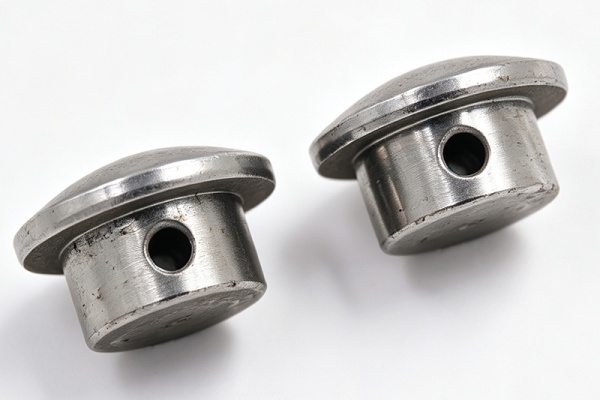
Reliable Fasteners from Riyi Standard Parts
2026-10-19Hex nuts are one of the most widely used threaded fasteners in modern manufacturing and construction. Together with hex bolts, they form secure joining assemblies to lock components in place, resist vibration and bear mechanical loads.
-
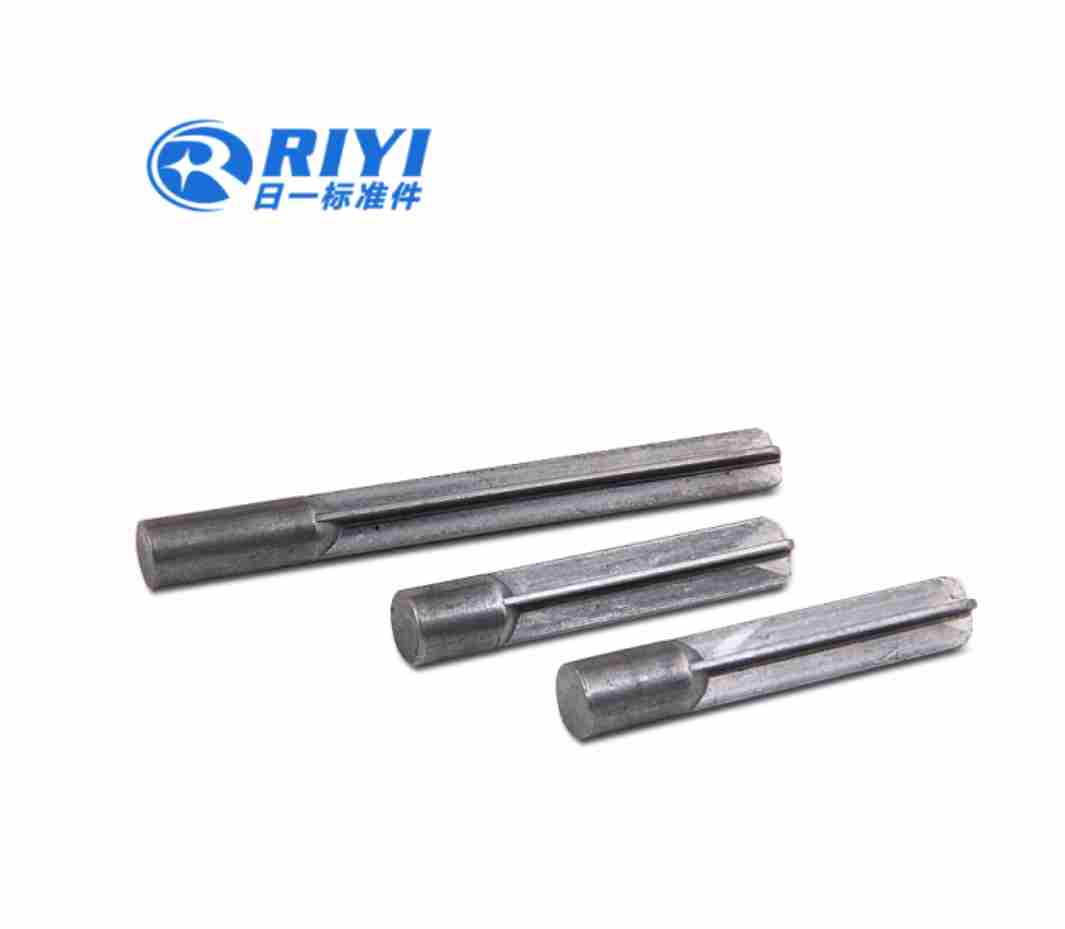
Cold Heading Components: High-performance Fastener Solutions from Wenzhou Riyi Standard Parts Co., Ltd
2026-09-29Cold heading processing shapes metal wire under strong pressure at room temperature without cutting raw materials. Unlike traditional CNC machining, this technology preserves the continuous metal grain flow inside cold heading parts.
-
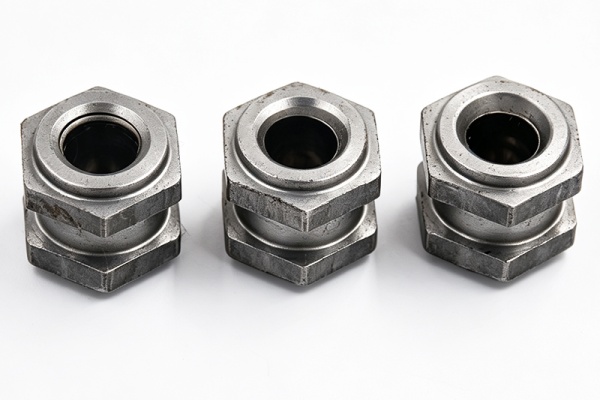
Special-shaped Bolts and Stainless Steel Double-ended Bolts from Wenzhou Riyi Standard Parts Co., Ltd
2026-09-23In modern mechanical manufacturing, construction engineering and equipment assembly, high-quality fasteners are the invisible foundation that guarantees structural safety and product stability.
-
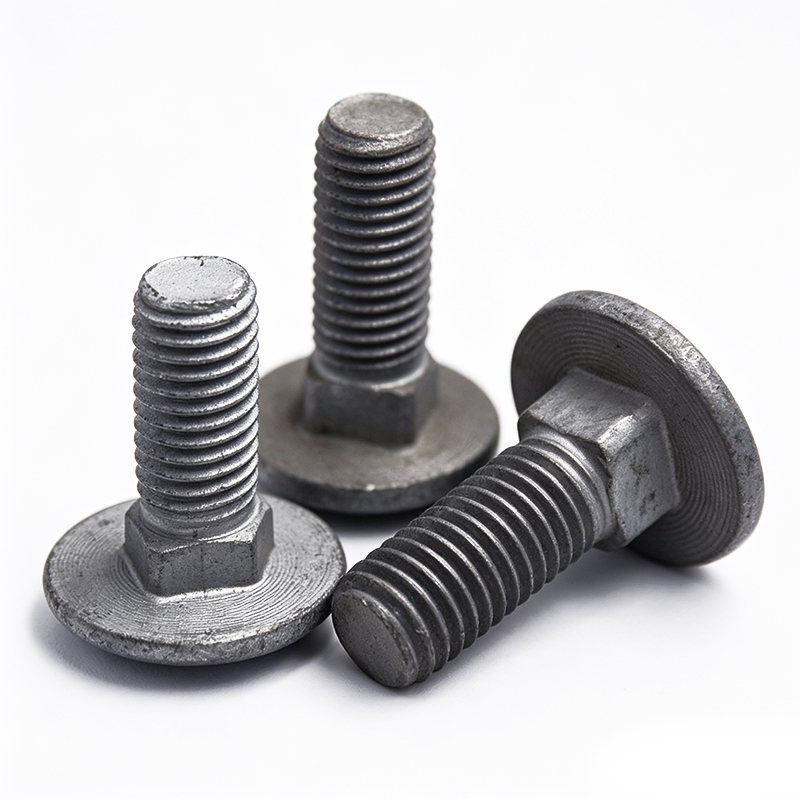
Precision Custom Fasteners from Wenzhou Riyi Standard Parts
2026-09-15Wenzhou Riyi Standard Parts is a reliable Chinese manufacturer focusing on custom non-standard fasteners, located in Wenzhou’s Binhai Economic Zone.