Products


Non-Standard Fasteners
Non-standard fasteners (referred to as "non-standard fasteners") refer to fasteners that have not yet formed national standards (such as GB, DIN, ISO, JIS, etc.) and need to be customized and processed according to specific equipment, project or process requirements.
Send Inquiry
Product Description
Product introduction
Non-standard fasteners (referred to as "non-standard fasteners") refer to fasteners that have not yet formed national standards (such as GB, DIN, ISO, JIS, etc.) and need to be customized and processed according to specific equipment, project or process requirements. It does not have the versatility and interchangeability of standard parts. Its size, shape, material, tolerance and other technical indicators are jointly determined by the customer and the manufacturer.
Compared with standard fasteners, non-standard fasteners appear to solve special connection needs that standard parts cannot meet - whether it is a special installation space, specific anti-corrosion requirements, or a unique anti-loosening design. As the scope of applications expands, some non-standard fasteners may gradually form standards, but most of them will exist as special parts for a long time due to complex application conditions.
The essence of customizing non-standard fasteners is the process of transforming customers' technical needs into qualified physical products. Such products are usually realized in the form of customized non-standard stainless steel parts or carbon steel/alloy steel parts, and serve a wide range of industries that have special requirements for connection reliability.
Product design and features
Fully customized structural design: this is the most fundamental feature. The design needs to clarify the appearance, specifications, dimensions, head shape, groove type, etc. of the fastener according to the usage scenario, and determine the material and surface treatment method based on the usage environment -6. Typical non-standard designs include:
Left-hand threaded fasteners: The thread direction is opposite to the conventional one, suitable for occasions where anti-loosening or pairing with right-hand threads is required to achieve two-way locking.
Special head types and groove types: such as special-shaped heads with anti-loosening grooves, non-standard cross grooves/hexagonal grooves, etc.
Combined drive screw fasteners: screws, washers, etc. are pre-assembled into one to achieve "one installation, multiple functions"
Diversified functional design: Non-standard fasteners can integrate a variety of special functions:
All-metal lock nut fasteners: anti-loosening through metal deformation or special thread structure, suitable for high temperature environments
Customized special-shaped fasteners: such as special-shaped head bolts, screws with positioning pins, studs with wrenching planes, etc.
Design for manufacturability (DFM): Excellent non-standard design will fully consider process feasibility. Manufacturing companies usually require customers to provide detailed drawings and indicate the specifications, dimensions and requirements of each part on the drawings; if there are no drawings, samples or detailed descriptions of actual needs can be provided, and the manufacturer will assist in the design.
Flexible matching of materials and processes: There are no restrictions on the selection of materials and processes for non-standard fasteners. Stainless steel, carbon steel, alloy steel, copper, aluminum, titanium alloy and other materials can be freely selected according to the working conditions, as well as cold heading, turning, stamping and other processes.
Materials and application fields
Core material:
Stainless steel series: such as SUS304 (universal type, high cost performance), SUS316 (containing molybdenum, better resistance to chloride corrosion). In highly corrosive environments such as petrochemical industry, marine engineering, and medical equipment, customizing non-standard stainless steel parts is the preferred option-9.
Carbon steel and alloy steel series: such as 10B21, SCM435, etc., can obtain high strength from grade 8.8 to grade 12.9 after heat treatment, and are suitable for heavy-duty connections.
Copper, aluminum alloy and other special materials: used for special needs such as conductivity and lightweight-1.
Wide application areas:
Aerospace and defense: Non-standard fasteners need to meet strict system certifications such as AS9100 and GJB, and are used for key connections such as aircraft structural parts and weapons and equipment.
Automobile manufacturing: Non-standard fasteners are widely used in engines, chassis, bodies and other components. IATF 16949 is the universal quality system certification in this industry.
Petrochemical and Marine Engineering: In corrosive environments, customizing special-shaped fasteners and stainless steel non-standard parts are the cornerstone of ensuring long-term safe operation of equipment.
Electronic communications and new energy: Precision electronic equipment, solar brackets, and wind power equipment have continued demands for the precision and weather resistance of non-standard fasteners.
Rail transit and construction machinery: Special non-standard fasteners such as high-speed railway threaded spikes need to meet high strength, fatigue resistance and weather resistance requirements at the same time.
Quality control and certification system
Whole-process testing: from raw materials to finished products, covering the following key links:
Raw material inspection: spectral analysis of chemical components, preliminary testing of mechanical properties
Process control: Dimensional monitoring during cold heading/thread rolling/thread rolling process
Finished product inspection: Use thread pass and stop gauges, projectors, and coordinate measuring machines (CMM) to ensure dimensional accuracy; use universal testing machines to verify tensile strength and yield strength
Corrosion resistance test: Salt spray test chamber (NSS) verifies the anti-corrosion ability of stainless steel non-standard parts
Metallography and hardness: Examine the internal structure of the material and test the surface and core hardness
Authoritative certification systems: Leading manufacturers often hold the following certifications:
ISO 9001:2015: Basic quality management system
IATF 16949: Quality Management Systems for the Automotive Industry
AS9100: Aerospace Quality Management System
GJB9001: National defense weapons and equipment quality management system
CNAS: National Laboratory Accreditation
Traceability: Each batch of customized non-standard fasteners should provide complete material certification, test reports and compliance statements to ensure traceability of product quality.
Customized services
1. Clarify the needs: Determine the usage scenario, fastening objects, and expected effects (whether it is anti-disassembly, whether it meets the appearance requirements)
2. Provide drawings or samples: provide detailed drawings and mark specifications, dimensions and requirements; if there are no drawings, samples or detailed description of requirements can be provided
3. Process review and mold development: The manufacturer conducts a DFM review, and if a mold needs to be opened, the mold must be customized first (mold development is the core technical difficulty)
4. Sample production: produce samples according to drawings and conduct physical testing and verification
5. Sample confirmation: Test the sample in actual usage scenarios and confirm that it is suitable before mass production.
Custom dimensions:
Dimensions and specifications: customized non-standard diameter, length, specific pitch, special tolerance level
Structure and form: left-hand thread fasteners, combination drive screw fasteners, all-metal lock nut fasteners, customized special shape fasteners, etc.
Material: stainless steel (304/316), carbon steel, alloy steel, copper, aluminum, titanium alloy
Performance grade: carbon steel from grade 4.8 to grade 12.9, A2-70/A4-70 stainless steel
Surface treatment: galvanized, blackened, Dacromet, passivation, nickel plating, chrome plating, etc.
Typical delivery time and minimum order quantity:
Standard parts: 7-15 days
Non-standard parts: 15-25 days
Minimum order quantity: Cold heading non-standard parts are usually around 10,000 pieces, and CNC processed parts can be as low as 100-500 pieces
FAQ
Q: What is the core difference between non-standard fasteners and standard fasteners?
A: The core lies in whether it follows national standards. Standard fasteners are versatile and interchangeable and can be purchased directly according to standard numbers, specifications, and materials; non-standard fasteners need to be customized according to specific needs, and the size, shape, and material are determined jointly by the customer and the manufacturer. The cost of non-standard parts is usually higher than that of standard parts, and the production cycle is also longer.
Q: What information do I need to provide when customizing non-standard fasteners?
A: The most important thing is to provide detailed drawings and indicate the specifications, dimensions, tolerances, materials, performance levels and surface treatment requirements of each part. If there are no drawings, samples can be provided for the manufacturer to measure and map, or the usage scenarios and functional requirements can be described in detail, and the manufacturer can assist in the design.
Q: To customize a batch of non-standard fasteners, what is the usual minimum order quantity and delivery time?
A: Standard parts are usually delivered in 7-15 days, and non-standard parts are usually delivered in 15-25 days. The minimum order quantity depends on the complexity of the process: cold heading non-standard parts are usually around 10,000 pieces; complex parts processed by CNC can be as low as 100-500 pieces.
Q: How to ensure the quality of customized non-standard fasteners?
A: Regular suppliers should hold ISO 9001 and other quality management system certifications, and provide full-process testing reports (raw material inspection, dimensional accuracy, mechanical properties, salt spray testing, etc.) -2. Be sure to complete physical testing and confirmation of samples before mass production. This is a core step to avoid major losses.
Q: Under what circumstances are left-hand threaded fasteners used?
A: Left-hand threads (counterclockwise screwing in) are usually used in the following scenarios: anti-loosening on rotating equipment (when the main shaft of the equipment is turned right, the left-hand thread will become tighter and tighter); paired with right-hand threads to achieve two-way synchronous adjustment; and some special assembly space requirements.
Send Inquiry
Related Products


Latest News
-
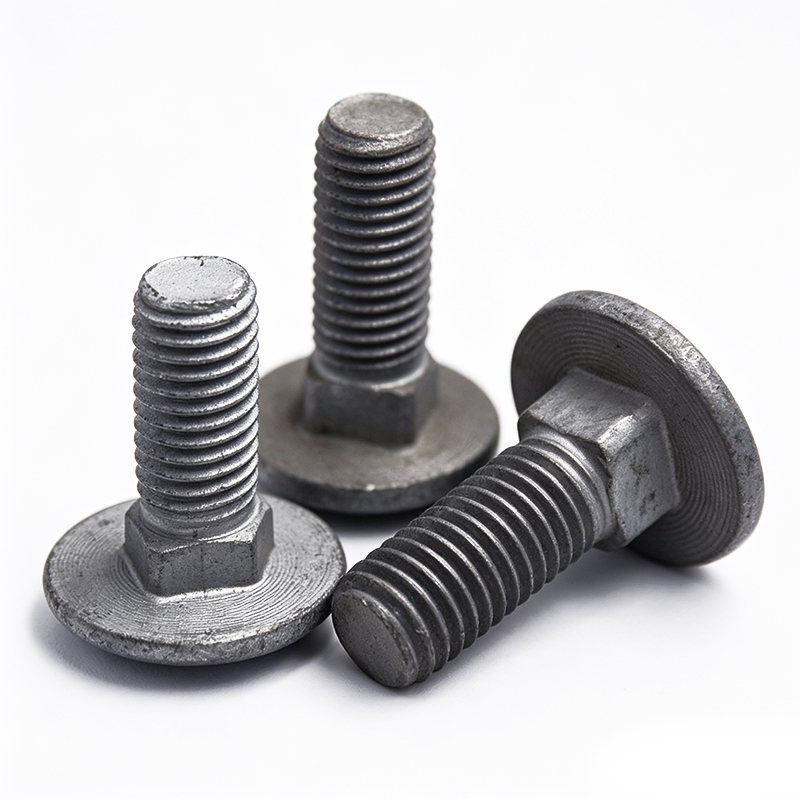
Precision Custom Fasteners from Wenzhou Riyi Standard Parts
2026-09-15Wenzhou Riyi Standard Parts is a reliable Chinese manufacturer focusing on custom non-standard fasteners, located in Wenzhou’s Binhai Economic Zone.
-
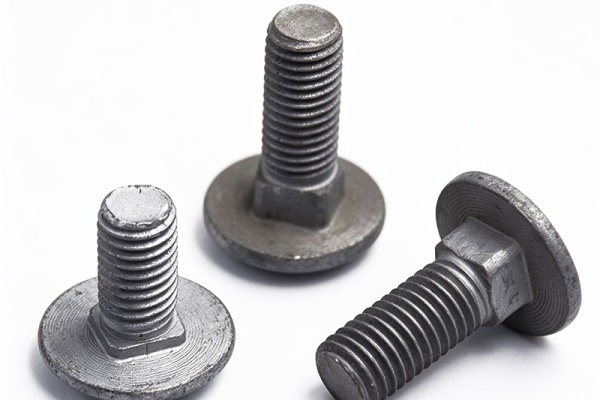
Aluminum Alloy Flange Bolts, Ball Head Studs & Dacromet Carriage Bolts – Reliable Fastener Startup Business
2026-09-08Fasteners are essential basic components widely used in machinery, automotive, engineering and equipment assembly industries.
-
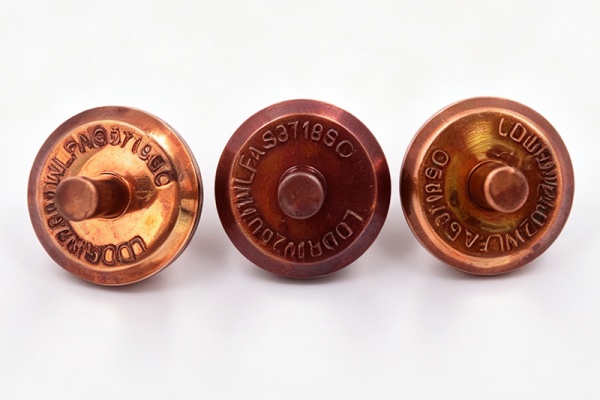
The Key Role of Precision Hardware Parts in Modern Mechanical Assembly
2026-09-04In the fast-developing field of modern mechanical manufacturing and equipment assembly, tiny hardware accessories are often the core factors that determine the stability, durability and safety of the entire device.
-
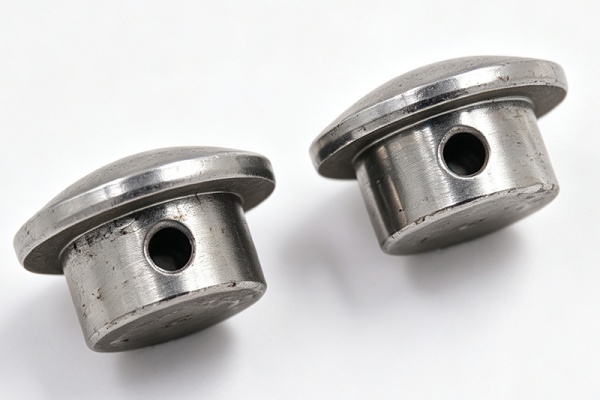
Two Practical Hardware Parts in Mechanical Assembly
2026-08-25Machine manufacturing and equipment assembly all rely on standard hardware parts. They make industrial equipment more stable and better positioned.