Products


Copper Step Bushing Fasteners
This product is a special material part, precision machined from T2 copper, with a stepped outer diameter structure, used for shoulder positioning, electrical conduction or mechanical limit. The electrical conductivity of copper material is ≥97% IACS, it has excellent thermal conductivity and is completely non-magnetic.
Send Inquiry
Product Description
Product introduction
This product is a special material part, precision machined from T2 copper, with a stepped outer diameter structure, used for shoulder positioning, electrical conduction or mechanical limit. The electrical conductivity of copper material is ≥97% IACS, it has excellent thermal conductivity and is completely non-magnetic. When the inner hole or outer diameter is integrated with a thread function, it can be regarded as a special-shaped screw, which has the dual functions of bushing positioning and threaded connection. As a typical non-standard screw, we support any customization of non-standard step size, internal and external thread specifications, length and hole diameter. Based on your electrical conductivity, thermal conductivity or mechanical support needs, we provide customized non-standard screw solutions, and can control quality according to the ISO 9001 system.
Product design and features
The copper step bushing is a precision bushing part with a stepped outer diameter (also called a step or a rib). It is often used for bearing positioning, shoulder support, mechanical limit or electrical connection, etc. Its core structure includes:
Main bushing section: a cylindrical part that precisely fits the mounting hole to provide radial support and positioning
Step (flange) section: an annular boss with a diameter larger than the main part, used for axial positioning, bearing thrust or preventing axial movement of the bushing
Inner hole: It can be designed as a smooth hole, a threaded hole or a special-shaped hole as needed to accommodate the rotating shaft or other fasteners.
Advantages of copper material - "special material parts":
Excellent conductivity: conductivity ≥97% IACS, suitable for electrical grounding, conductive connections, etc.
Good thermal conductivity: The thermal conductivity is about 386 W/(m·K), which can be used for heat dissipation or heat conduction structures
Corrosion resistance: Excellent corrosion resistance in the atmosphere, fresh water and neutral solutions
Non-magnetic: suitable for electronic equipment and medical instruments that are sensitive to magnetism
Processing ductility: easy to precision process, can obtain high dimensional accuracy and smooth surface
Product features
Although "bushings" are not usually classified as "screws", in practical applications, copper step bushings often need to be used with screws, bolts, or even themselves as threaded special-shaped fasteners. For example:
Step bushing with internal thread: The internal hole is threaded and can be screwed directly into the screw, acting as a thread insert
Step bushing with external thread: The outer diameter is machined with threads, which can be screwed into the screw hole and has both positioning and tightening functions.
Pressure riveting type step bushing: fixed on the thin plate through the press riveting process, replacing the welding nut
When the inner hole or outer diameter of the product has a threaded structure, it has the dual functions of a bushing and a fastener, and is a special-shaped screw. If the size required by the customer (such as non-standard step diameter, special inner hole shape) is different from any standard parameters, the product further becomes a non-standard screw. When we design and produce parameters according to the customer's specific working conditions (for example: used in high-voltage switch cabinets, which require conductivity ≥ 98% and voltage resistance test passed), they are customized non-standard screws.
Materials and application areas
T1 copper: purity ≥99.95%, optimal conductivity, high-end electrical equipment, precision instruments
T2 copper: purity ≥99.90%, high cost performance, universal electrical connection, mechanical bushing
T3 copper: purity ≥99.70%, lower cost, general purpose, non-critical conductive parts
Application areas:
Electrical equipment: high-voltage switch cabinet contact guide bushings, circuit breaker operating mechanism bushings, grounding bar connection bushings
Electronics and communications: RF equipment grounding terminals, shielding cover positioning bushings, radiator fixing sleeves
Medical equipment: non-magnetic surgical instrument shaft bushings, CT machine sliding parts (needs a non-magnetic environment)
Precision machinery: instrument shaft supports, optical equipment focusing bushings
Mold manufacturing: mold guide post guide bushing, ejector plate limit bushing
Quality control and certification system
Test items and methods:
Dimensional accuracy: inner and outer diameter dimensions, step height/diameter, coaxiality, coordinate measuring machine, projector (tolerance ±0.01mm)
Material composition: copper purity, impurity content, spectrum analyzer (in compliance with GB/T 5231 standard)
Conductive properties: Resistivity/Conductivity Double-arm bridge method (≥97% IACS)
Mechanical properties: hardness, tensile strength, Vickers hardness tester, universal testing machine
Surface quality: roughness, appearance defects, roughness meter (Ra≤0.8μm), magnifying glass visual inspection
Certification qualification:
ISO 9001:2015 (whole-process quality management system)
IATF 16949 (Special requirements for the automotive industry, applicable to automotive electrical bushings)
RoHS/REACH (environmental compliance)
Can issue third-party testing reports (SGS, etc.)
Customized services
Size: any inner diameter (1mm~50mm), any outer diameter (3mm~80mm), any length (2mm~100mm), step outer diameter/height non-standard
Inner hole type: plain hole, metric thread (M2~M30), inch thread (UNC/UNF), left-hand thread, special-shaped hole (hexagonal/square)
Outside diameter type: smooth cylinder, external thread, knurled, slotted, with oil groove
Step shape: single step, double step, tapered step, beveled flange
Material selection: Special material parts: T1/T2/T3 copper, brass H59/H62, bronze, chromium zirconium copper (high strength conductive)
Surface treatment: pickling and passivation (natural color), silver plating/tin plating (enhanced conductivity), nickel plating (anti-oxidation), polishing
Additional functions: side opening (oil filling hole), end face with straight/cross groove, integrated sealing ring groove
Special design capabilities:
Threaded Step Bushing: A variation on a specially shaped screw that has a threaded interior that acts as a "screwable bushing"
Externally threaded step bushing: The outer diameter is threaded and can be directly screwed into the equipment screw hole
Press-riveted step bushing: embossed teeth are designed on the bottom, which can be pressed into the thin plate and fixed, replacing the welding nut.
Customization process
Requirement input: Provide drawings, samples or detailed description of working conditions (current/voltage requirements, installation space, matching parts parameters)
DFM manufacturability analysis: evaluate the processing process route (CNC turning or cold heading + finishing) and give manufacturability suggestions
Sample manufacturing: 10-30 pieces of samples delivered within 7-15 days
Installation verification: Customer tests conductive performance, fit accuracy and installation process
Mass production: MOQ is generally 500-2000 pieces, complex non-standard screws can be negotiated for trial production of 100 pieces.
FAQ
Q: Is the copper step bushing a "screw"? Why is "non-standard screws" mentioned in the article?
A: Strictly speaking, pure bushings are not screws. However, in practical applications, copper step bushings are often designed with threaded structures—for example, the inner hole is threaded (acting as a thread insert), and the outer diameter is threaded (can be directly screwed into the equipment). When it integrates the thread function, it has the dual properties of a bushing and a fastener, and is a special-shaped screw. If you need non-standard thread specifications or special step sizes, it becomes a non-standard screw; if it is completely customized according to your working conditions, it is a customized non-standard screw.
Q: What is the difference between copper and brass step bushings? How to choose?
A: Red copper (pure copper) has higher electrical and thermal conductivity, is softer, and has better ductility, and is suitable for electrical conduction or occasions that require deformation; brass (copper-zinc alloy) has higher strength, better wear resistance, and lower cost, and is suitable for mechanical support. As special material parts, we can provide both materials. Recommendations need to be based on your specific working conditions (electrical conductivity/thermal conductivity/strength requirements).
Q: Is the conductive performance of the copper step bushing affected by processing?
A: CNC precision machining will not significantly change the conductive properties of copper. But you need to pay attention to surface oxidation - we will perform anti-oxidation treatment (such as passivation or tin plating) on the product, and use anti-oxidation bags when packaging. For applications that require extremely high conductivity (such as high-current grounding), it is recommended to choose silver plating to reduce the contact resistance to less than 0.5mΩ.
Q: Can I customize a composite structure with internal and external threads?
A: Yes. For example: the outer diameter of the main body is a smooth cylinder that matches the mounting hole, and the inner hole of the step end surface is threaded for fixing other screws - this forms the composite function of "bushing + threaded insert", which is a typical screw with a special shape. We can design the most reasonable thread positions and specifications according to your assembly needs.
Q: What is the minimum order quantity (MOQ)?
A: - CNC processing (non-standard screws): starting from 100 pieces
Specially shaped screws (complex thread/step structure): starting from 300 pieces
Special material parts (T1 high-purity copper): starting from 500 pieces
Sample order: 10-30 pieces can be negotiated for testing
Q: How much torque can the copper step bushing withstand?
A: Copper is relatively soft and is not recommended to bear high torque loads alone. If you need to withstand torsion, it is recommended to: ① Increase the wall thickness; ② Use a copper-steel composite structure; ③ Use positioning pins to assist in anti-rotation during installation. If you need specific values, please provide size parameters and we can calculate and give recommended values.
Q: How to ensure the matching accuracy of non-standard bushings and rotating shafts?
A: We will design the inner hole size based on the shaft diameter tolerance you provide. Common fit levels include: clearance fit (H7/g6), transition fit (H7/k6), and interference fit (H7/p6). A first-piece inspection report is provided for each batch, including actual measurement data of inner diameter and cooperation verification video (if necessary).


Latest News
-
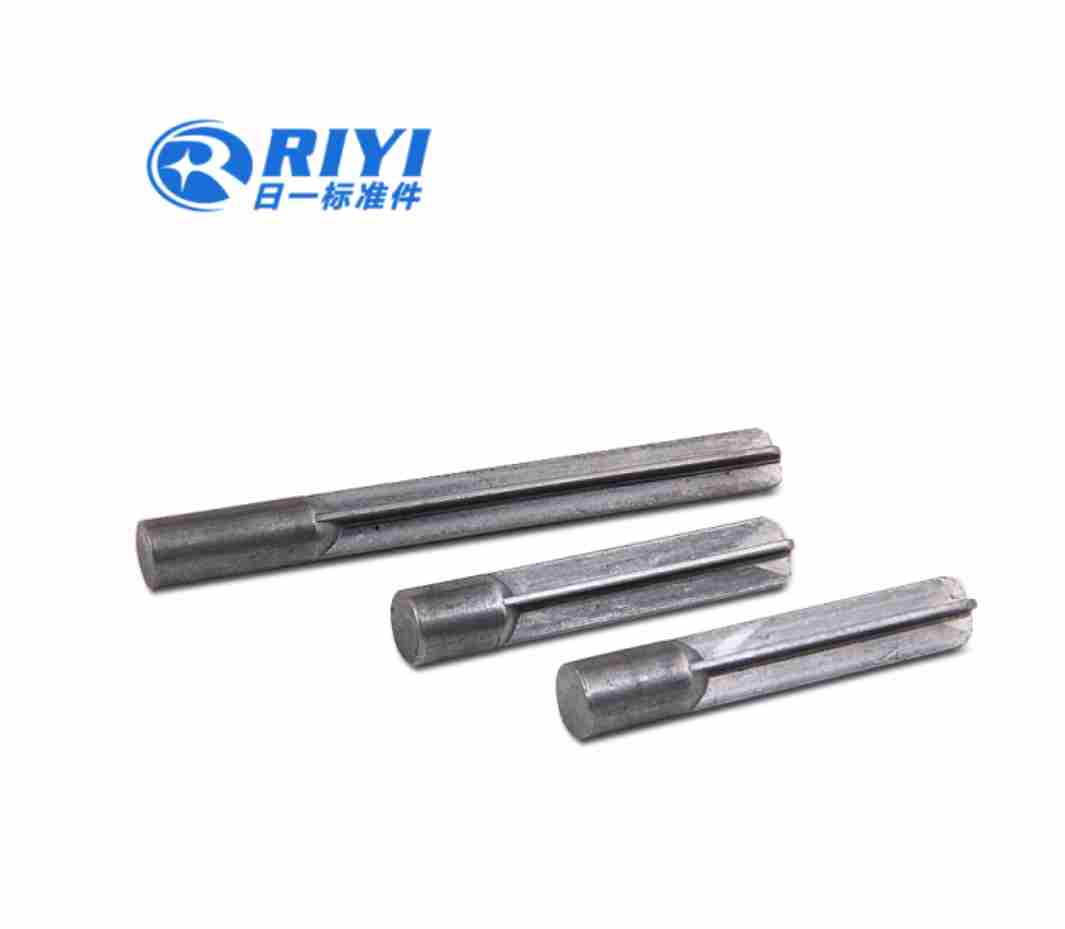
Cold Heading Components: High-performance Fastener Solutions from Wenzhou Riyi Standard Parts Co., Ltd
2026-09-29Cold heading processing shapes metal wire under strong pressure at room temperature without cutting raw materials. Unlike traditional CNC machining, this technology preserves the continuous metal grain flow inside cold heading parts.
-
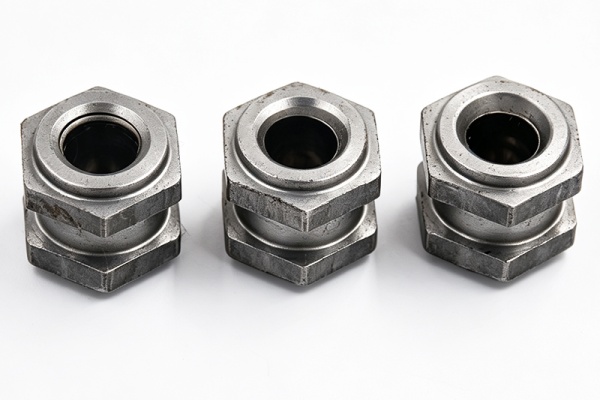
Special-shaped Bolts and Stainless Steel Double-ended Bolts from Wenzhou Riyi Standard Parts Co., Ltd
2026-09-23In modern mechanical manufacturing, construction engineering and equipment assembly, high-quality fasteners are the invisible foundation that guarantees structural safety and product stability.
-
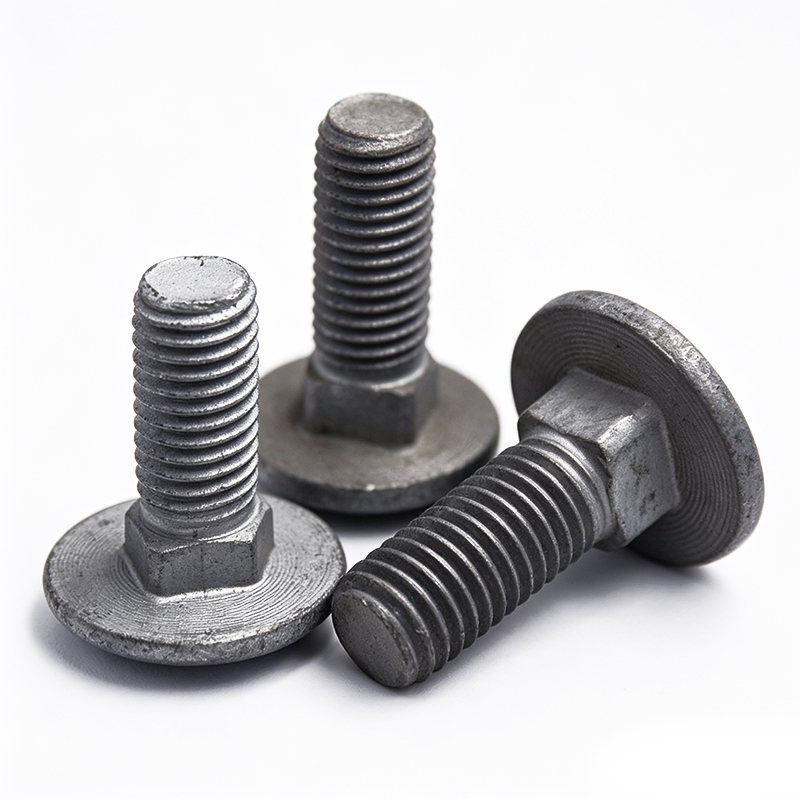
Precision Custom Fasteners from Wenzhou Riyi Standard Parts
2026-09-15Wenzhou Riyi Standard Parts is a reliable Chinese manufacturer focusing on custom non-standard fasteners, located in Wenzhou’s Binhai Economic Zone.
-
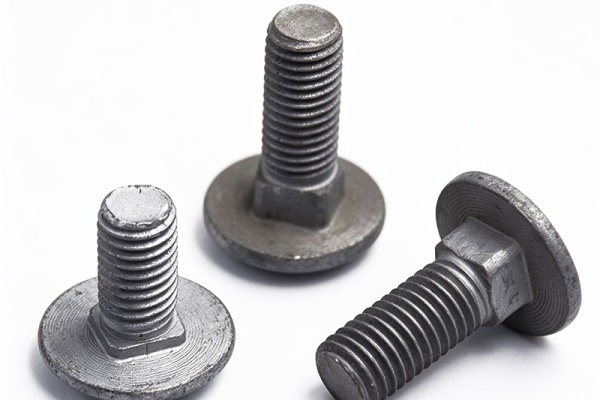
Aluminum Alloy Flange Bolts, Ball Head Studs & Dacromet Carriage Bolts – Reliable Fastener Startup Business
2026-09-08Fasteners are essential basic components widely used in machinery, automotive, engineering and equipment assembly industries.