Products


Drop-In Aluminum T-Head Nut For Metal Channel
The welded T-head nut is a fastener designed to be permanently fixed to sheet metal or structural parts. This product consists of two parts: the upper end is a standard T-shaped head, and the lower end has a welding positioning structure.
Send Inquiry
Product Description
Product introduction
The welded T-head nut is a fastener designed to be permanently fixed to sheet metal or structural parts. This product consists of two parts: the upper end is a standard T-shaped head, and the lower end has a welding positioning structure. Its core application method is to pre-make holes on the surface of the workpiece, pass the welding end of the nut through and position it, and then use resistance welding, arc welding, etc. to firmly weld it to the base material. After welding is completed, the nut becomes an embedded part of the workpiece. At this time, the T-shaped head structure is hidden inside or on the back of the workpiece, providing a strong and precise internal thread channel for bolt connection. This product enables blind installation from one side of the workpiece, solving assembly problems in closed or hard-to-reach structures. It is commonly used in the manufacturing of automobile bodies, chassis sheet metal, heavy equipment skeletons and various metal cabinets. It is a key industrial component for building stable and long-lasting threaded connection points.
Product features
1. Any positioning along the slot provides modular flexibility
The most notable feature of the T-shaped head nut is that it can move and position freely in the matching T-shaped slot. Users do not need to drill holes in advance, and can quickly slide the nut to any position for locking according to actual installation needs. This provides a high degree of flexibility in the modular design and adjustment of fixtures, machinery and workbenches.
2. Achieve blind assembly operations from one side
The design allows the entire installation to be done from the front side of the platform or profile only. Simply place the nut through the slot, slide it into place, and tighten the bolt. This feature makes it an irreplaceable connection solution in closed structures or when the internal space of the equipment is limited and cannot be operated from the back.
3. The combination of high load-bearing capacity of T-shaped head and groove surface
The combination of its T-shaped head and T-shaped groove provides a huge pressure-bearing area. When the bolts are tightened, the load is widely distributed to the groove wall and platform base, forming extremely strong resistance to pullout and shearing, and can withstand high-intensity loads and vibrations.
4. Extremely convenient to install and adjust
Compared with traditional methods of welding or drilling and tapping, the installation of T-head nuts does not require any thermal processing or special threading equipment. When adjusting the position, you only need to loosen the bolt and tighten the moving nut again, which greatly simplifies the assembly, debugging and maintenance processes.
5. Compact structure, keeping the platform surface flat
The head of the nut is embedded in the groove, and after installation it is flush with the surface of the platform or only the bolt protrudes. This compact design avoids interference with the movement of other components, ensuring a clean and safe work area while maximizing space savings.
Product application
1.Heavy machinery and engineering equipment
Welded T-nuts are widely used on the structural frames and skins of heavy equipment such as excavators, cranes, and agricultural machinery. They provide strong and durable mounting points for accessories such as hydraulic pipe supports, protective plates, and access covers, and can effectively resist severe vibration and impact loads generated during equipment operation.
2. Automobile manufacturing and rail transportation
In automotive body-in-white, chassis and interior parts, welded T-nuts are key connecting elements for efficient assembly. They are used to secure wiring harnesses, heat shields, seats, interior panels and various functional modules. In the aluminum profiles or steel structures of high-speed trains and subways, they are also often used to install interior decoration, equipment and ventilation ducts.
3. Chassis cabinet and electrical control
In sheet metal structural parts of power control cabinets, server cabinets, and industrial consoles, welded T-nuts facilitate standardized installation. Through them, rails, partitions, panels and various electronic components can be easily installed inside or on the side of the cabinet to achieve neat and orderly wiring and organization.
4.Aerospace and military equipment
In such areas where weight, reliability and safety are extremely important, welded T-nuts (usually made of high-strength, lightweight materials) are used in aircraft skins, internal frames, equipment bays and missile casings. They ensure connection integrity and airtightness of critical components in extreme environments.
5.Industrial automation and robots
On automated production lines, large welding fixtures, robot arms and bases, welded T-nuts provide a modular interface for the positioning and fixation of sensors, guide rails, pneumatic components and protective devices. Its single-sided installation feature facilitates maintenance and component replacement within complex frame structures.
FAQ
Q: What is the fundamental difference between welded T-head nuts and ordinary T-head nuts?
A: The fundamental difference lies in the fixation method. Ordinary T-shaped nuts are fixed by sliding and locking in the T-shaped groove and are detachable; while welded T-shaped head nuts are permanently fixed on the surface of the plate or structural part through welding processes (such as projection welding and arc welding) and become an embedded threaded connection point.
Q: How much force can the T-head nut withstand?
A: The load-bearing capacity depends on many factors: the material of the nut, heat treatment status, thread specifications and the strength of the T-slot itself. Specific static load and dynamic load data should be obtained from the supplier for a detailed technical parameter table, and do not estimate by yourself to avoid danger.
Q: Will the T-head nut loosen in an environment with strong vibration?
A: There is a risk of loosening. Although the T-shaped head design itself has certain anti-rotation and pressure-bearing capabilities, the threaded connection between the bolt and the nut may still loosen under long-term severe vibration. It is recommended to take additional anti-loosening measures, such as using lock washers, double nuts or using threadlockers after tightening.
Send Inquiry
Related Products
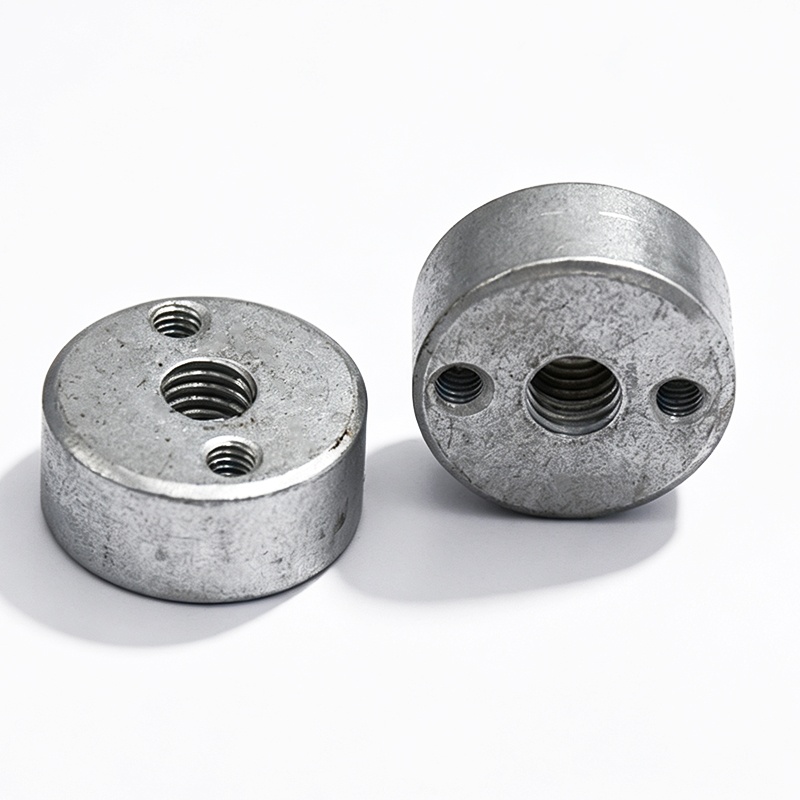 Three Hole Round Plate Nuts with Threaded Plate Fasteners for Metal and Machinery
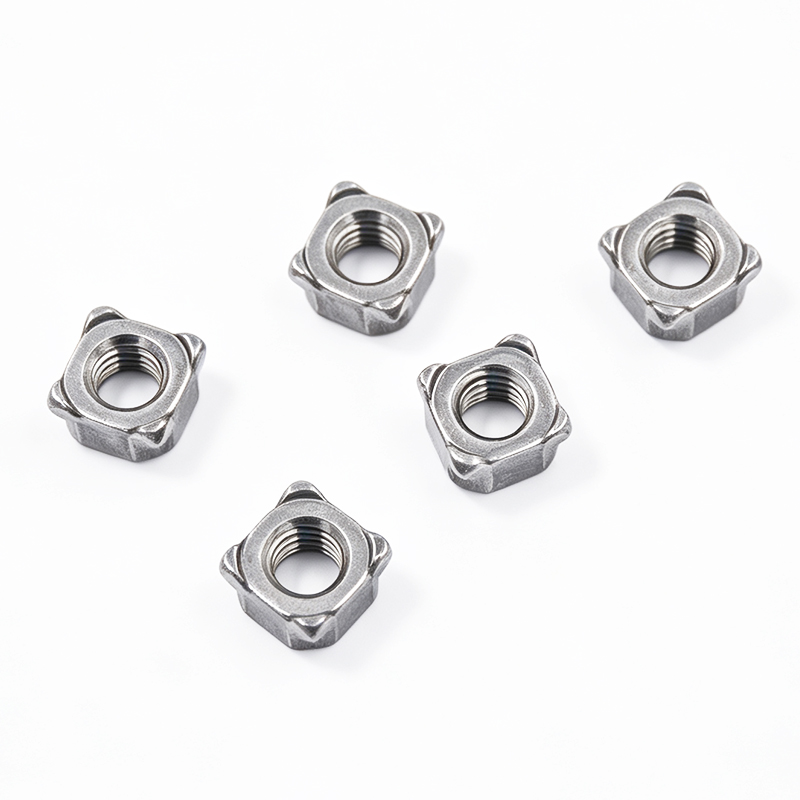 Carbon Steel Square Weld Nuts with Heavy Duty Threaded Nuts for Welding Applications
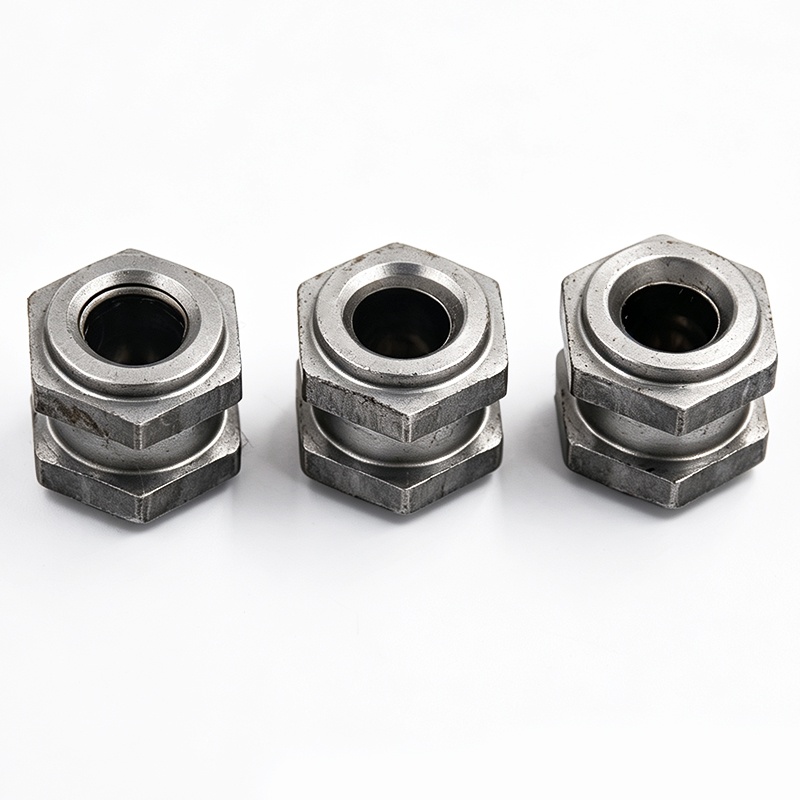 Non Standard Stainless Steel CNC Machined Special Shaped Nuts
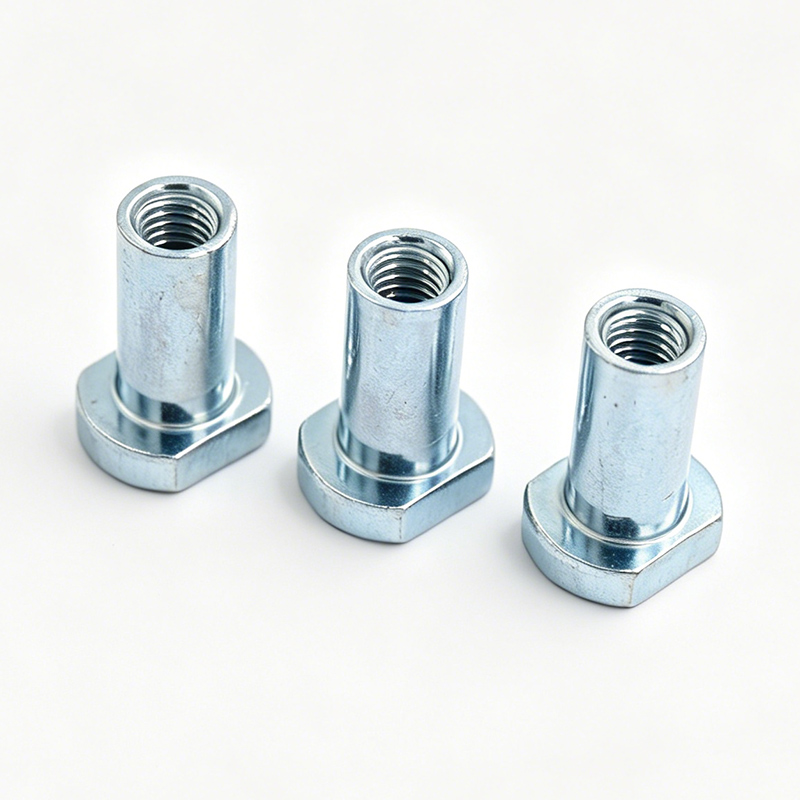 Non-Standard Special-Shaped Nuts
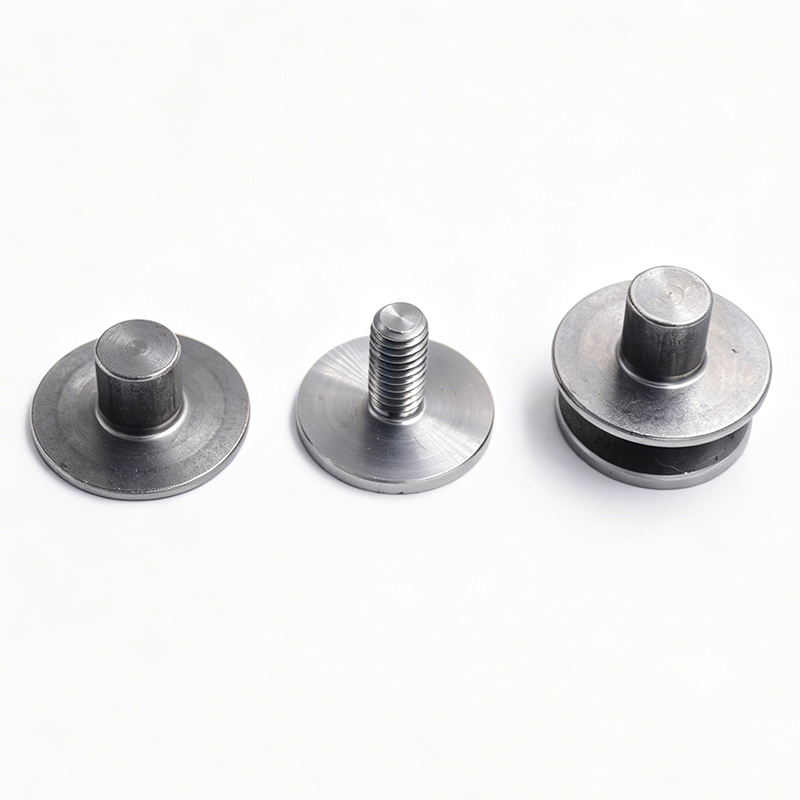 Knurled Cylindrical Or External Hexagonal Locking Screws And Nuts
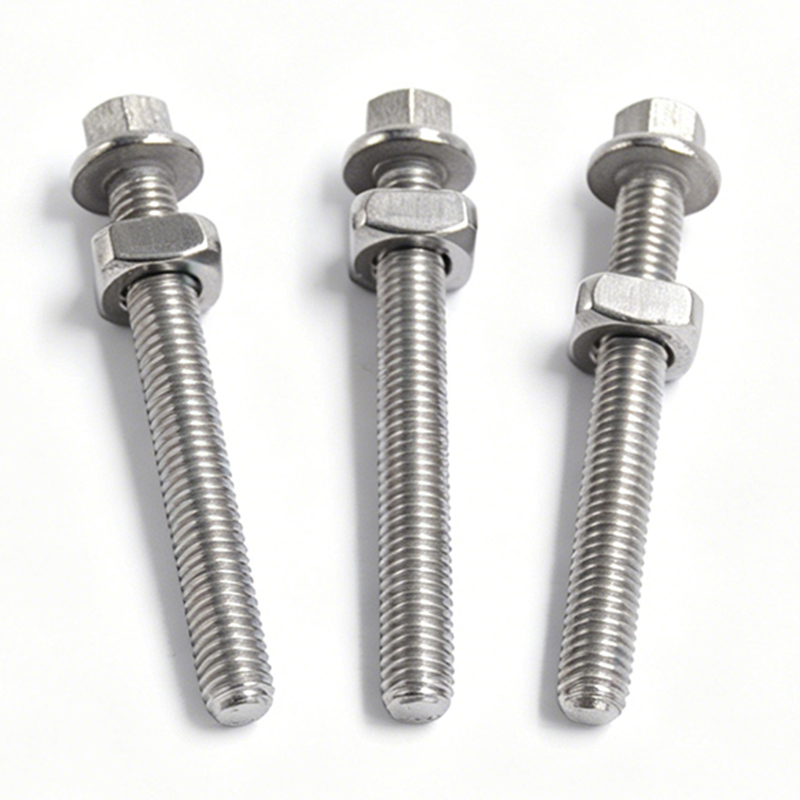 Flange Bolts With Square Nuts
Latest News
-
Cold Heading Components: High-performance Fastener Solutions from Wenzhou Riyi Standard Parts Co., Ltd
2026-09-29Cold heading processing shapes metal wire under strong pressure at room temperature without cutting raw materials. Unlike traditional CNC machining, this technology preserves the continuous metal grain flow inside cold heading parts.
-
Special-shaped Bolts and Stainless Steel Double-ended Bolts from Wenzhou Riyi Standard Parts Co., Ltd
2026-09-23In modern mechanical manufacturing, construction engineering and equipment assembly, high-quality fasteners are the invisible foundation that guarantees structural safety and product stability.
-
Precision Custom Fasteners from Wenzhou Riyi Standard Parts
2026-09-15Wenzhou Riyi Standard Parts is a reliable Chinese manufacturer focusing on custom non-standard fasteners, located in Wenzhou’s Binhai Economic Zone.
-
Aluminum Alloy Flange Bolts, Ball Head Studs & Dacromet Carriage Bolts – Reliable Fastener Startup Business
2026-09-08Fasteners are essential basic components widely used in machinery, automotive, engineering and equipment assembly industries.