Products


Titanium Alloy Hexagon Socket Bolts
This product is made of TC4 titanium alloy, which is a typical special material part. Its density is only 57% of steel, its tensile strength can reach more than 1100MPa, it is resistant to seawater corrosion and completely non-magnetic.
Send Inquiry
Product Description
Product introduction
This product is made of TC4 titanium alloy, which is a typical special material part. Its density is only 57% of steel, its tensile strength can reach more than 1100MPa, it is resistant to seawater corrosion and completely non-magnetic. In addition to standard specifications, non-standard screws of any non-standard length, fine thread and left-hand thread can be provided. If you need a head with a flange, anti-skid teeth or a deeper hexagon, it can be converted into a special shape screw. Based on your weight reduction, corrosion resistance or non-magnetic requirements, we provide customized non-standard screw solutions to support high-end applications such as aerospace, medical implants, and deep-sea equipment, and control quality according to AS9100 or ISO 13485 systems.
Product design and features
Product structure composition
Titanium alloy hexagon socket bolts are high-performance fasteners made of titanium alloy and have hexagon socket drive grooves in the head. Its core structure includes: Hexagonal head: It complies with ISO 4762/DIN 912 standards. The hexagonal hole is evenly stressed and can be driven with a hexagonal wrench or hexagonal screwdriver. It is suitable for installation scenarios with limited space.
Precision thread segment: can process various thread specifications such as metric coarse/fine thread, inch UNC/UNF, etc. The accuracy level is usually 6g or higher.
Shaft: Can be designed as fully threaded or partially threaded, with the partially threaded version having a plain shank section, providing more precise positioning and shear load carrying capacity
Advantages of titanium alloy material:
Ultra-high specific strength: density is about 4.5g/cm³ (only 57% of steel), tensile strength can reach 900-1200MPa, and the specific strength is significantly better than steel
Excellent corrosion resistance: It has strong resistance to seawater, chloride ions, acid, alkali and salt environments, and can be used for a long time without surface treatment.
Biocompatibility: non-toxic, does not cause allergic reactions, can be implanted into the human body, and is suitable for medical devices
High and low temperature resistance: working temperature range -250℃~600℃, good mechanical properties can still be maintained under high temperatures
Non-magnetic: completely non-magnetic, suitable for magnetic sensitive occasions such as MRI and electronic equipment.
Product features
Standard hexagon socket head bolts (such as GB/T 70.1, ISO 4762) are available in fixed series in terms of size, thread, and head height. Our titanium alloy products can be adjusted according to customer needs:
Non-standard length: The standard length series is 5mm, 6mm, 8mm, 10mm... If you need any non-standard size such as 7.5mm, 12.3mm, etc.
Non-standard threads: fine threads (such as M6×0.75), left-hand threads, tapered pipe threads, etc.
Special head type: the inner hexagon can be changed to an inner torx (TX slot) or an inner twelve corners; the head can be equipped with a flange, anti-skid teeth, and centering cone
Special-shaped rod: stepped rod, with positioning step, with annular groove (for circlip)
Materials and application areas
TC4 (Grade 5): Ti-6Al-4V, the highest strength (≥1100MPa), most commonly used in aerospace, racing, and medical implants
TA2 (Grade 2): Industrial pure titanium, low strength (≥400MPa), excellent corrosion resistance, chemical equipment, marine engineering, medical equipment
TC11: High-temperature titanium alloy, excellent heat resistance, aerospace engines, high-temperature environments
TB6 (Grade 19): β-type titanium alloy, low elastic modulus, can be cold processed springs, fasteners, medical
Application areas:
Aerospace: Aircraft fuselage structure, engine accessories, satellite brackets - weight reduction is the core requirement, and every gram reduced by titanium alloy bolts is extremely valuable
Racing and high-performance cars: F1 racing cars, supercars, motorcycles - reducing unsprung mass can significantly improve handling
Medical devices: orthopedic implants (bone nails, bone plates), surgical instruments, dental implants - biocompatible and non-magnetic required
Marine engineering: deep-sea detectors, submarine equipment, offshore drilling platforms - titanium alloys are far more resistant to seawater corrosion than 316 stainless steel
Chemical industry: reactors, heat exchangers, valves - resistant to strong acid, strong alkali, and chloride ion corrosion
High-end consumer electronics: ultra-thin notebooks, drones, and diving watch casings—paying equal attention to weight reduction and corrosion prevention
Quality control and certification system
Test items and methods:
Dimensional accuracy: hexagonal dimensions across flats, thread pitch diameter, head height, total length, three-dimensional coordinate measuring instrument, thread projector (tolerance ±0.05mm)
Material composition: Ti, Al, V, Fe and other element contents Spectral analyzer (in compliance with GB/T 3620 or AMS standards)
Mechanical properties: tensile strength, yield strength, elongation after break Universal testing machine (according to ISO 898 or ASTM F468)
Hardness testing: Rockwell/Vickers hardness hardness tester (TC4 typical value HRC33-39)
Non-destructive testing: surface cracks, internal defects, fluorescent penetrant testing (PT), ultrasonic testing (UT)
Metallographic analysis: grain size, α/β phase distribution, metallographic microscope
Certification qualification:
ISO 9001:2015 (whole-process quality management system)
AS9100D (Aerospace Quality Management System)
ISO 13485 (Medical Device Quality Management System)
IATF 16949 (Special Requirements for the Automotive Industry)
RoHS/REACH (environmental compliance)
Can issue third-party testing reports (SGS, TÜV, etc.)
Customized services
We specialize in transforming a customer's sketch or a usage problem into mass-produced customized non-standard screws. Here are our customizable dimensions:
Size: any specification (M1.6~M30), any length (3mm~300mm), non-standard head height/diameter
Thread specifications: metric coarse/fine thread, inch UNC/UNF, UNJ aviation thread, MJ thread, left-hand thread, trapezoidal thread
Head type: Internal hexagonal (standard/deepened), internal torx (TX), internal twelve corners, cross recess, slotted head, T-shaped head, head with flange
Rod design: fully threaded, partially threaded, stepped rod, with positioning step, with annular groove, with drilled holes (for fuses)
Material selection: Special material parts: TC4/TA2/TC11/TB6/Zirconium alloy/Niobium alloy/Inconel718
Surface treatment: polished color, anodized (multiple colors), passivation, silver plating (anti-seizing), DLC coating (wear-resistant)
Additional functions: head engraving/engraving LOGO, thread pre-coated with aviation-grade anti-loosening glue (such as Loctite), tail with guide cone, overhead hole
Special shape design capabilities:
Anti-loosening structure: head with radial serrations, threaded sections with micro-bead coating, countersunk head with anti-rotation ribs
Lightweight design: weight-reducing holes inside the head and hollow rod (30% weight reduction)
Special-shaped head types: oval head, tapered head, spherical head, ultra-thin head (height is only 1/2 of the standard)
Integrated functions: head with spring (floating bolt), rod with sealing ring groove, tail with internal thread hole
Customization process
Requirement input: Provide drawings, samples or detailed description of working conditions (force requirements, environmental conditions, installation space, weight target)
DFM manufacturability analysis: evaluate the process route (cold heading/hot heading/CNC turning/thread rolling) and give optimal suggestions
Sample manufacturing:
CNC sample: 5-20 pieces delivered in 5-10 days
Mold samples (cold heading/hot heading): 20-50 pieces delivered in 15-25 days
Installation verification: Customer tests mechanical properties and installation process matching
Mass production: mass production based on confirmed samples
FAQ
Q: What are the main advantages of titanium alloy hexagon socket bolts compared with ordinary stainless steel bolts?
A: Three core advantages: ① Lightweight - the weight of the same specification is only 57% of stainless steel, which is of great significance to aerospace, racing, drones and other fields; ② Corrosion resistance - it can resist seawater, acid, alkali and salt corrosion without surface treatment, while 304/316 stainless steel may still be pitted in a chloride ion environment; ③ Non-magnetic - completely non-magnetic, suitable for magnetic field sensitive occasions such as medical MRI and electronic equipment. In addition, as a special material part, titanium alloy is also biocompatible and can be implanted in the human body.
Q: Will titanium alloy bolts cause electrochemical corrosion with aluminum alloy or carbon fiber?
A: The potential of titanium alloy is quite different from that of aluminum alloy, and galvanic corrosion may occur in a humid environment. Solution: ① Anodize the surface of the bolt (to form an insulating layer); ② Use isolation washers or apply anti-corrosion sealant during assembly; ③ Choose TA2 pure titanium (lower potential, more compatible). If you need to use aluminum alloy/carbon fiber connection, please specify the working conditions when customizing, and we will recommend the best protection solution.
Q: Are titanium alloy hexagon socket bolts easy to "seize"? How to solve it?
A: Titanium alloy materials are prone to cold welding when tightened (when matched with stainless steel and titanium alloy nuts). Solution: ① Use anti-seize lubricant (such as molybdenum disulfide, silver-based anti-seize agent); ② Use different materials for nuts (such as copper alloy, silver-plated nuts); ③ Coating the bolt threads (such as MoS2, DLC coating). For demanding applications, custom non-standard screws are available - with an aerospace-grade anti-seize coating pre-applied to the thread surface.
Q: How to verify the authenticity of titanium alloy bolts?
A: We provide the following verification methods: ① Spectral analysis report (showing the content of Ti, Al, V and other elements); ② Hardness test report (TC4 typical value HRC33-39); ③ Density measurement (about 4.5g/cm³); ④ Third-party testing agencies (such as SGS) can issue material identification reports. Each batch of products comes with a material certificate.
Q: Can you provide non-standard customization of the inner hexagonal size? For example darker or lighter than standard?
A: Yes. The standard hexagon socket depth has a fixed value, but some installation tools are longer or shorter and the depth needs to be adjusted. This falls under the category of specially shaped screws and we can customize the hexagonal depth to suit your tool size. Note: Too shallow may lead to unstable driving, and too deep may weaken the head strength. Our engineers will give optimal design suggestions.
Q: What is the torque standard for titanium alloy bolts? How is it different from stainless steel?
A: The tightening torque of titanium alloy bolts is about 70-80% of that of steel bolts of the same strength (due to the higher friction coefficient). The specific value depends on the material and lubrication conditions. Recommended installation torque ranges are available. For reference: TC4 titanium alloy M6×1.0 (oiled) recommended torque is about 8-10 N·m, and 10.9 grade steel bolts of the same specification are about 12-15 N·m. Torque testing services are available for bulk orders.
Send Inquiry
Related Products
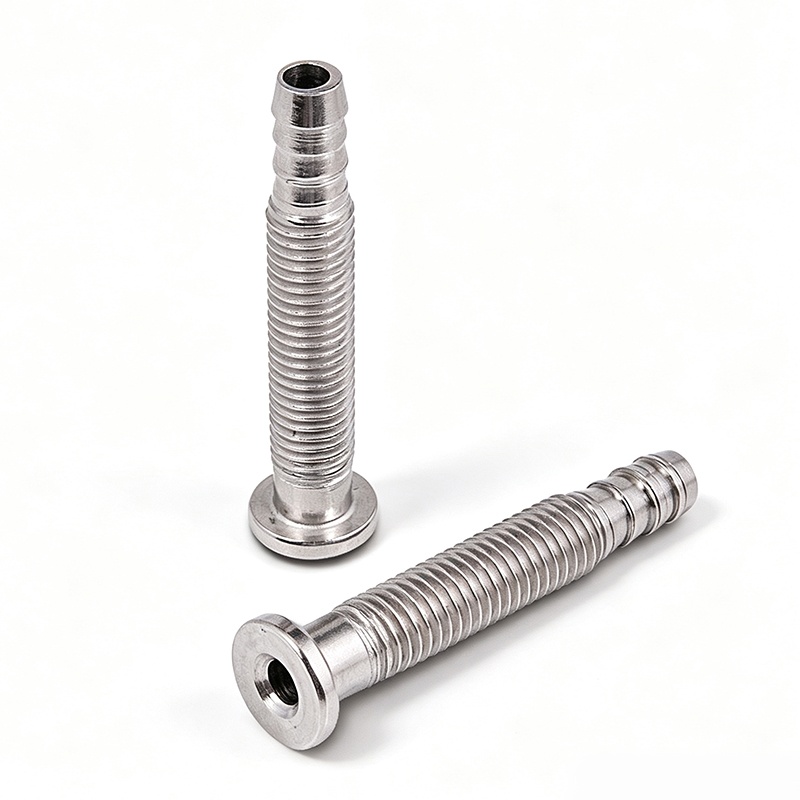 Stainless Steel External Threaded Hollow Multi-Step Connector
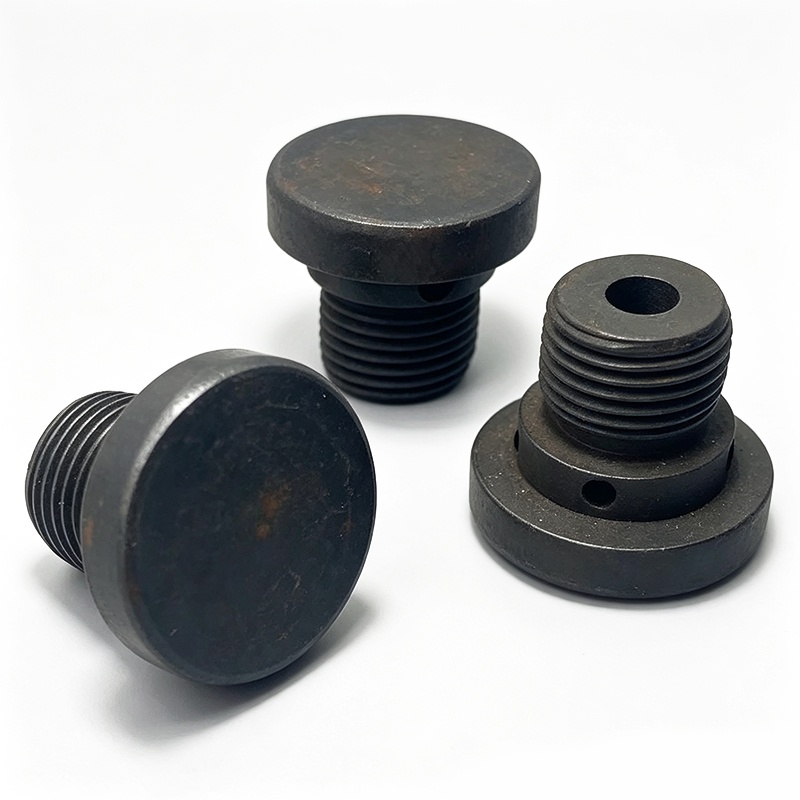 Round Head Hollow Threaded Plugs with Threaded Fasteners for Metal and Machinery
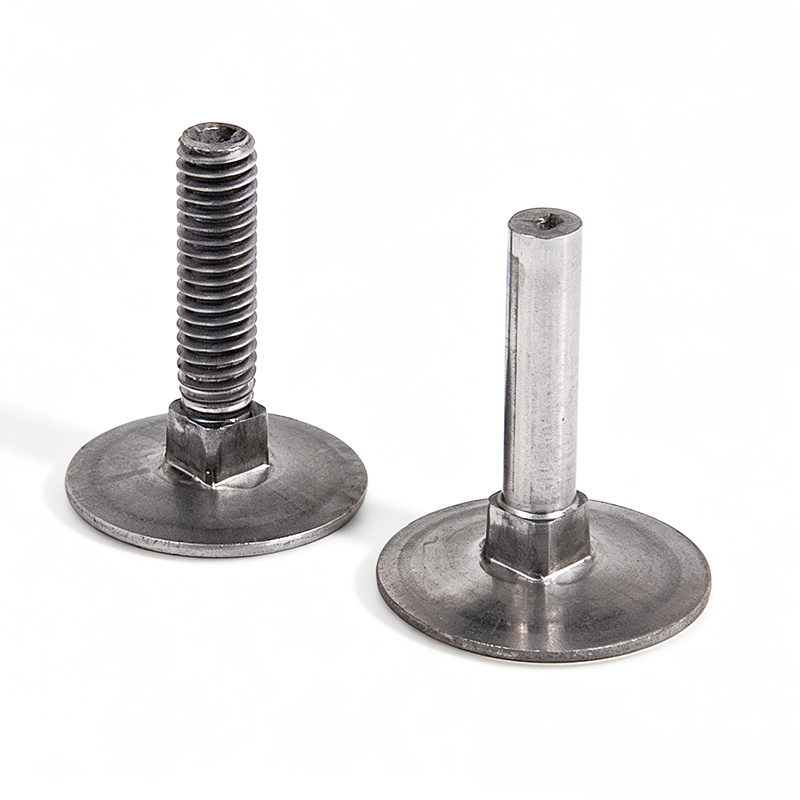 Flat Head Square Neck Adjusting Bolts with Flat Head Fasteners for Furniture and Machinery
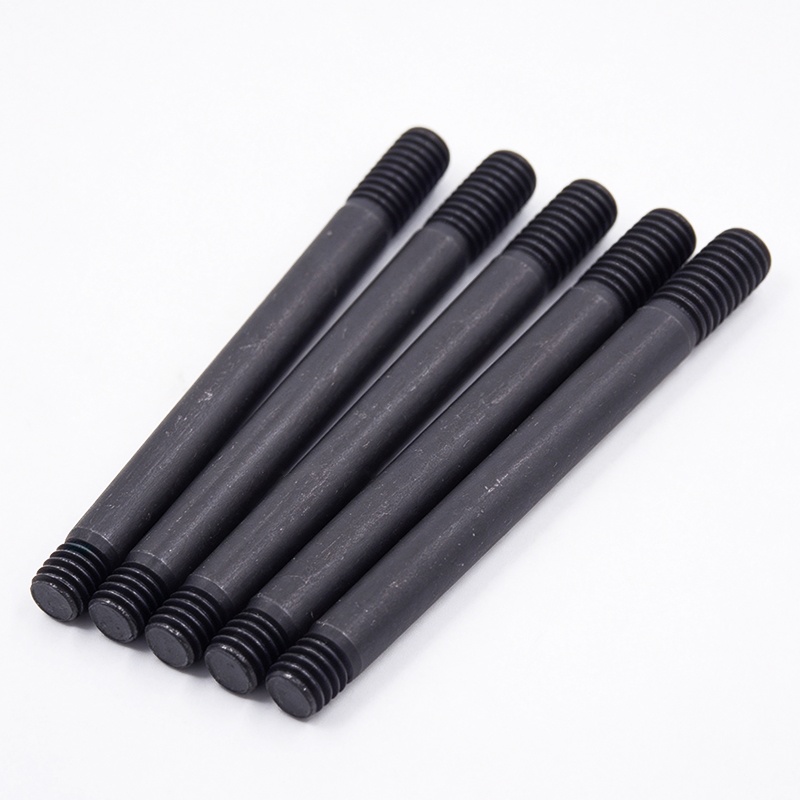 Double Ended Bolts with Threads with Heavy Duty Fasteners for Mechanical Assembly
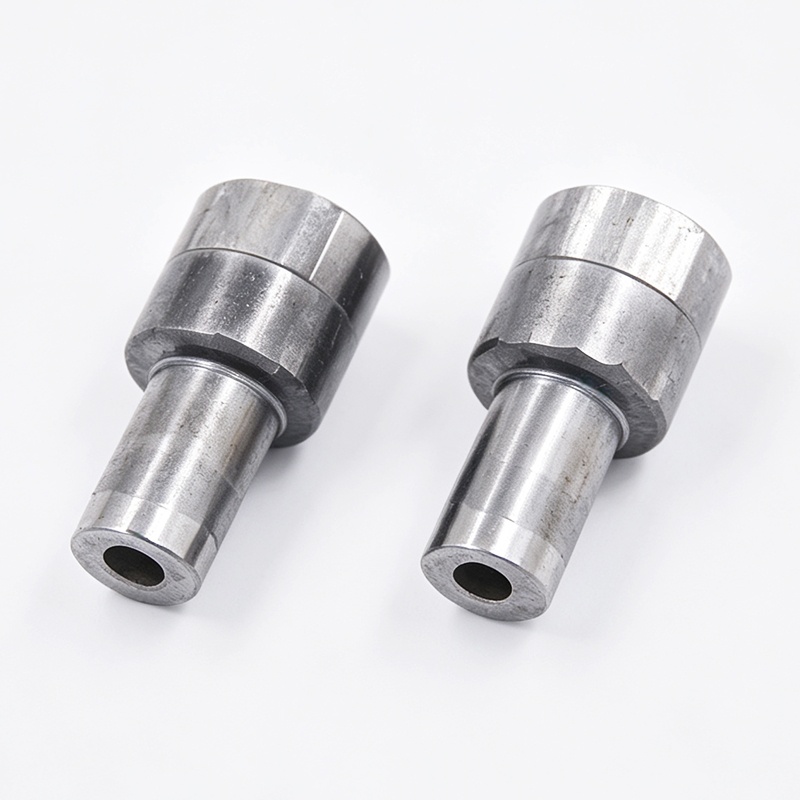 Cold-Bent Stepped Hollow Shaft Sleeve
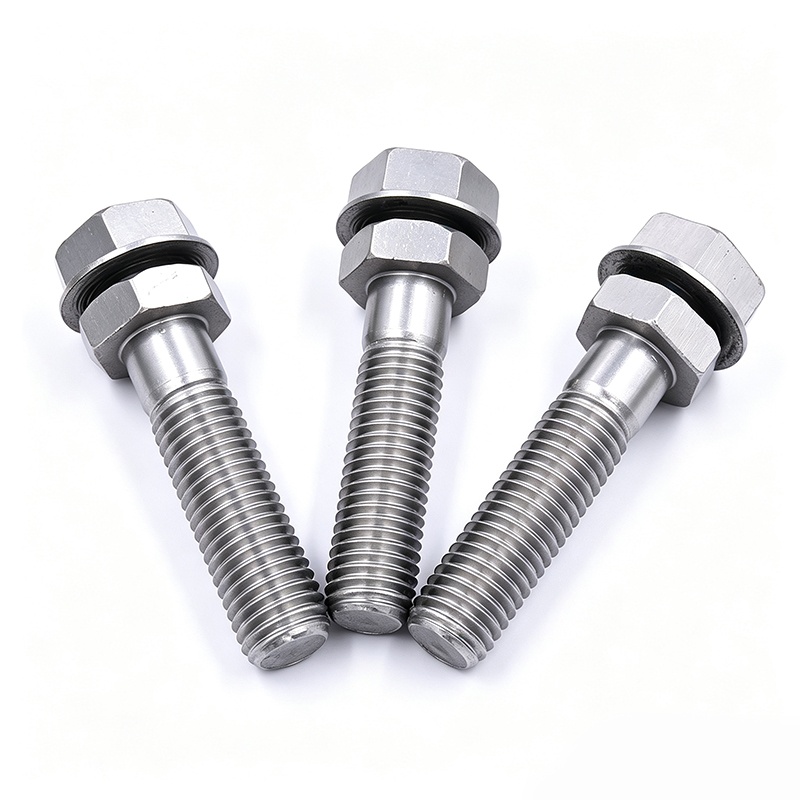 Aluminum Alloy Flange Bolt
Latest News
-
Cold Heading Components: High-performance Fastener Solutions from Wenzhou Riyi Standard Parts Co., Ltd
2026-09-29Cold heading processing shapes metal wire under strong pressure at room temperature without cutting raw materials. Unlike traditional CNC machining, this technology preserves the continuous metal grain flow inside cold heading parts.
-
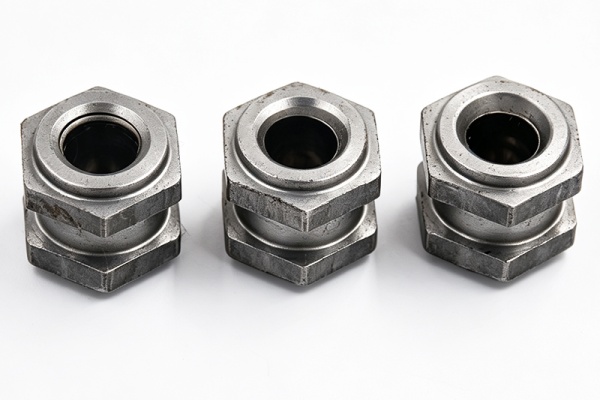
Special-shaped Bolts and Stainless Steel Double-ended Bolts from Wenzhou Riyi Standard Parts Co., Ltd
2026-09-23In modern mechanical manufacturing, construction engineering and equipment assembly, high-quality fasteners are the invisible foundation that guarantees structural safety and product stability.
-
Precision Custom Fasteners from Wenzhou Riyi Standard Parts
2026-09-15Wenzhou Riyi Standard Parts is a reliable Chinese manufacturer focusing on custom non-standard fasteners, located in Wenzhou’s Binhai Economic Zone.
-
Aluminum Alloy Flange Bolts, Ball Head Studs & Dacromet Carriage Bolts – Reliable Fastener Startup Business
2026-09-08Fasteners are essential basic components widely used in machinery, automotive, engineering and equipment assembly industries.