Products


Non-Standard Titanium Alloy Wheel Hub Bolts With Flange Or Tapered Design
This product is a typical custom-made non-standard screw. The head adopts a flange surface or tapered surface design to ensure a tight fit with the wheel hub. As special-shaped screws, they are made of TC4/GR5 titanium alloy.
Send Inquiry
Product Description
Product introduction
This product is a typical custom-made non-standard screw. The head adopts a flange surface or tapered surface design to ensure a tight fit with the wheel hub. As special-shaped screws, they are made of TC4/GR5 titanium alloy. The density is only 60% of steel, and the strength is comparable to grade 10.9 bolts. It has the advantages of being lightweight, never rusting, non-magnetic, and colorfully anodized.
The products are widely used in fields such as high-performance modified vehicles, civilian vehicle upgrades and new energy vehicles, which can effectively reduce unsprung mass and improve control performance. We focus on the R&D and production of customized special-shaped screws and titanium alloy non-standard screws. We can provide customized services for titanium alloy cold heading non-standard parts and titanium alloy special-shaped bolts. Thread specifications, lengths, and colors can be processed according to drawings. We support small batch samples and large-volume supply. Welcome to inquire about drawings.
Product design and features
The advantages of lightweight are significant: the density of titanium alloy is about 4.5g/cm³, which is only about 60% of steel (7.8g/cm³). The weight reduction of wheel hub bolts can reduce the unsprung mass and improve the suspension response speed and control sensitivity;
High strength performance: Made of TC4/GR5 (Ti-6Al-4V) titanium alloy, the tensile strength can reach 900-1100MPa, which is equivalent to the strength of steel grade 10.9 bolts and meets the high load-bearing requirements of wheel hub connections;
Excellent corrosion resistance: Titanium alloy is naturally resistant to salt spray, acid and alkali corrosion, and will never rust when used in humid environments, salt-spread roads in winter, or coastal areas, and maintains its appearance as new for a long time;
Non-magnetic characteristics: extremely low magnetic permeability, suitable for high-end precision wheels and electrified chassis systems;
Beautiful and diverse: It can be anodized into blue, gold, burnt blue, black and other colors to meet personalized modification needs;
Optional anti-theft design: R-Drive and other special anti-theft head types can be customized, which cannot be disassembled using ordinary tools, improving the safety of the wheel hub.
Materials and application fields
TC4/GR5 titanium alloy (Ti-6Al-4V): The most widely used α+β titanium alloy, with tensile strength ≥895MPa and excellent overall performance, it is the mainstream material for manufacturing titanium alloy non-standard screws. TC4 production accounts for more than half of the world's total titanium alloy semi-finished products production, accounting for more than 80% of the aerospace industry;
GR2/TA2 industrial pure titanium: good plasticity and excellent corrosion resistance, suitable for scenes with high formability requirements;
GR23 titanium alloy (Ti-6Al-4V ELI): ultra-low gap element version, suitable for scenes with extremely high fatigue performance requirements;
TC16 titanium alloy: has good cold heading performance and is suitable for mass production of titanium alloy cold heading non-standard parts.
As customized non-standard screws, its application areas cover the automobile manufacturing and modification markets:
Performance modified cars: track day cars and high-performance sports cars, which improve acceleration, braking and cornering performance by reducing unsprung mass;
Civilian car upgrade: equipped with lightweight forged wheels to improve the overall visual effect and vehicle texture;
Off-road/outdoor vehicles: Corrosion resistance is suitable for wading, mud and other complex environments to avoid rust and locking problems;
New energy vehicles: There is an urgent need for lightweighting, and titanium alloy wheel hub bolts can help reduce vehicle energy consumption;
Commercial vehicles/engineering machinery: wheel hub fastening for some high-end models and special vehicles.
Quality control and certification system
Raw material control: All titanium alloy materials come with material certificates, and the chemical composition is verified by a spectrum analyzer to ensure compliance with TC4 (Ti-6Al-4V) and other brand standards. Main component requirements: Al 5.5%-6.8%, V 3.5%-4.5%, Fe≤0.30%, balance Ti;
Heat treatment process control: Heat treatment of titanium alloys has a significant impact on performance, and temperature and aging parameters need to be strictly controlled. TC4 is used in the annealed state and can also be strengthened by solid solution aging, but the hardenable cross-section is limited;
Dimensional accuracy control: Key dimensions (flange surface diameter, cone surface angle, thread specifications (such as M12×1.25, M12×1.5, M14×1.5, etc.), total length) are fully inspected or AQL randomly inspected using professional measuring tools such as image measuring machines, three-dimensional coordinate measuring machines, and thread gauges;
Mechanical property testing: covering tensile strength (≥895MPa), yield strength (0.2%≥825MPa), hardness (Vickers hardness 320-380), guaranteed load, etc.;
Metallographic inspection: Check the α+β phase ratio of the microstructure to ensure that there are no defects such as overheating and overburning;
Torque coefficient verification: K value range is 0.10-0.16, ensuring the corresponding relationship between installation torque and clamping force;
Salt spray test evaluation: Neutral salt spray for 1000 hours, red rust area ≤5%, verifying corrosion resistance;
Dynamic fatigue test: simulate actual driving conditions and verify anti-fatigue performance (following SAE J78 standard);
System certification: The company has passed ISO 9001 quality management system certification to ensure that each batch of titanium alloy cold heading non-standard parts has complete traceability.
Customized services
Size customization: Thread specifications (metric specifications such as M12×1.25, M12×1.5, M14×1.5, as well as British and American specifications), thread length, total bolt length, flange surface diameter, and cone surface angle can all be customized according to customer drawings or samples;
Head type customization: As special shape screws, special head types such as flange head, cone head, spherical head, pan head with anti-decompression, R-Drive anti-theft head, etc. can be customized;
Material customization: Choose TC4/GR5, GR2/TA2, GR23, TC16 and other titanium alloy materials according to strength, corrosion resistance and other requirements;
Customized surface treatment: titanium alloy natural color, passivation, anodizing (blue, gold, burnt blue, black, color, etc.), PVD coating;
Processing technology customization:
CNC turning + milling: suitable for customized non-standard screws with small batches, high precision and complex structures, the minimum order quantity can be as low as 50 pieces;
Cold heading forming: Suitable for mass production of titanium alloy cold heading non-standard parts. It should be noted that titanium alloy cold heading has higher equipment and process requirements;
Hot heading forming: suitable for medium and large quantities of products with relatively simple structures;
Customized anti-loosening solution: can be equipped with special titanium alloy gaskets, thread pre-coated anti-loosening glue (such as Loctite 243), etc.;
Packaging method: anti-static packaging, taping packaging, customized labels, pallet packaging, etc. can be provided to meet the assembly line needs of the OEM.
FAQ
Q: What are the advantages of titanium alloy wheel hub bolts compared with steel wheel hub bolts?
A: There are three main advantages: First, it is lightweight. The density of titanium alloy is about 4.5g/cm³, which is about 40% lighter than steel, which can significantly reduce the unsprung mass and improve suspension response speed and controllability. Second, it will never rust. Titanium alloy is naturally corrosion-resistant and remains intact after many years of use. Third, it is beautiful and customizable, and can be processed into a variety of colors through anodization to show personality. The disadvantage is that the cost is high, and a set can cost several thousand RMB.
Q: What grade is the strength of TC4 titanium alloy equivalent to that of steel bolts?
A: The tensile strength of TC4 titanium alloy is ≥895MPa, and the 0.2% yield strength is ≥825MPa, which is close to the strength of steel grade 10.9 bolts (tensile strength ≥1000MPa). Some customized products can reach over 1100MPa. At the same time, the titanium alloy electrode potential matches the carbon fiber composite material, which can effectively avoid galvanic corrosion.
Q: What is the installation torque of titanium alloy wheel hub bolts?
A: Taking the M12 specification as an example, the recommended installation torque is usually 90-110 N·m. For specific torque values, please refer to the technical parameters provided by the manufacturer. A torque wrench must be used during installation, and an air cannon must not be used to avoid over-tightening, which may lead to thread damage or bolt breakage (titanium alloys may be brittle under overload).
Q: How to ensure that the titanium alloy wheel hub bolts match my wheel hub?
A: Three key parameters need to be confirmed: first, the thread specification (metric M12/M14, pitch 1.25/1.5mm, etc.); second, the cone/spherical/flange surface type must match the hub hole position; third, the bolt length must meet the requirements. We can provide professional matching suggestions based on your car model or wheel parameters.
Q: Can the titanium alloy wheel hub screws be disassembled and assembled using a pneumatic air cannon?
A: It is not recommended to use wind cannon. Although titanium alloy has high strength, its elastic modulus is lower than steel, and the impact load of the wind cannon may cause thread damage or micro-cracks. It is recommended to use a manual torque wrench and operate according to the specified torque.
Send Inquiry
Related Products
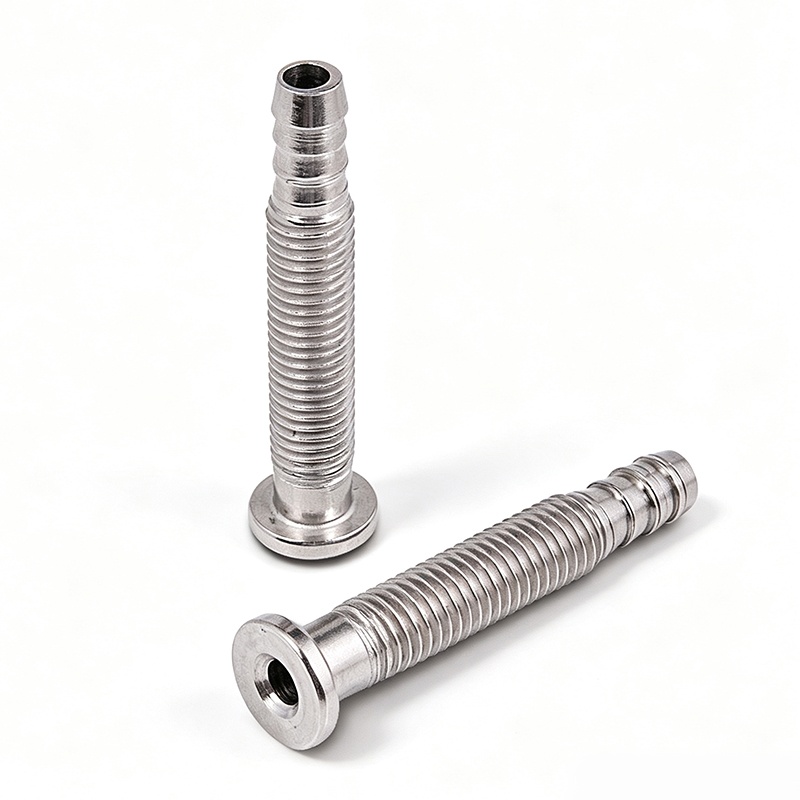 Stainless Steel External Threaded Hollow Multi-Step Connector
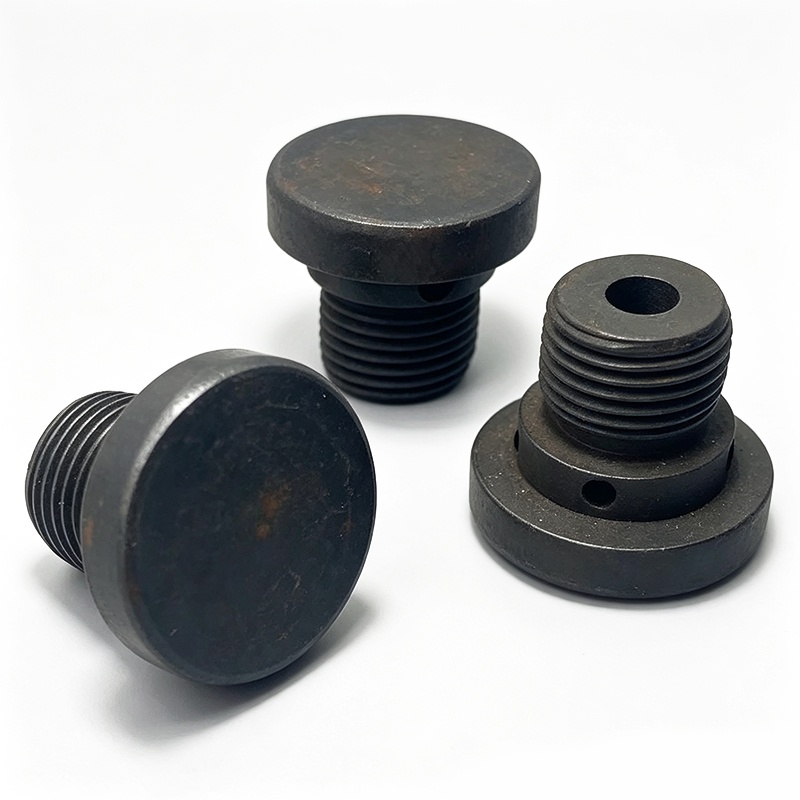 Round Head Hollow Threaded Plugs with Threaded Fasteners for Metal and Machinery
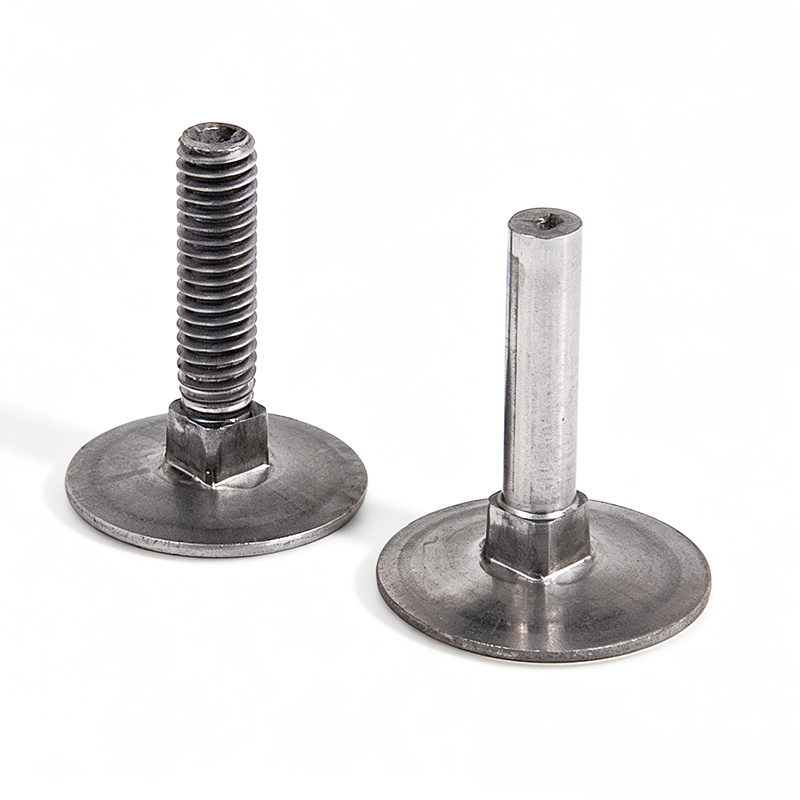 Flat Head Square Neck Adjusting Bolts with Flat Head Fasteners for Furniture and Machinery
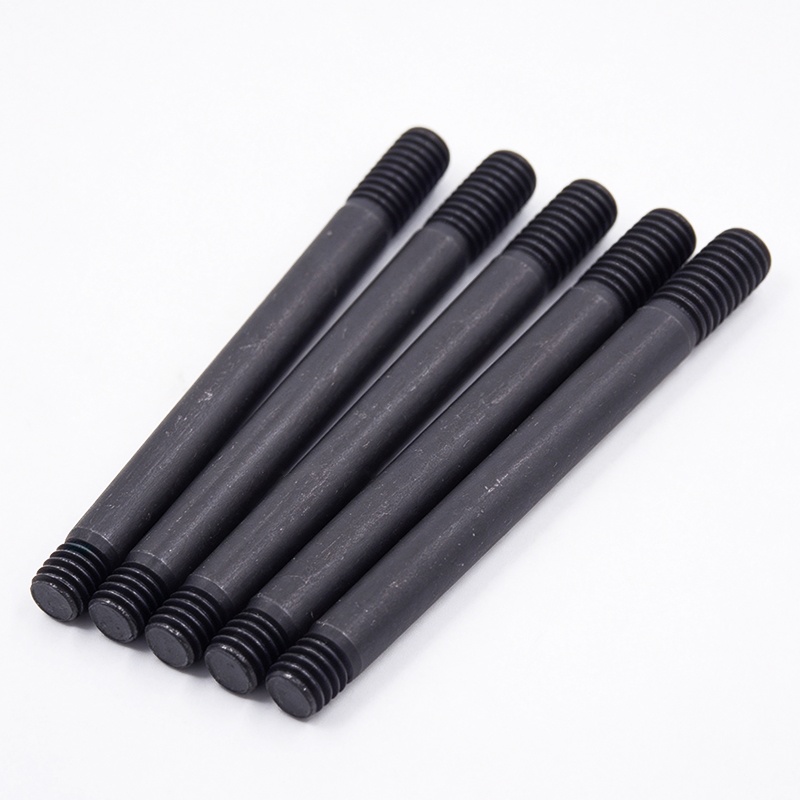 Double Ended Bolts with Threads with Heavy Duty Fasteners for Mechanical Assembly
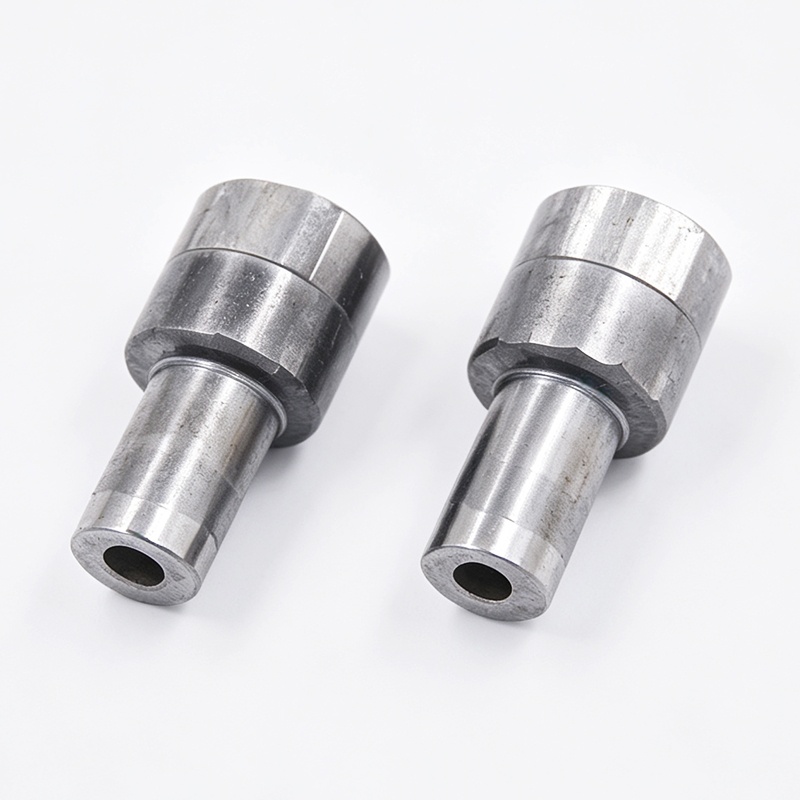 Cold-Bent Stepped Hollow Shaft Sleeve
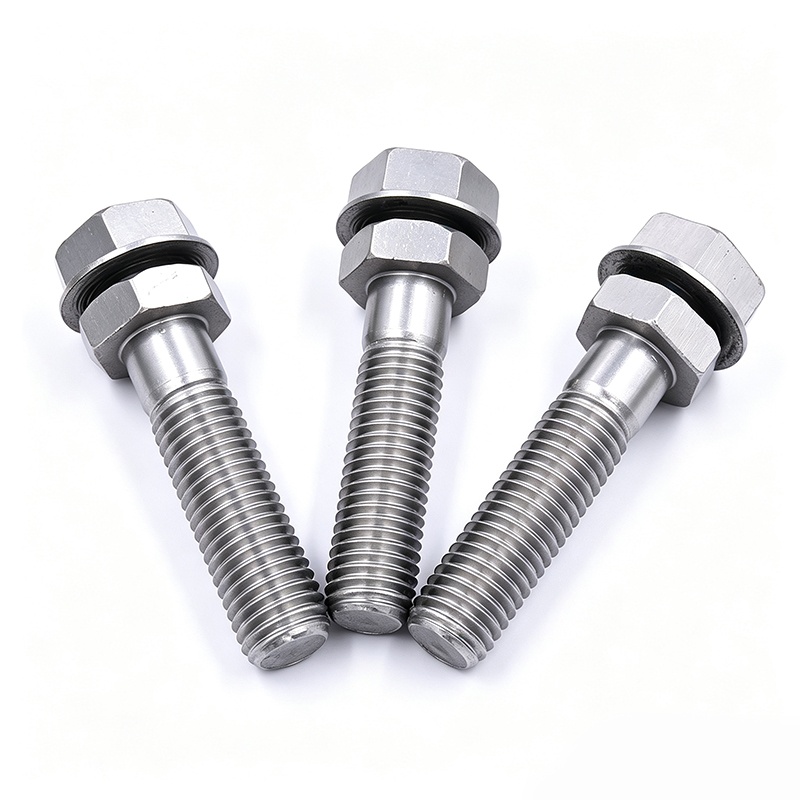 Aluminum Alloy Flange Bolt
Latest News
-
Precision Custom Fasteners from Wenzhou Riyi Standard Parts
2026-09-15Wenzhou Riyi Standard Parts is a reliable Chinese manufacturer focusing on custom non-standard fasteners, located in Wenzhou’s Binhai Economic Zone.
-
Aluminum Alloy Flange Bolts, Ball Head Studs & Dacromet Carriage Bolts – Reliable Fastener Startup Business
2026-09-08Fasteners are essential basic components widely used in machinery, automotive, engineering and equipment assembly industries.
-
The Key Role of Precision Hardware Parts in Modern Mechanical Assembly
2026-09-04In the fast-developing field of modern mechanical manufacturing and equipment assembly, tiny hardware accessories are often the core factors that determine the stability, durability and safety of the entire device.
-
Two Practical Hardware Parts in Mechanical Assembly
2026-08-25Machine manufacturing and equipment assembly all rely on standard hardware parts. They make industrial equipment more stable and better positioned.