Products


Titanium Alloy Twelve-Joint Flange Bolt
This product is a special material part, made of TC4 titanium alloy, with a density of only 57% of steel, a tensile strength of ≥1100MPa, seawater corrosion resistance and completely non-magnetic. The twelve-corner head and flange gasket are integrated into the design, and the driving torque is 30% higher than that of the internal hexagon.
Send Inquiry
Product Description
Product introduction
This product is a special material part, made of TC4 titanium alloy, with a density of only 57% of steel, a tensile strength of ≥1100MPa, seawater corrosion resistance and completely non-magnetic. The twelve-corner head and flange gasket are integrated into the design, and the driving torque is 30% higher than that of the internal hexagon. The flange has anti-skid teeth that can replace the gasket. In addition to standard specifications, non-standard screws such as non-standard lengths, fine threads, and UNJ aviation threads can be provided. If you need to customize the flange diameter, tooth shape or dodecagonal groove depth, you can convert it to a special shape screw. Based on your aviation, racing or deep-sea equipment needs, we provide customized non-standard screw solutions and control quality according to the AS9100 aerospace system.
Product design and features
Product structure composition:
Titanium alloy twelve-point flange bolt is a high-end fastener that integrates a twelve-point driving head, a flange pad and a titanium alloy material. Its core structure includes:
Twelve-point head: It adopts a twelve-point (double hexagon) drive groove design and is matched with a special twelve-point sleeve. Compared with the internal hexagon, it can withstand higher torque and is less likely to slip. It is commonly used in high-end fields such as aerospace and racing.
Flange gasket: An integrated flange is integrated under the head. The bottom surface of the flange is usually equipped with radial anti-slip teeth or annular sealing grooves, which can replace a separate gasket to disperse pressure and prevent loosening.
Precision thread segment: can process metric, inch, UNJ aviation threads and other specifications, with an accuracy level of up to 4h/6g
Shaft: Fully threaded or partially threaded design available
Advantages of titanium alloy material:
Ultra-high specific strength: density is about 4.5g/cm³ (only 57% of steel), and tensile strength can reach 1100-1300MPa
Excellent corrosion resistance: extremely resistant to sea water, chloride ions, acid and alkali salts, no surface treatment required
High and low temperature resistance: working temperature range -250℃~600℃, still maintaining good mechanical properties under high temperature
Non-magnetic: completely non-magnetic, suitable for magnetic sensitive occasions such as MRI and electronic equipment.
Product features
Non-standard dimensions: any non-standard length, non-standard flange diameter, non-standard head height
Non-standard threads: fine thread, left-hand thread, tapered pipe thread, MJ aviation thread
Special flange design: flange with axial limit step, flange with sealing ring groove, flange with directional anti-rotation teeth
Special-shaped twelve-corner: the twelve-corner groove is deepened/shallowed, and the twelve-corner is modified with a guide cone
Materials and application areas
Titanium alloy material specifications
TC4 (Grade 5): Ti-6Al-4V, the highest strength (≥1100MPa), most commonly used in aerospace, racing, and military industries
TC11: high-temperature titanium alloy, heat resistance up to 600℃, aerospace engines, high-temperature fasteners
TB6 (Grade 19): β-type titanium alloy, low elastic modulus, excellent fatigue resistance Aircraft landing gear, high fatigue bolts
TA2 (Grade 2): Industrial pure titanium, excellent corrosion resistance, low strength, chemical equipment, marine engineering
Application areas:
Aerospace: aircraft fuselage butt bolts, engine accessory mounting bolts, landing gear connecting bolts
Racing and high-performance cars: F1 racing suspension bolts, supercar wheel hub bolts, gearbox housing bolts
Military equipment: missile launchers, military aircraft, ship-based equipment
High-end industry: centrifugal compressors, turbochargers, vacuum equipment
Medical equipment: large medical equipment structural parts, surgical robot joints
Quality control and certification system
Certification qualification:
ISO 9001:2015 (whole-process quality management system)
AS9100D (Aerospace quality management system, including special process certification)
ISO 13485 (Medical Device Quality Management System)
NADCAP (Aviation Special Process Certification—Heat Treatment, Nondestructive Testing)
RoHS/REACH (environmental compliance)
Can issue third-party testing reports (SGS, TÜV, BV, etc.)
Enhanced quality control measures for “non-standard and special shapes”
For customized non-standard screws, we will establish an exclusive quality control plan:
All critical dimensions are set to tighter tolerances than aviation standards (such as flange thickness tolerance ±0.05mm)
Sampling frequency increased to AQL 0.25 (aerospace industry standard)
Non-destructive testing implements 100% fluorescence testing + 100% eddy current testing
A complete FAIR report, material certificate, and heat treatment curve record are provided for each batch.
Establish a full traceability system, from titanium alloy bar batches to final products, all processes can be traced
Customized services
Size: any specification (M3~M30), any length (4mm~200mm), non-standard flange diameter/thickness, non-standard head height
Thread specifications: metric coarse/fine thread, inch UNC/UNF, UNJ aviation thread (enlarged bottom arc), MJ thread, left-hand thread
Twelve-corner head type: standard twelve-corner, shallow groove type (adapted to quick tools), deep groove type (anti-loosening tool), twelve-corner head with guide cone
Flange design: flat flange, with radial anti-skid teeth, with annular sealing ring groove, with axial positioning step, eccentric flange
Rod design: fully threaded, partially threaded, with stress relief groove, with drilled holes (for thread locking), hollow for weight reduction
Material selection: Special material parts: TC4/TC11/TB6/TA2/Inconel718/niobium alloy/zirconium alloy
Surface treatment: polished natural color, anodized (multiple colors), sandblasting, silver plating (anti-seizing), DLC coating, molybdenum disulfide coating
Additional features: head engraved/engraved with batch number, threads pre-coated with aviation-grade anti-loosening glue, tail with guide cone, head with magnet
Special shape design capabilities:
Flange anti-skid teeth: One-way anti-loosening teeth, two-way anti-loosening teeth, and asymmetrical tooth shapes can be designed
Lightweight design: weight-reducing holes inside the head and hollow rod (weight reduction 30%-50%)
Anti-fatigue optimization: enlarging the thread bottom arc (R≥0.06mm), optimizing the transition R angle between the head and the rod
Integrated sealing: flange with O-ring groove, thread with sealant groove
Special-shaped flange: notch flange, elliptical flange, flange with positioning key
Customization process
Requirement input: Provide drawings, samples or detailed description of working conditions (load, temperature, environment, installation space, tool limitations)
DFM manufacturability analysis: evaluation of process routes (hot heading/cold heading/CNC turning/thread rolling/thread grinding)
Engineering verification: FEA finite element analysis (if necessary), simulation verification
Sample manufacturing:
CNC sample: 5-20 pieces delivered in 10-15 days
Hot heading mold sample: 20-50 pieces delivered in 20-35 days
Installation verification: Customer tests mechanical properties, fatigue life, and installation process
Mass production: mass delivery based on verification results
FAQ
Q: What is the difference between twelve-corner flange bolts and hexagon socket flange bolts? Why choose Twelve Angles?
A: ① Torque transmission capacity - the hexagon has 12 contact surfaces, the force is more even, and it can withstand higher torque than the hexagon (approximately 30% higher); ② Anti-slip - the hexagonal corners are easy to wear and cause slipping, but the hexagon has almost no such problem; ③ Tool coordination - the hexagon socket fits more closely with the bolt head, suitable for high-speed tightening of pneumatic / electric tools. Therefore, twelve-point flange bolts are widely used in aerospace, racing and other fields that require extremely high reliability.
Q: Why is this product called "special material parts" and "specially shaped screws"?
A: Special material parts - titanium alloy has low density, high strength, corrosion resistance and non-magnetic. It is a high-end engineering material and is far different from ordinary carbon steel or stainless steel fasteners. Specially shaped screws - dodecagonal head + flange tooth surface combination, are non-standard designs in themselves. If the size, tooth shape and thread are customized according to your specific needs, it will be considered a non-standard screw. Designed and produced completely according to your working conditions parameters, it is a customized non-standard screw.
Q: When titanium alloy twelve-point flange bolts are used in aerospace engine environments, how high a temperature can they withstand?
A: The applicable temperature range of standard TC4 titanium alloy is -250℃~400℃. If higher temperatures (such as 500℃-600℃) are needed, TC11 or Ti6242 high-temperature titanium alloy can be used, which is further customization of special material parts. Please provide operating temperature parameters in the requirement description.
Q: Will the anti-skid teeth at the bottom of the flange damage the surface of the connected parts?
A: The anti-skid teeth are embedded in a small amount of the surface to prevent loosening, and will leave marks on soft materials such as aluminum, magnesium, and plastic. If you need to protect the surface, you can choose: ① Reduce the tooth height (such as from 0.2mm to 0.1mm); ② Change to an annular micro-bead structure; ③ The bottom of the flange has no teeth and uses a gasket. All of the above can be achieved through customized non-standard screw solutions.
Send Inquiry
Related Products
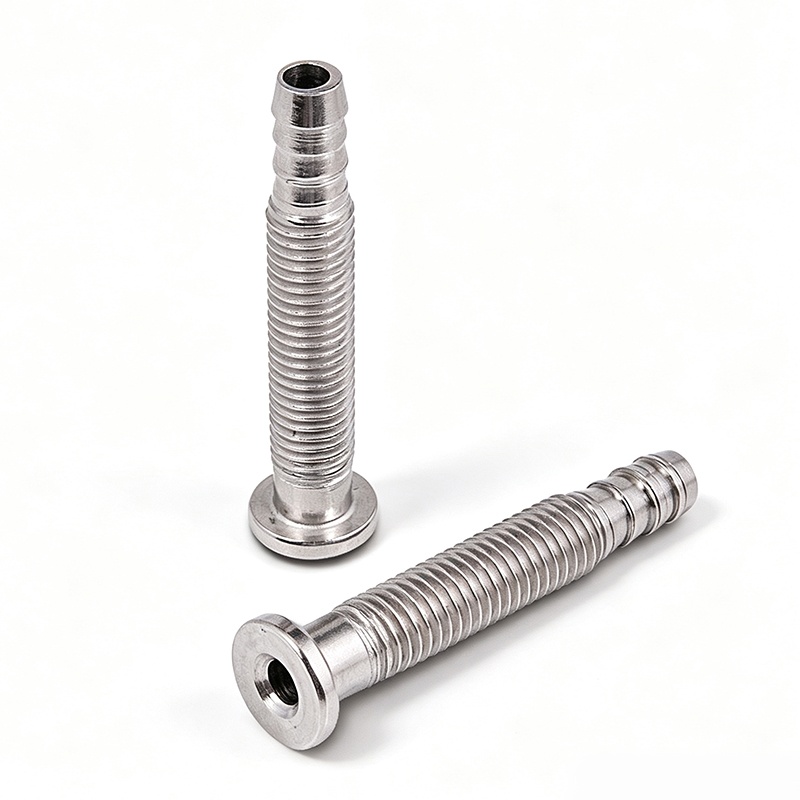 Stainless Steel External Threaded Hollow Multi-Step Connector
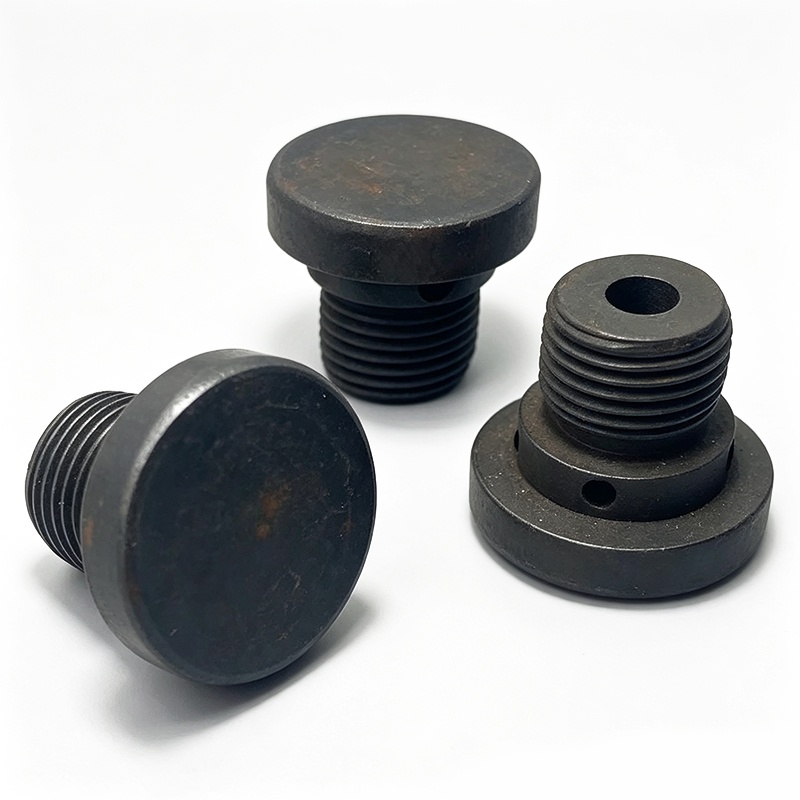 Round Head Hollow Threaded Plugs with Threaded Fasteners for Metal and Machinery
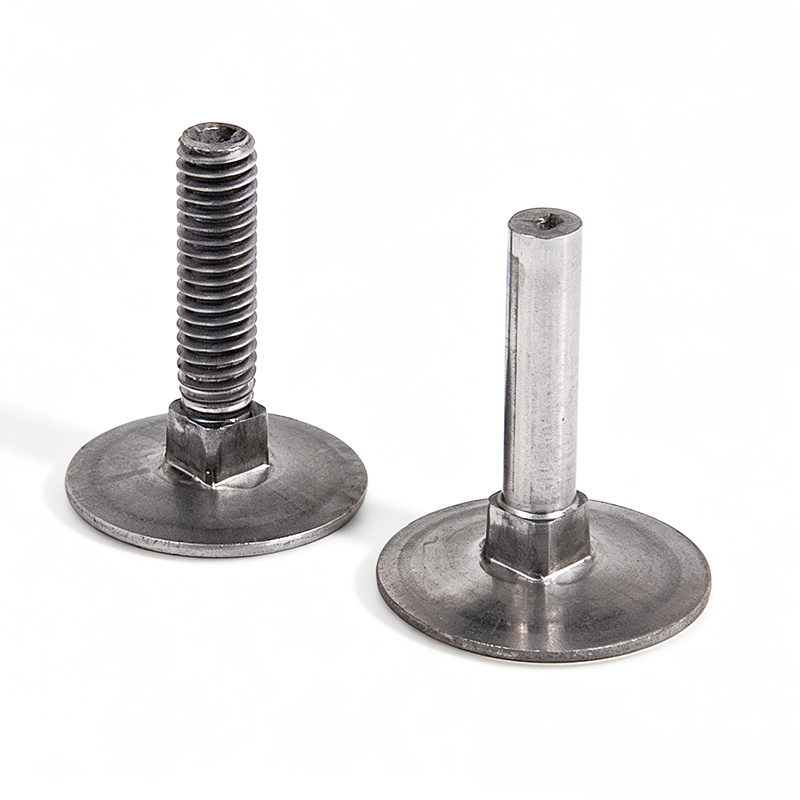 Flat Head Square Neck Adjusting Bolts with Flat Head Fasteners for Furniture and Machinery
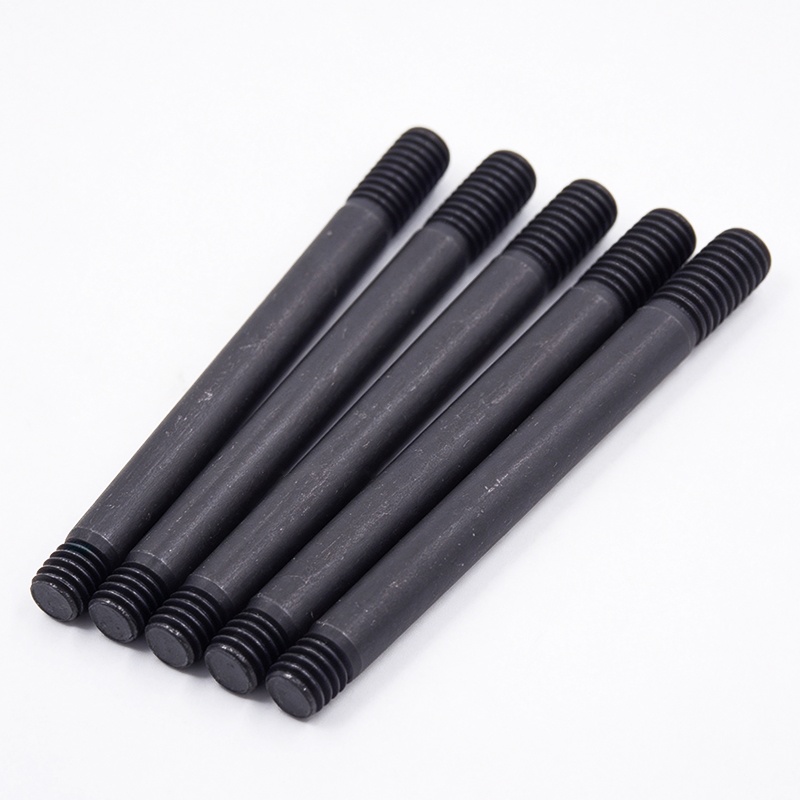 Double Ended Bolts with Threads with Heavy Duty Fasteners for Mechanical Assembly
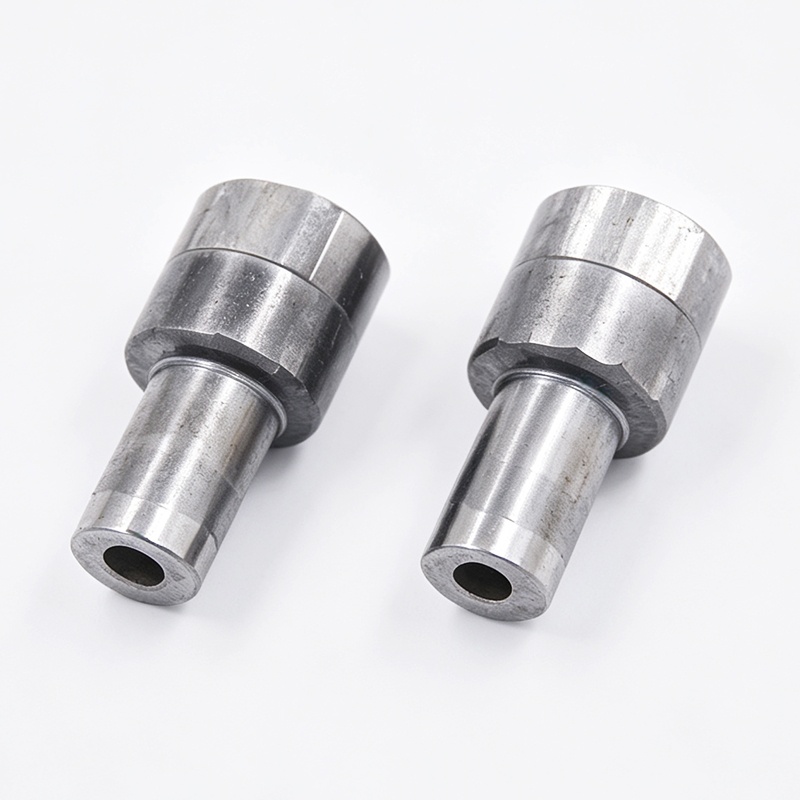 Cold-Bent Stepped Hollow Shaft Sleeve
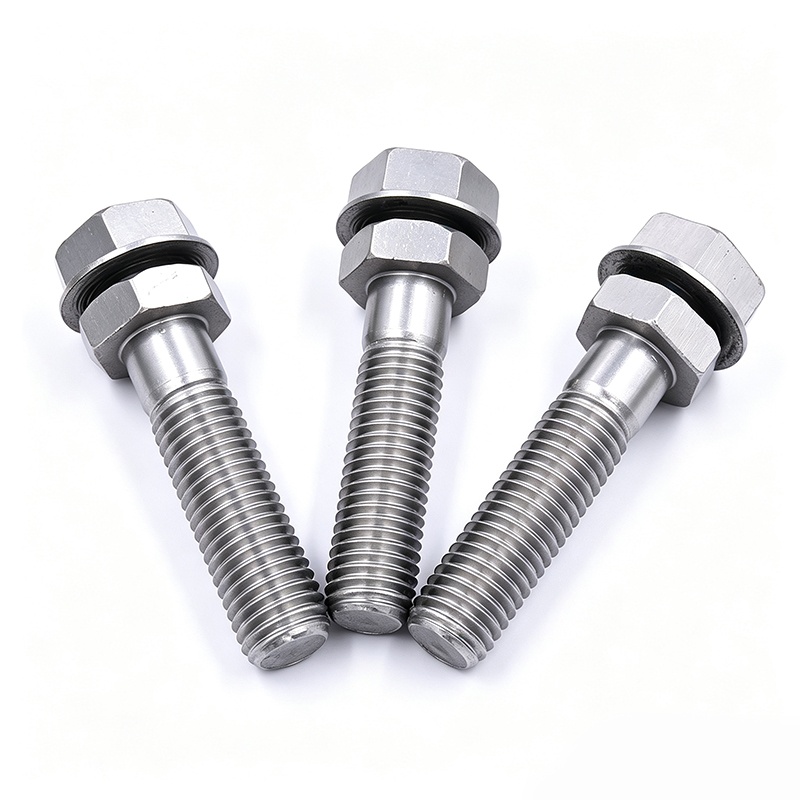 Aluminum Alloy Flange Bolt
Latest News
-
Cold Heading Components: High-performance Fastener Solutions from Wenzhou Riyi Standard Parts Co., Ltd
2026-09-29Cold heading processing shapes metal wire under strong pressure at room temperature without cutting raw materials. Unlike traditional CNC machining, this technology preserves the continuous metal grain flow inside cold heading parts.
-
Special-shaped Bolts and Stainless Steel Double-ended Bolts from Wenzhou Riyi Standard Parts Co., Ltd
2026-09-23In modern mechanical manufacturing, construction engineering and equipment assembly, high-quality fasteners are the invisible foundation that guarantees structural safety and product stability.
-
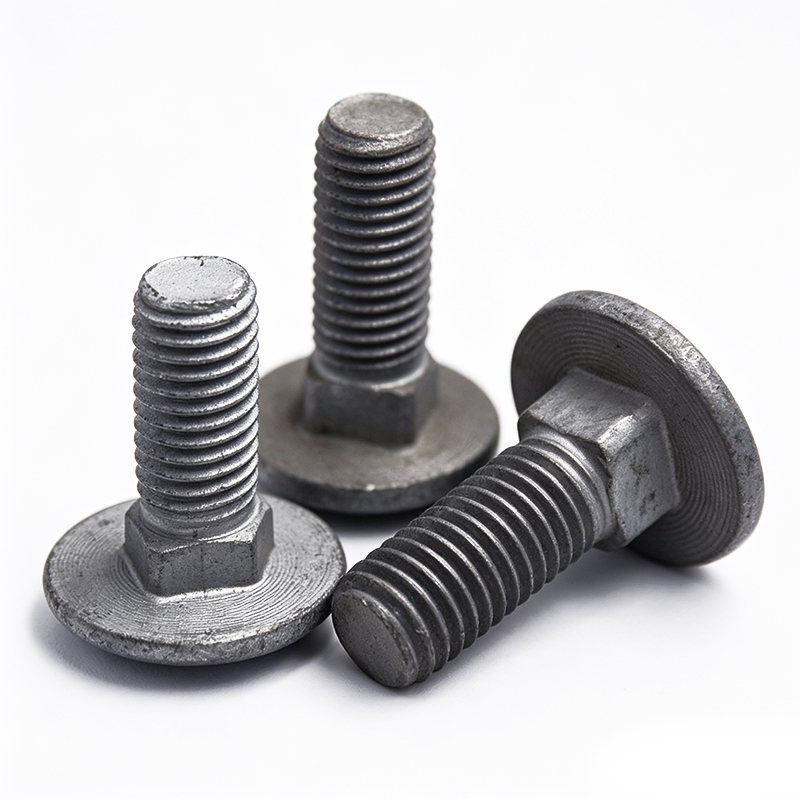
Precision Custom Fasteners from Wenzhou Riyi Standard Parts
2026-09-15Wenzhou Riyi Standard Parts is a reliable Chinese manufacturer focusing on custom non-standard fasteners, located in Wenzhou’s Binhai Economic Zone.
-
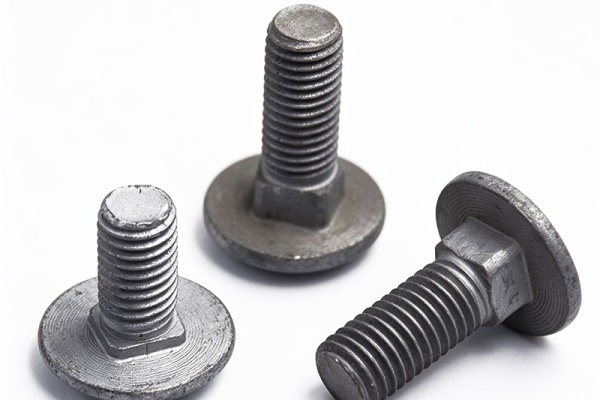
Aluminum Alloy Flange Bolts, Ball Head Studs & Dacromet Carriage Bolts – Reliable Fastener Startup Business
2026-09-08Fasteners are essential basic components widely used in machinery, automotive, engineering and equipment assembly industries.