Products


Rust-Resistant 304 Or 316 Stainless Steel T-Screws
Stainless steel T-shaped screw is an exquisitely designed mechanical connector, and its T-shaped head is the core feature that distinguishes it from ordinary screws. This unique design allows it to be easily embedded into the T-shaped chute of the device from the side.
Send Inquiry
Product Description
Product introduction
Stainless steel T-shaped screw is an exquisitely designed mechanical connector, and its T-shaped head is the core feature that distinguishes it from ordinary screws. This unique design allows it to be easily embedded into the T-shaped chute of the device from the side, and then rotated 90 degrees or directly slid along the slot to the designated position, and finally tightened the nut on the screw end to complete a solid connection. It perfectly solves the problem of fastening inside the channel structure and enables quick installation without having to operate from the back. This kind of screw is both a special shape screw and often used as a non-standard screw. Although there are general specifications such as national standards, in actual applications, their size, material and performance level often need to be selected and fine-tuned according to the specific profile groove width, load-bearing requirements and environmental conditions. Therefore, understanding its design and selection logic is crucial to maximize its effectiveness.
Product design and features
T-shaped head design: This is the iconic feature of the product. The width of the head (i.e., the two wings of the T) must closely match the width of the target T-slot or aluminum profile slot to ensure that it can be placed and slid in the slot smoothly while providing sufficient pressure-bearing area to resist lateral shear forces.
Anti-rotation structure: In order to prevent the entire screw from rotating in the slot and destroying the preset position when the nut is tightened, high-end or special T-shaped screws will adopt an anti-slip design. For example, anti-skid teeth (strip-shaped or mesh-shaped) are processed on the bottom surface of the T-shaped head (the side in contact with the groove), or structures such as square necks and double necks are added to the side of the head to effectively block the groove wall and achieve absolute rotation prevention.
Screw and Threads: The screw portion is usually fully threaded to provide maximum range of adjustment. The thread accuracy is generally 6g level to ensure good cooperation with various types of nuts. Screw length can be customized according to application needs and is one of the most common variables in non-standard screw customization.
Advantages of quick installation: Compared with traditional bolts that require precise hole alignment, the installation process of T-shaped screws is extremely simple - "put in, slide, and tighten" in three steps, which greatly improves assembly efficiency and is especially suitable for occasions that require frequent adjustments or modular disassembly and assembly.
Materials and application fields
304 (A2), a general-purpose austenitic stainless steel with good corrosion resistance (anti-rust) and mechanical properties, economical and practical. General industrial equipment, food machinery, indoor building materials, ordinary aluminum profile frames, storage shelves.
316 (A4), containing molybdenum (Mo) element, has significantly better resistance to acid, alkali and chloride corrosion than 304, and is especially suitable for marine environments. Coastal building curtain walls, ship assembly, chemical equipment, sewage treatment facilities, high-end medical device casings.
Other/Customized, duplex stainless steel (higher strength) or specific alloys available upon special request. Nuclear power plants, deep-sea equipment, extreme high temperatures or corrosive environments and other special fields.
Aluminum profile frame system: used to connect and fix industrial aluminum profiles. It is a standard fastener for automation equipment fences, workbenches, and conveyor lines.
Mechanical equipment and machine tools: Used to quickly clamp workpieces on machine tool T-shaped worktables and welding fixtures, with accurate and firm positioning.
Building curtain walls and steel structures: Used in conjunction with Hafen channels (embedded channels) to fix curtain wall panels, pipe supports, cable trays, etc., with flexible installation.
Food and medical industry: Stainless steel itself is easy to clean, resistant to disinfection, meets hygienic standards, and is used for the installation of production equipment and clean room structures.
Quality control and certification system
Core performance standards: In China, the mechanical properties of stainless steel fasteners follow the GB/T 3098.6 standard. This standard clearly stipulates key indicators such as tensile strength, yield strength (RP0.2), hardness, and wedge load of stainless steel bolts and screws.
For bolts used in T-shaped slots, the GB/T 37 standard specifically stipulates their dimensions, geometric tolerances, etc.
Production and system certification:
Regular manufacturers usually pass ISO 9001 quality management system certification to ensure the standardization and traceability of the production process.
For export products or specific industries (such as construction, nuclear power), it may also be necessary to meet relevant international standards (such as DIN, ASTM) or industry certification.
Customized services
Clarify requirement parameters: Provide detailed technical drawings or clarify the following information:
Head size: width, thickness of the T-shaped head and whether anti-slip teeth are required.
Screw specifications: thread type (metric/imperial), diameter, pitch, length (clearly full thread or polished rod part).
Material and grade: such as SUS316, A4-80, etc., and the use environment (such as sea water, acid and alkali).
Mechanical properties: required strength level (such as 8.8, A2-70).
Surface treatment: whether and what kind of treatment is needed (natural color passivation, wire drawing, etc.).
Sample confirmation: Before mass production, the manufacturer provides samples for physical verification to check the size, thread, appearance and trial assembly effect.
FAQ
Q: What is the general delivery time and minimum order quantity for customized T-shaped screws?
A: It depends on the craftsmanship and complexity. The lead time for small batches (such as 50-100 pieces) of turning customization may be 1-2 weeks; the lead time for large-scale forging customization is longer. The minimum order quantity (MOQ) also varies from factory to factory. Turned parts may start from 50 pieces, while forged parts usually start from hundreds. Details need to be negotiated with the supplier.
Q: How to choose the width of the "T-shaped head" of stainless steel T-shaped screws? What is its relationship with the profile notch?
A: This is the first key to selection. The width of the T-shaped head must be slightly smaller than the internal width (i.e., the width of the slot cavity, not the width of the slot opening) of the target installation slot (such as the slot of industrial aluminum profiles, machine tool T-slot) to ensure smooth insertion. Usually, suppliers will provide matching suggestions, for example: corresponding to a profile with a groove width of 8mm, the standard T-shaped head width is about 7.5mm. If the head width is too small, the pressure-bearing area will be insufficient and it will easily shake; if it is too wide, it will not be able to be put in. For the application of special-shaped screws in non-standard systems, accurate groove drawings must be provided for matching calculations.
Q: How to choose between 304 (A2) and 316 (A4) materials commonly used for stainless steel T-shaped screws in practical applications?
A: The choice depends on the corrosiveness of the environment:
304 stainless steel (A2): suitable for most general environments, such as indoor dry environments, ordinary mechanical equipment, and food processing areas without corrosive media. It has good comprehensive rust resistance and economy.
316 stainless steel (A4): Due to the addition of molybdenum (Mo) element, its chemical corrosion resistance, especially its resistance to chlorides (such as salt water, sea water, deicing salt), is significantly better than 304. It must be used in coastal outdoor, shipbuilding, chemical industry, electroplating, bleaching and dyeing, pharmaceutical and other environments where acid and alkali salt spray or high humidity exist. This is a critical quality control point. Choosing the wrong material can cause rapid corrosion and failure of the connection points.
Send Inquiry
Related Products
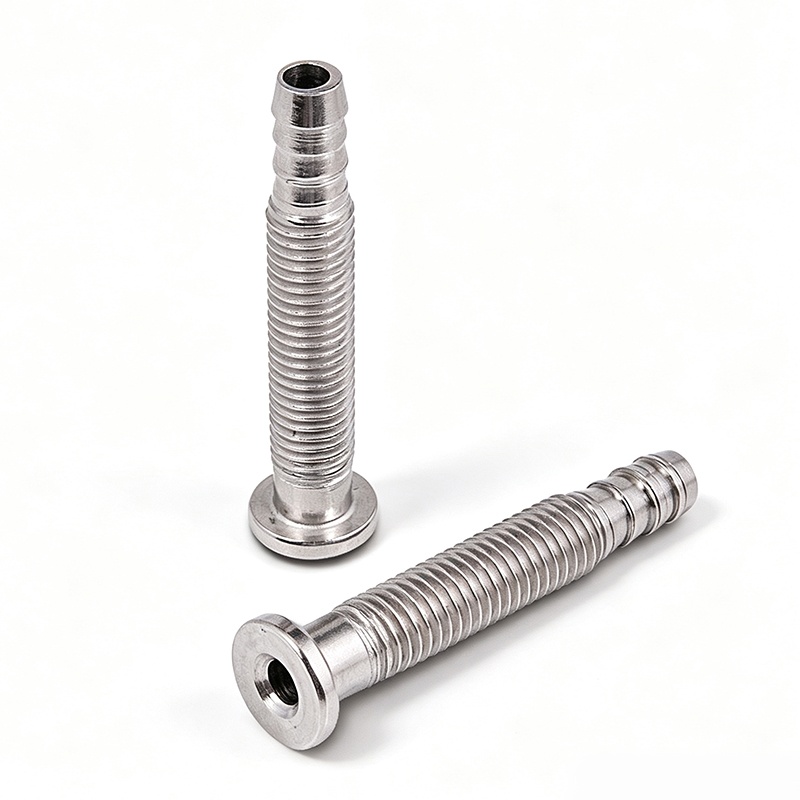 Stainless Steel External Threaded Hollow Multi-Step Connector
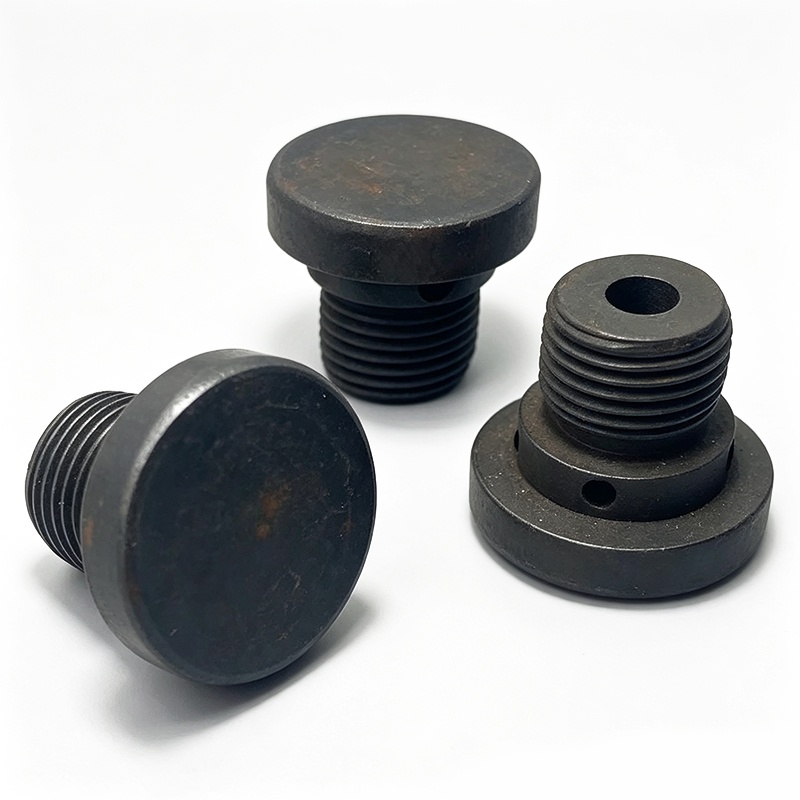 Round Head Hollow Threaded Plugs with Threaded Fasteners for Metal and Machinery
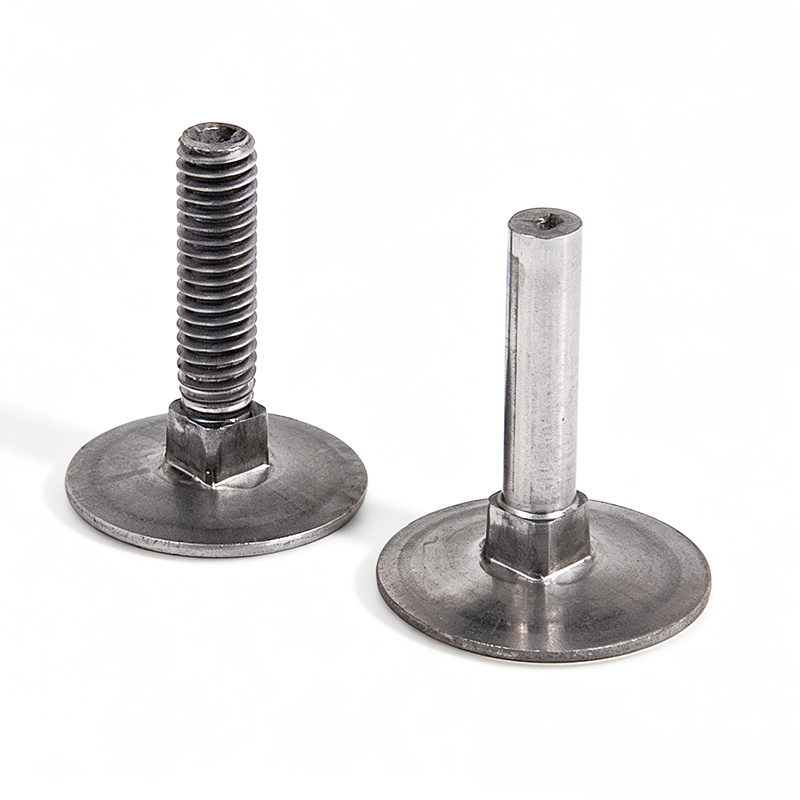 Flat Head Square Neck Adjusting Bolts with Flat Head Fasteners for Furniture and Machinery
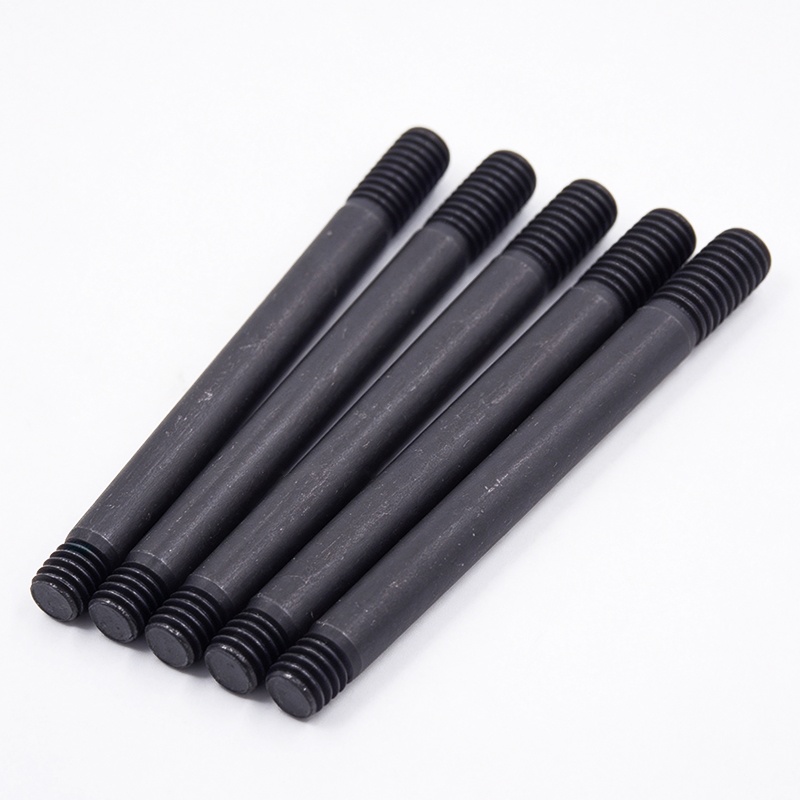 Double Ended Bolts with Threads with Heavy Duty Fasteners for Mechanical Assembly
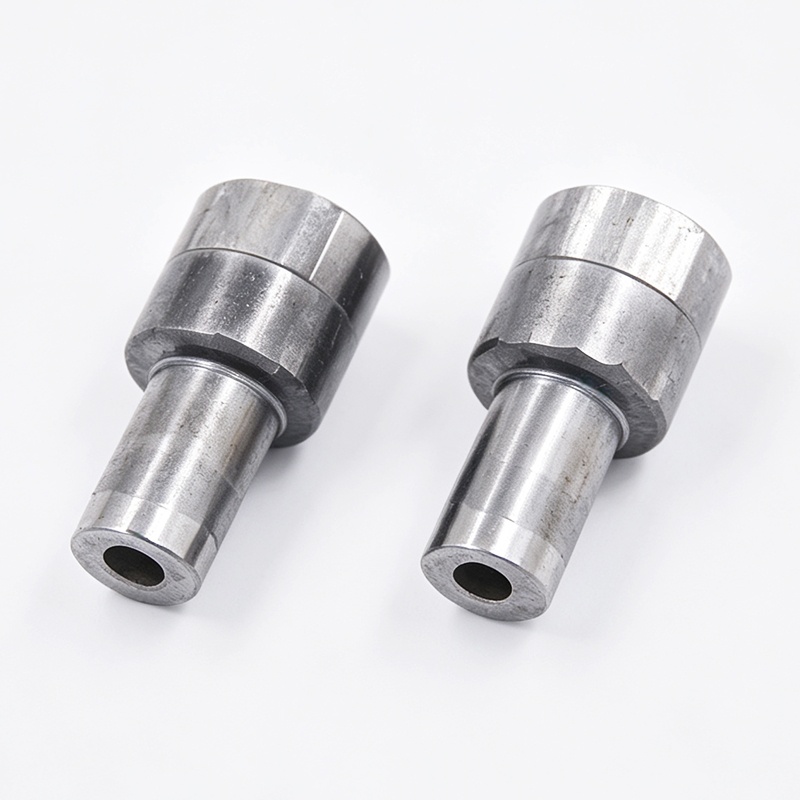 Cold-Bent Stepped Hollow Shaft Sleeve
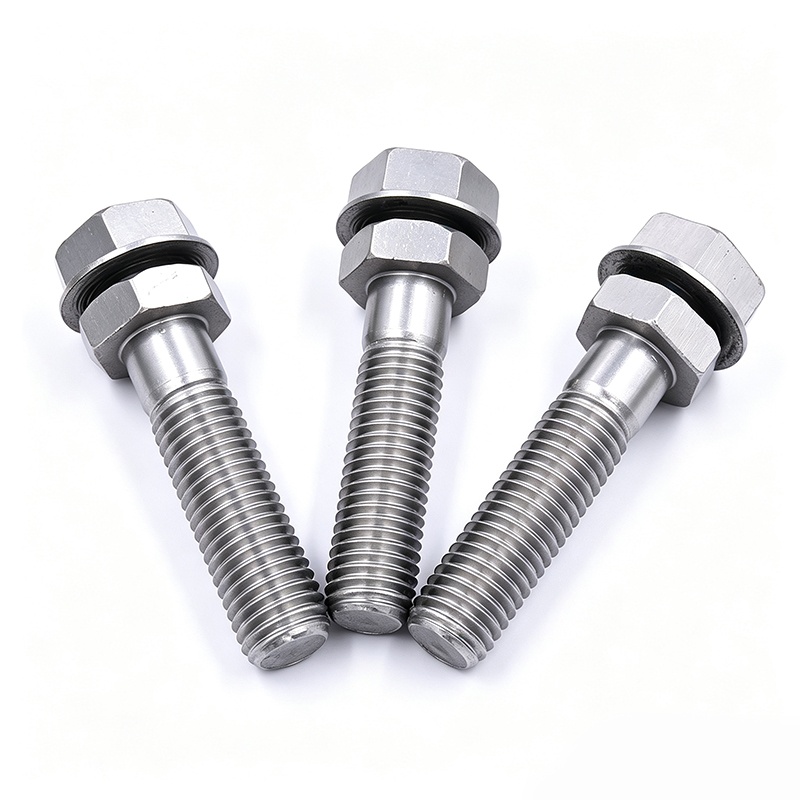 Aluminum Alloy Flange Bolt
Latest News
-
Cold Heading Components: High-performance Fastener Solutions from Wenzhou Riyi Standard Parts Co., Ltd
2026-09-29Cold heading processing shapes metal wire under strong pressure at room temperature without cutting raw materials. Unlike traditional CNC machining, this technology preserves the continuous metal grain flow inside cold heading parts.
-
Special-shaped Bolts and Stainless Steel Double-ended Bolts from Wenzhou Riyi Standard Parts Co., Ltd
2026-09-23In modern mechanical manufacturing, construction engineering and equipment assembly, high-quality fasteners are the invisible foundation that guarantees structural safety and product stability.
-
Precision Custom Fasteners from Wenzhou Riyi Standard Parts
2026-09-15Wenzhou Riyi Standard Parts is a reliable Chinese manufacturer focusing on custom non-standard fasteners, located in Wenzhou’s Binhai Economic Zone.
-
Aluminum Alloy Flange Bolts, Ball Head Studs & Dacromet Carriage Bolts – Reliable Fastener Startup Business
2026-09-08Fasteners are essential basic components widely used in machinery, automotive, engineering and equipment assembly industries.