Products


Corrosion Resistant Stainless Steel Torx Tamper-Proof Screws
Torx anti-theft screws, also known as plum blossom anti-tamper screws, are special-shaped fasteners widely used in various industries. Its core feature is a raised cylinder designed in the center of the screw head, which makes the standard "-" or "+" screwdriver inoperable, and a special Torx wrench that exactly matches it must be used to install and remove it.
Send Inquiry
Product Description
Product introduction
Torx anti-theft screws, also known as plum blossom anti-tamper screws, are special-shaped fasteners widely used in various industries. Its core feature is a raised cylinder designed in the center of the screw head, which makes the standard "-" or "+" screwdriver inoperable, and a special Torx wrench that exactly matches it must be used to install and remove it. This design makes it an important type of non-standard fastener, which can effectively prevent the public from dismantling it at will and protect equipment safety, functional integrity and intellectual property rights. Its design specifications usually follow international standards, so it is universal and replaceable in the professional field.
Product design and features
The essence of the design of Torx anti-theft screws lies in the physical anti-tamper characteristics of its driving structure. The main design variants and features are as follows: Core anti-tamper structure: Its most significant feature is the convex column in the center of the screw head. This stud completely blocks the entrance to a standard slotted or Phillips screwdriver, making it impossible for any general-purpose tool that doesn't have a central hole to snap into the drive. Main types and tooth shapes: Common ones include standard Torx® (six-tooth star) and Torx Plus® (improved five-tooth star, with greater transmission torque and longer tool life). In order to meet higher security requirements, Torx® TR with pins (anti-tamper type), Torx® TTAP with wings (can be used for quick installation), etc. are also derived. "Anti-tampering" rather than "anti-theft": It needs to be made clear that the primary goal is to "prevent unauthorized disassembly" rather than "absolutely prevent theft". It can effectively prevent accidental or malicious disassembly without special tools, but its protective effect is limited when faced with special tools or malicious damage means. It is an economical and efficient "first line of defense".
Materials and application areas
Main materials: carbon steel, stainless steel (304/316), alloy steel (such as SCM435), non-ferrous metals (such as copper, aluminum), etc.
Core application areas: Automotive industry: widely used to fix dashboards, door panels, center consoles, airbag modules, vehicle computer casings, etc. to prevent unauthorized disassembly by non-professionals from causing safety hazards. Electronic appliances: Shell packaging of laptop computers, game consoles, and smart devices to prevent users from dismantling them without permission, which may affect the warranty or cause danger. Public facilities and industrial equipment: fixation of vending machines, shared equipment, power communication cabinets, and mechanical safety shields. High-value commodities: luxury display cabinets and the fixation of medical device casings, both functional and aesthetic.
Quality control and certification system
Reliable quality is the cornerstone of security screws, especially when used as fasteners for automotive parts or in safety-critical applications.
Quality management system: IATF 16949: This is a mandatory quality management system certification for entering the global automotive supply chain, ensuring that the entire product process from design to delivery meets the automotive industry's extremely high quality, traceability and continuous improvement requirements. ISO 9001: Universal quality management system certification, which is the basic entry threshold for manufacturing companies.
Product Standards and Testing
Dimensions and Tolerances: Strictly follow international or national/industry standards such as ISO 10664 (Head Dimensions and Testing of Torx Screws).
Mechanical properties: Tested according to ISO 898-1 (Mechanical Properties of Carbon Steel and Alloy Steel Fasteners) and other standards, including hardness testing (Rockwell, Vickers), tensile strength testing, torque testing, etc.
Environmental resistance: Conduct a salt spray test (such as ASTM B117) on the surface treatment to evaluate its corrosion resistance.
Production process control: Excellent manufacturers will strictly control the production process of cold heading non-standard parts, such as spectral analysis of raw materials, dimensional SPC (statistical process control) monitoring during production, and 100% visual inspection and batch sampling performance testing of finished products.
Customized services
Standard products cannot meet all needs, and customized services are an important part of high-end manufacturing.
Size customization: Screws of non-standard sizes can be produced according to customer drawings (the drawings need to clearly indicate the tooth shape of the head of the special-shaped fastener, the size of the boss, the thread specifications, etc.). Material and strength customization: Specific grades of stainless steel non-standard parts or ultra-high-strength alloy steel parts can be provided, and the heat treatment process can be adjusted to meet specific mechanical performance levels (such as level 14.9). Surface treatment customization: In addition to conventional electroplating, more advanced anti-corrosion treatments such as Dacromet and geometric plating, or baking/spraying in specific colors are also available. Head logo customization: Laser engraving can be performed on the screw head to mark company LOGO, part number, QR code and other information to achieve tracking management.
FAQ
Q: Can Torx anti-theft screws with special sizes or logos be customized?
A: Absolutely. Professional non-standard fastener manufacturers usually provide flexible customization services: Size customization: Non-standard total length, rod diameter, head size or tooth shape can be customized according to your installation space and force requirements. Material and surface treatment customization: In addition to regular selections, special treatments such as special alloys, electrophoretic black, and Dacromet are also available. Logo customization: Supports laser engraving on the screw head to mark the company LOGO, part number, production batch or QR code to achieve quality traceability and brand anti-counterfeiting. This is especially important for high-end manufacturing and brand protection.
Q: Is the anti-disassembly effect of this type of screw absolute?
A: Not absolutely. No mechanical anti-theft design is impenetrable. The core value of Torx anti-theft screws is that they significantly increase the difficulty, time and cost of unauthorized disassembly. Special tools are required to effectively prevent temporary or unprepared disassembly. When subjected to destructive disassembly, obvious traces ("tampering evidence") will be left, which can serve as a warning and tracing function. It is an efficient and cost-effective passive safety solution that blocks out most non-professional demolitions.
Q: For use in high-demand fields such as automobile manufacturing, what are the special quality control requirements for this type of screws?
A: Yes, the requirements are extremely strict. When it is used as a fastener for automobile parts, it is not only a part, but also an integral part of safety and reliability. Qualification certification: Suppliers with IATF 16949 (Automotive Industry Quality Management System) certification are preferred. This is the entry barrier to the global mainstream automotive supply chain. Material traceability: Suppliers are required to provide complete material quality certificates to ensure full traceability from steel to finished products. Full size and performance inspection: In addition to regular dimensions, batch sampling or 100% inspection of key performance indicators such as hardness, torque-tension relationship, salt spray test time, etc. Error-proofing management: On the final assembly line, screws of different specifications are often distinguished by color, head markings or packaging to prevent assembly errors.
Send Inquiry
Related Products
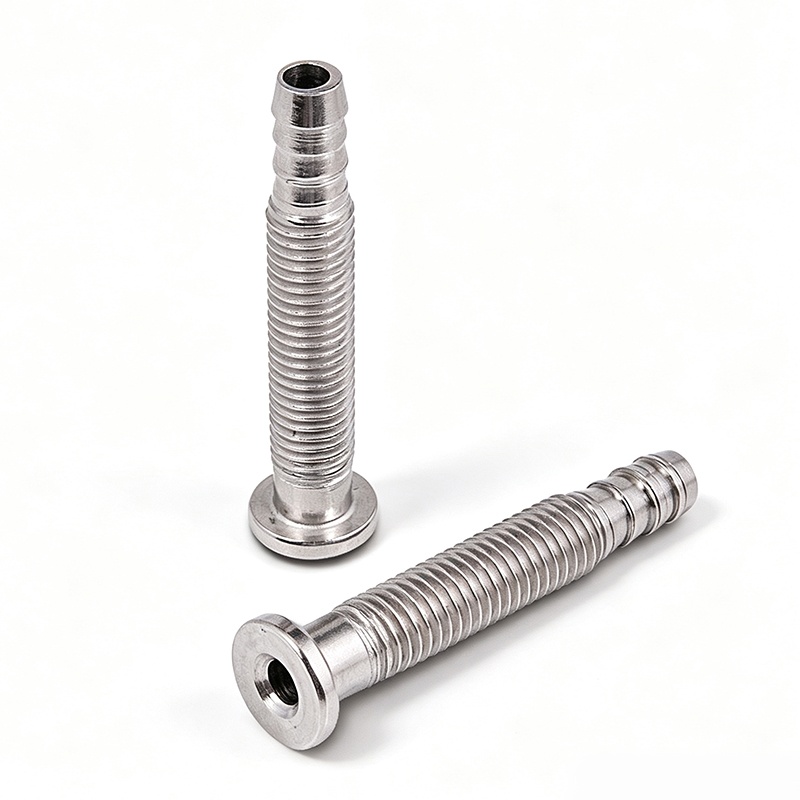 Stainless Steel External Threaded Hollow Multi-Step Connector
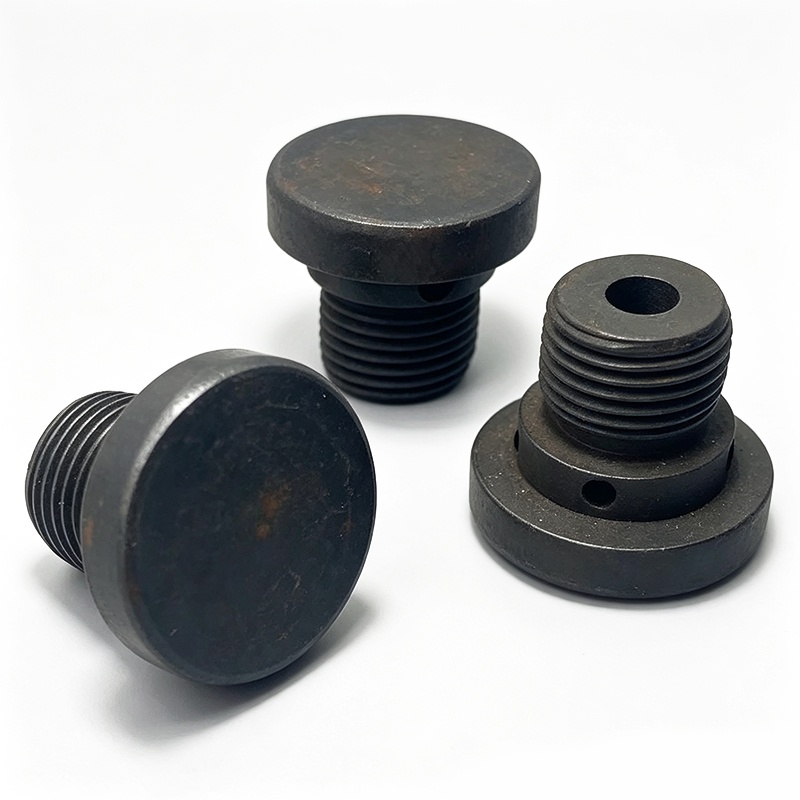 Round Head Hollow Threaded Plugs with Threaded Fasteners for Metal and Machinery
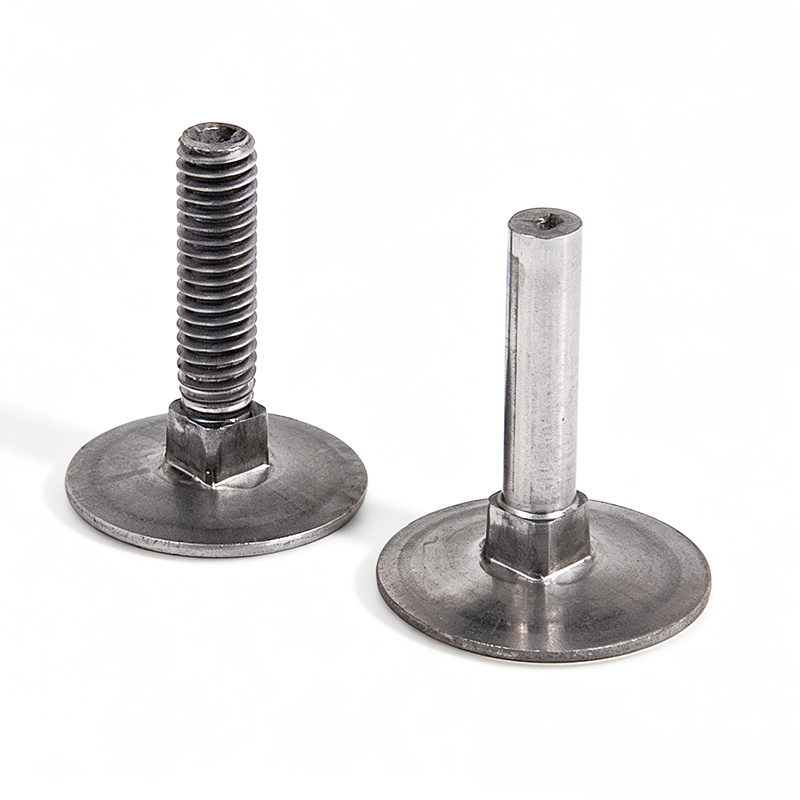 Flat Head Square Neck Adjusting Bolts with Flat Head Fasteners for Furniture and Machinery
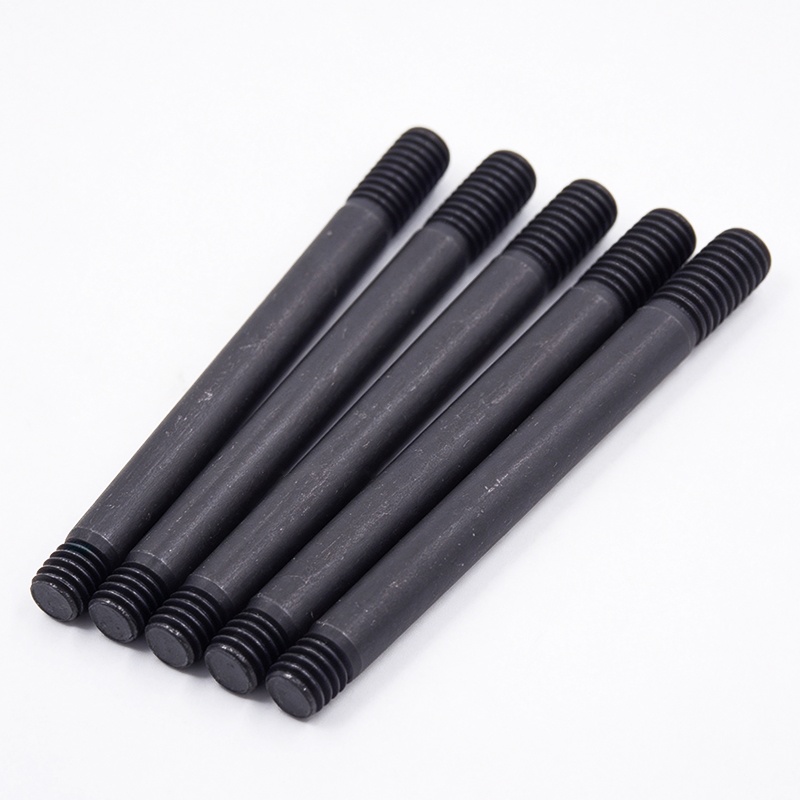 Double Ended Bolts with Threads with Heavy Duty Fasteners for Mechanical Assembly
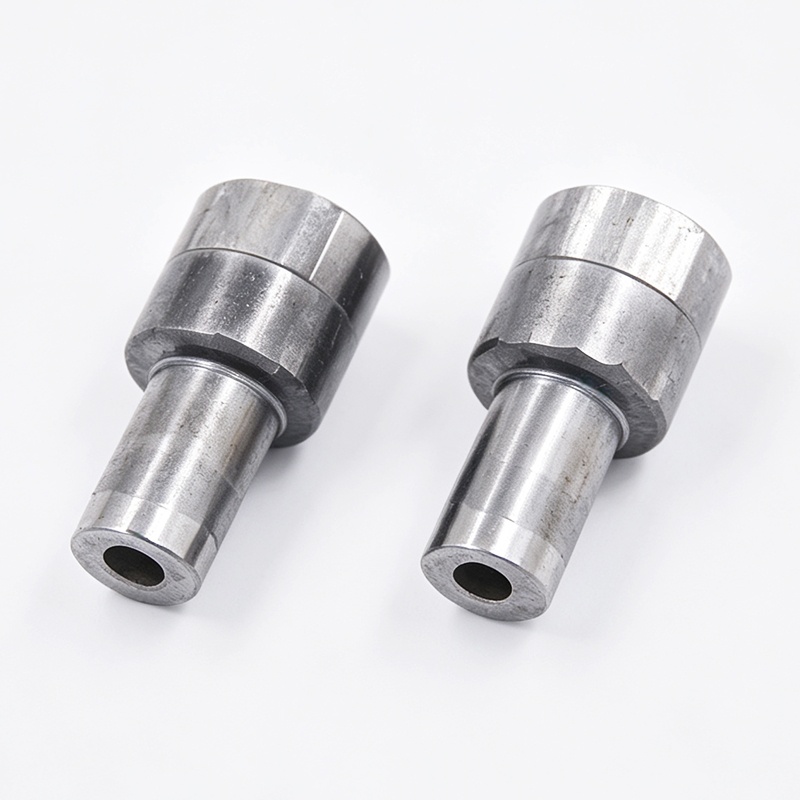 Cold-Bent Stepped Hollow Shaft Sleeve
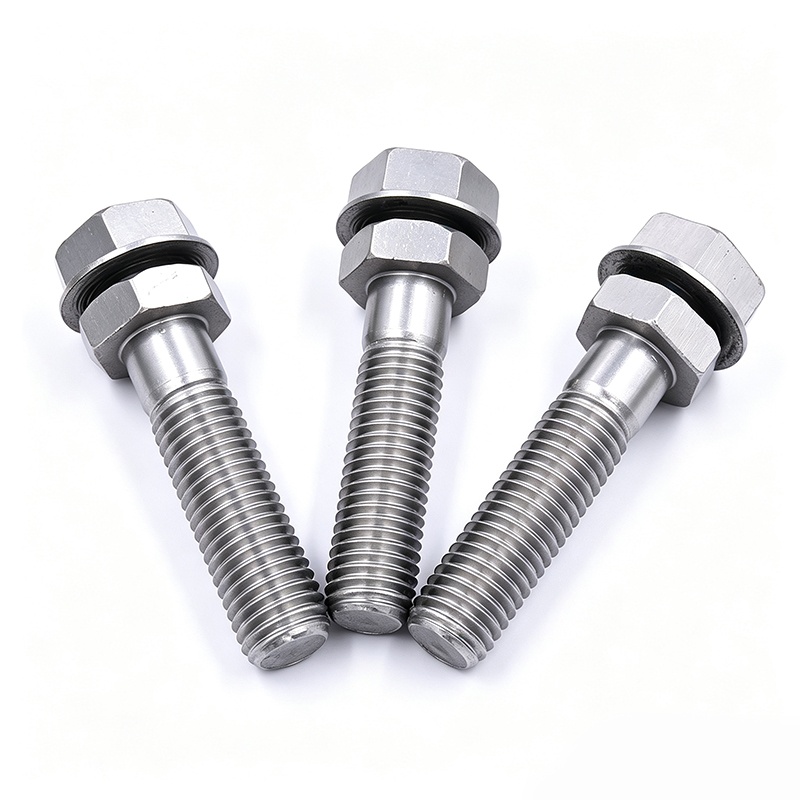 Aluminum Alloy Flange Bolt
Latest News
-
Cold Heading Components: High-performance Fastener Solutions from Wenzhou Riyi Standard Parts Co., Ltd
2026-09-29Cold heading processing shapes metal wire under strong pressure at room temperature without cutting raw materials. Unlike traditional CNC machining, this technology preserves the continuous metal grain flow inside cold heading parts.
-
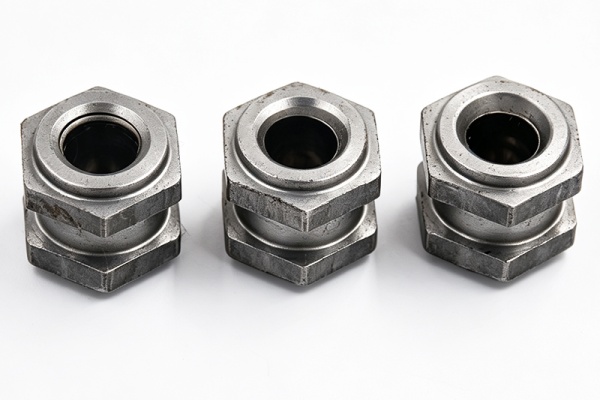
Special-shaped Bolts and Stainless Steel Double-ended Bolts from Wenzhou Riyi Standard Parts Co., Ltd
2026-09-23In modern mechanical manufacturing, construction engineering and equipment assembly, high-quality fasteners are the invisible foundation that guarantees structural safety and product stability.
-
Precision Custom Fasteners from Wenzhou Riyi Standard Parts
2026-09-15Wenzhou Riyi Standard Parts is a reliable Chinese manufacturer focusing on custom non-standard fasteners, located in Wenzhou’s Binhai Economic Zone.
-
Aluminum Alloy Flange Bolts, Ball Head Studs & Dacromet Carriage Bolts – Reliable Fastener Startup Business
2026-09-08Fasteners are essential basic components widely used in machinery, automotive, engineering and equipment assembly industries.