Products


Carbon Steel Ball Head Step Pin For Mechanical Joints
The ball head step pin is a hard standard part used for precision mechanical positioning and connection. Its typical construction consists of two core parts: a precisely ground ball head at one end and a cylindrical pin body with a defined shoulder (step) at the other end. This component mainly performs two functions.
Send Inquiry
Product Description
Product introduction
The ball head step pin is a hard standard part used for precision mechanical positioning and connection. Its typical construction consists of two core parts: a precisely ground ball head at one end and a cylindrical pin body with a defined shoulder (step) at the other end. This component mainly performs two functions. The ball head end is designed to cooperate with components with corresponding ball sockets to form a spherical joint that can be flexibly deflected within a certain angle. It can not only transmit loads, but also allow slight self-adjustment of direction. It is often used for mechanism hinge points that need to compensate for installation errors or achieve small-range swings. The step end provides stable axial positioning. Its shoulder can ensure that the pin body maintains a precise extension length when inserted into the base or fixed plate to prevent excessive penetration. The cylindrical part achieves radial fixation through interference or transition fit. Therefore, ball-head step pins are commonly used in the positioning guides of fixture molds, adjustable support points of precision instruments, movable joints in automation equipment, and various mechanical devices that require both positioning accuracy and connection flexibility. They are a key basic component that balances rigidity and flexibility.
Product features
1. Composite function integration: A single part integrates two core functions - the ball head end realizes direction-adjustable articulation, and the step end realizes precise axial positioning and radial fixation. This design simplifies the assembly structure and reduces the number of parts.
2. Precise positioning combined with adjustability: The step (shoulder) of the cylindrical pin portion provides a defined and consistent installation depth, ensuring axial dimensional accuracy for every assembly. At the same time, the cooperation between the ball head and the ball socket allows direction adaptation or swing within a certain cone angle range to compensate for installation alignment errors and avoid additional stress caused by rigid connections.
3. Reliable and stable connection: The cylindrical part usually adopts interference or transition fit to ensure no looseness and shear resistance in the matrix. The spherical curved surface of the ball head part has been precision ground to have a large contact area with the matching parts and uniform stress distribution, enabling smooth rotation or swing while carrying load.
4. High rigidity load-bearing and wear resistance: It is usually made of high-carbon alloy steel such as bearing steel, and has been quenched and finely ground. It has high hardness, high strength and excellent wear resistance. It can withstand radial force and axial force for a long time and is suitable for high-frequency or heavy-load working conditions.
5. Easy installation and high repeatability: standardized design makes the installation process simple. The stepped construction eliminates the need for additional positioning pieces such as shims and prevents the pin from being over-driven. This feature is especially suitable for occasions that require batch assembly and maintenance and replacement, and can ensure the consistency of performance and size.
Product application
1. Positioning and guiding of precision fixtures and molds
This is its most classic application. The stepped cylindrical portion is precision pressed into the fixture base, providing strong and precise vertical positioning; while its ball end mates with a corresponding ball socket in the mold or workpiece. This design not only ensures the precise positioning of the workpiece in the horizontal direction, but also compensates for the slight unevenness of the bottom surface of the workpiece or the fixture support surface through the slight swing of the ball head, ensuring that the clamping force is evenly distributed and preventing the workpiece from being deformed due to uneven stress.
2. Movable joints and connectors in automation equipment
In robot end effectors, conveyor line guides, or devices that require floating connections, ball-head step pins are often used as the axis of movable joints. The cylindrical part is fixed, and the ball end is connected to the follower, allowing the follower to swing or rotate in multiple directions within a certain cone angle range, thereby absorbing installation errors, adapting to path deviations, or achieving compliant motion.
3. Adjustable supports for precision instruments and measuring equipment
In high-precision platforms, optical instrument bases or measuring equipment, they are often used as adjustable feet in three-point support systems. The step part is used to set and lock the basic height. The ball head end is in contact with the platform. By adjusting other support points, the adaptive ability of the ball head can be used to achieve fine horizontal leveling of the platform to ensure the absolute level of the measurement reference plane.
4. Self-aligning connections for heavy equipment
In the connecting rod mechanism, bearing seat or connection parts of large mechanical equipment (such as presses and rolling mills) that need to transmit huge loads but have the risk of alignment errors, the use of ball-end step pins can form a self-aligning bearing pair. It can effectively eliminate edge loads caused by processing or installation errors, enable the load to be transmitted evenly along the center line, protect bearings and structures, and extend equipment life.
FAQ
Q: What is the core function of the ball head step pin?
A: It simultaneously achieves two key functions on one part: precise positioning and flexible articulation. The stepped cylindrical part provides rigid axial positioning and radial fixation, while the ball head part allows the mating parts to swing or self-align within a certain angle to compensate for installation errors, absorb vibration, or accommodate misalignment.
Q: How to correctly install the ball head step pin?
A: It is recommended to use the press-in method instead of hammering to directly hit the ball head.
Use a special ball stud installation tool (a protective sleeve with an escape hole) or make a hole in a flat pad, apply pressure to the stepped end face or cylindrical part of the pin, and press it vertically into the base hole. Definitely avoid hitting the ball head directly to avoid damaging the delicate ball geometry and surface finish.
Q: What should I do if the ball head or socket is worn?
A: Ball head step pins are generally regarded as high-precision wearing parts. Once the ball surface is obviously worn, scratched or has excessive gaps, the most reliable method is to replace it in pairs (that is, replace the pin and the matching ball socket sleeve or part at the same time). Replacing just one side may accelerate wear due to poor fit.
Send Inquiry
Related Products
 Stainless Steel Carriage Bolts with Corrosion Resistant Square Neck Bolts for Metal
 Stainless Steel Cylindrical Connector with Threaded Cross Holes
 CNC Machined Stainless Steel Round Head Shoulder Bolts
 CNC Machined Stainless Steel Hex Flange Double Ended Stud Bolts for Industrial Fastening
 CNC Machined Bronze Flanged Bushing with Self Lubricating Wear Resistance
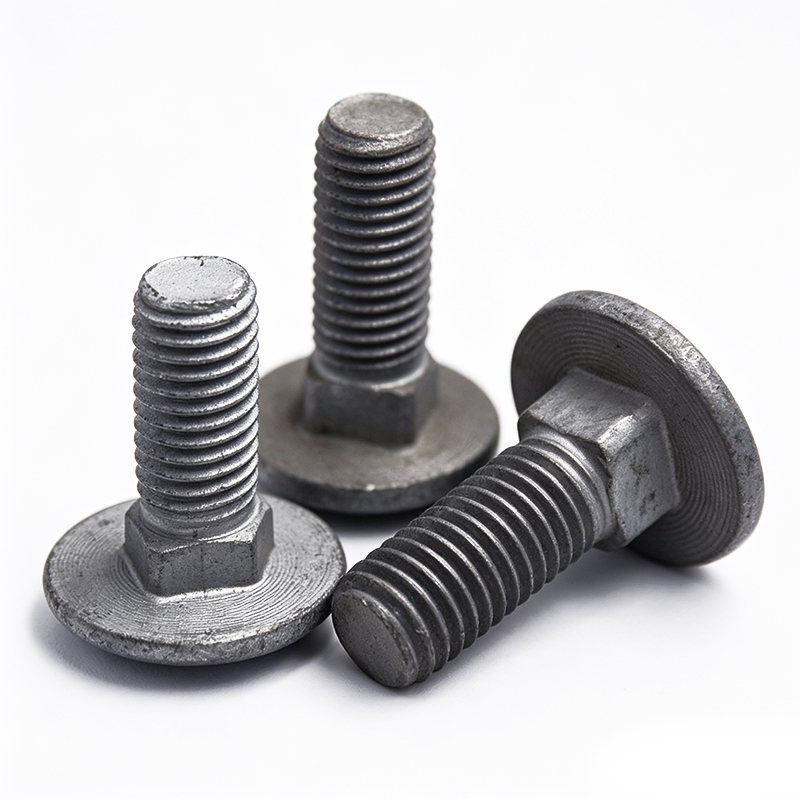
 Dacromet Disc Head Square Neck Carriage Bolt
Latest News
-
Cold Heading Components: High-performance Fastener Solutions from Wenzhou Riyi Standard Parts Co., Ltd
2026-09-29Cold heading processing shapes metal wire under strong pressure at room temperature without cutting raw materials. Unlike traditional CNC machining, this technology preserves the continuous metal grain flow inside cold heading parts.
-
Special-shaped Bolts and Stainless Steel Double-ended Bolts from Wenzhou Riyi Standard Parts Co., Ltd
2026-09-23In modern mechanical manufacturing, construction engineering and equipment assembly, high-quality fasteners are the invisible foundation that guarantees structural safety and product stability.
-
Precision Custom Fasteners from Wenzhou Riyi Standard Parts
2026-09-15Wenzhou Riyi Standard Parts is a reliable Chinese manufacturer focusing on custom non-standard fasteners, located in Wenzhou’s Binhai Economic Zone.
-
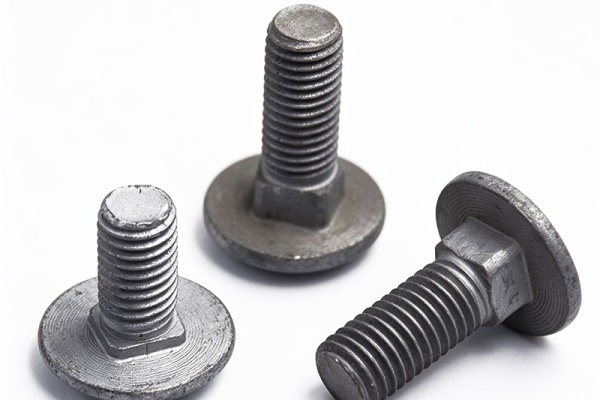
Aluminum Alloy Flange Bolts, Ball Head Studs & Dacromet Carriage Bolts – Reliable Fastener Startup Business
2026-09-08Fasteners are essential basic components widely used in machinery, automotive, engineering and equipment assembly industries.