Products


Stainless Steel Hexagon Socket Double Head Screws
Stainless steel hexagonal double-head screws, also known as studs or studs, are standard fasteners with threads on both ends and a smooth or knurled shaft in the middle. The "external hexagon" refers to the hexagonal driving part in the middle for tool clamping, not the head.
Send Inquiry
Product Description
Product introduction
Stainless steel hexagonal double-head screws, also known as studs or studs, are standard fasteners with threads on both ends and a smooth or knurled shaft in the middle. The "external hexagon" refers to the hexagonal driving part in the middle for tool clamping, not the head. The main function of this product is to achieve docking or fixing between two components, especially when a nut needs to be installed or one end needs to be screwed into a blind hole base. One end (screw-in end) is usually a short thread, used to be firmly screwed into a preset threaded hole or component; the other end (nut end) is equipped with a standard thread, used to penetrate the connected part and tighten it with a nut. The hexagonal section in the middle facilitates overall rotation and installation using a wrench. Stainless steel material gives it excellent corrosion resistance and durability, making it widely used in chemical equipment, pipeline flange connections, machinery manufacturing, ship engineering and structures that require frequent disassembly and maintenance. Because it can be flexibly assembled at both ends, it is particularly suitable as a fixed shaft, connecting rod or tension member that needs to be adjusted on both sides. It is a versatile, strong and reliable industrial basic connection.
Product features
1. Bilateral threaded connection structure: Both ends of the product are equipped with complete threads, and the middle section is a polished rod or processed with an external hexagonal drive structure, so that while one end can be firmly screwed into the base body (such as the body, flange), the other end is used to connect components in series and fasten with nuts, realizing a detachable through-type connection or blind hole installation.
2. External hexagonal middle drive design: The external hexagonal structure in the middle facilitates the use of conventional wrenches for integral rotation tightening or disassembly. Compared with long studs without a drive structure, the installation convenience, controllability and torsion resistance are significantly improved. It is especially suitable for situations where space is limited or high pre-tightening force is required.
3. The material has strong corrosion resistance: It is made of stainless steel (commonly 304 or 316), which has excellent rust resistance, chemical resistance and weather resistance. It can adapt to the requirements of humid, acid and alkali environments and long-term outdoor use, ensuring the long-term reliability of the connection under harsh working conditions.
4. Adjustable and repeatable assembly: Since the threads at both ends can be operated independently, it is convenient for fine-tuning and alignment during installation. It is also suitable for equipment that requires frequent disassembly, maintenance or replacement of components (such as pump valves, flanges, pressure vessels), reducing the risk of wear of the base threads caused by repeated disassembly and assembly.
5. High load carrying capacity: The whole structure adopts an integrated metal shaft structure with no weak links and can withstand high axial tension and a certain shear force. When used with nuts, the connection strength is high and the stability is good.
Product application
1. Flange and pipe connection: It is the core standard part for pipe flange connection in chemical, petroleum, gas and water supply systems. One end is pre-screwed into the threaded hole of the equipment flange, and the other end passes through the butt flange and is then locked with a nut to achieve reliable pressing of the sealing surface and facilitate later maintenance and disassembly.
2. Heavy equipment and structure installation: often used for positioning and fixing heavy components such as large machinery (such as pumps, valves, compressors), pressure vessels, steel structure modules and bridge supports. Its through-type connection method can withstand high-intensity vibration and load, and the external hexagon in the middle section facilitates precise tightening using tools within the installation space.
3. Equipment that vibrates frequently or requires repeated maintenance: widely used in equipment such as engine cylinder heads, gearboxes, heavy-duty axles, and vibrating screens. The double-head design allows only the nut end to be removed during frequent disassembly and maintenance, while the screw-in end can be permanently retained in the base body, effectively protecting the base threads from repeated wear and extending the service life of the equipment.
4. Fastening in corrosive environments: Due to the characteristics of stainless steel, it is widely used in humid and corrosive environments such as food processing equipment, pharmaceutical machinery, coastal ship facilities, sewage treatment equipment and electroplating production lines. Its corrosion resistance ensures long-term safety and stability of the connection.
5. As a positioning shaft or tension adjustment rod: In textile machinery, printing equipment, conveyor line rollers and other devices, the threads at both ends are often used as an adjustable positioning shaft, tension rod or support rod, and the position or tension can be accurately adjusted by advancing and retreating the nuts on both sides.
FAQ
Q: What is the function of the "outer hexagon" in the middle? Is it possible without this structure?
A: The function of the external hexagonal core in the middle is to provide a clamping point during installation and removal, preventing the stud from rotating as a whole when screwing into or out of the base body. Without this structure, installation and removal would be very difficult (usually requiring two nuts interlocking at the threaded end to twist). Therefore, it is a key design for easy and reliable installation.
Q: When installing, which end should be tightened first?
A: Usually the screw-in end should be completely screwed into the threaded hole of the base body first. To ensure firmness, it is recommended to use tools to tighten it until it fits the base surface or reaches the specified torque value. Then, put the parts to be connected on the nut end, and finally install and tighten the nut.
Q: Can the threads on both ends of a double-head screw be different?
A: Yes. This is a common custom design called a "reducing stud." Different thread specifications and tooth shapes can be used at both ends to meet special connection requirements.
Send Inquiry
Related Products
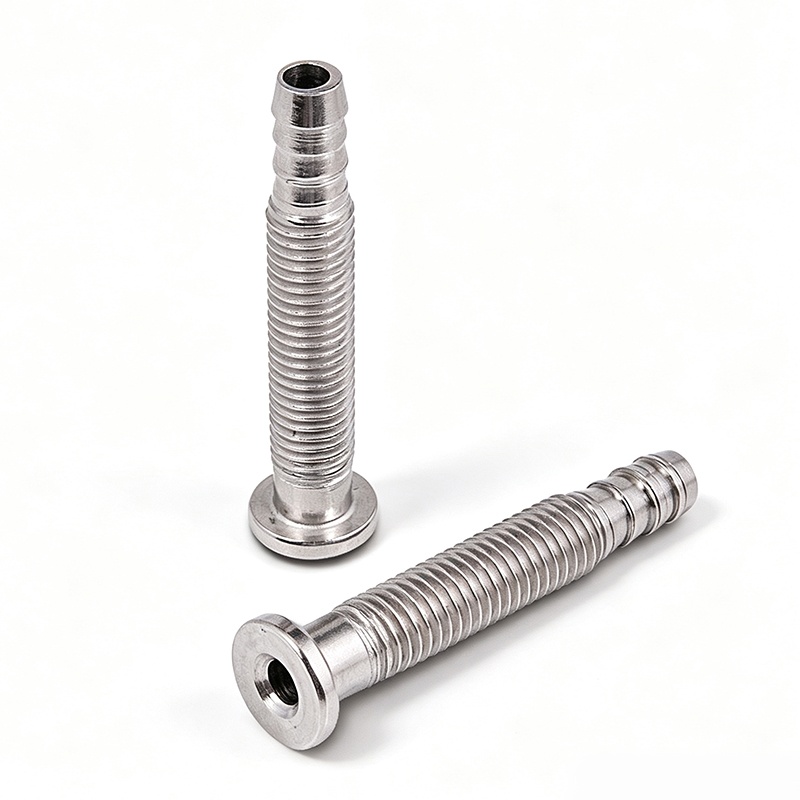 Stainless Steel External Threaded Hollow Multi-Step Connector
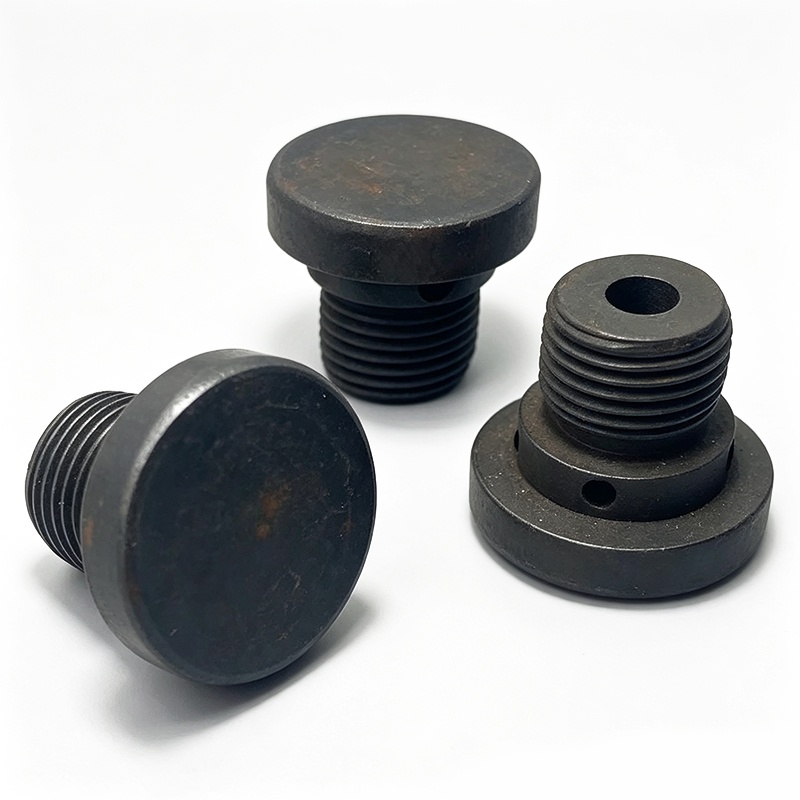 Round Head Hollow Threaded Plugs with Threaded Fasteners for Metal and Machinery
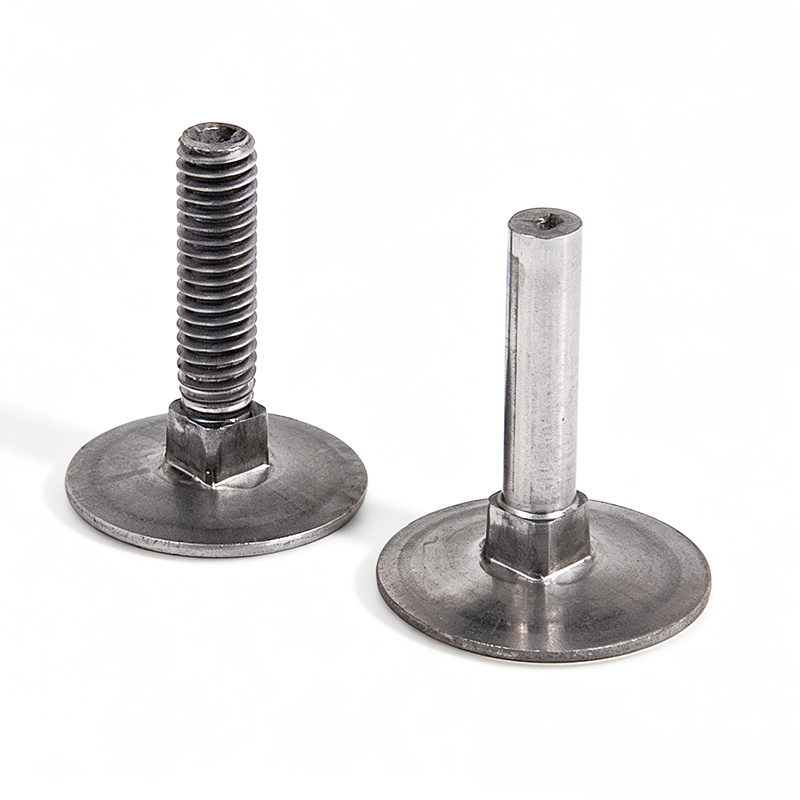 Flat Head Square Neck Adjusting Bolts with Flat Head Fasteners for Furniture and Machinery
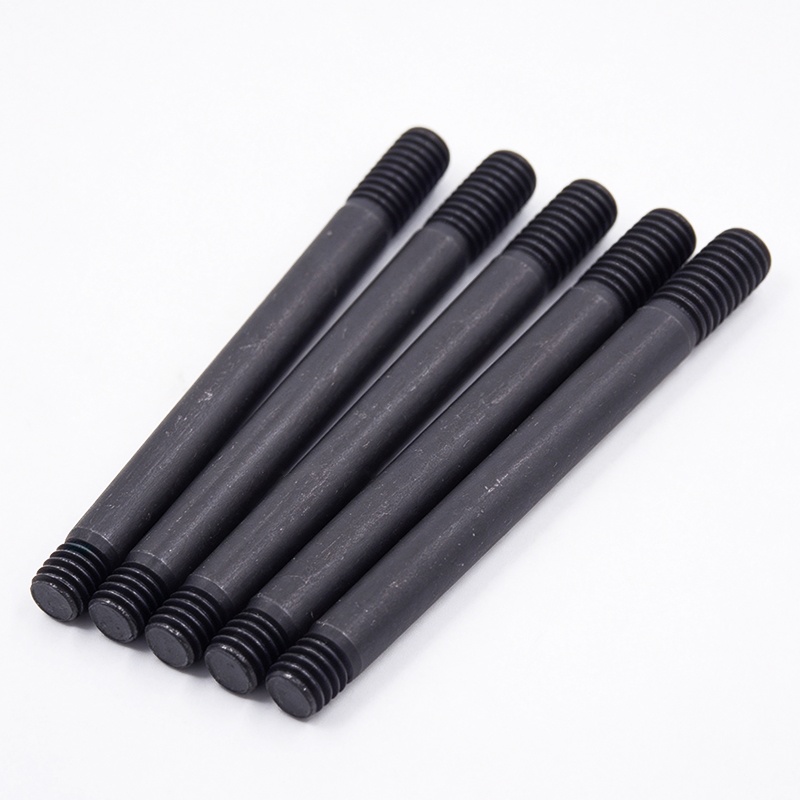 Double Ended Bolts with Threads with Heavy Duty Fasteners for Mechanical Assembly
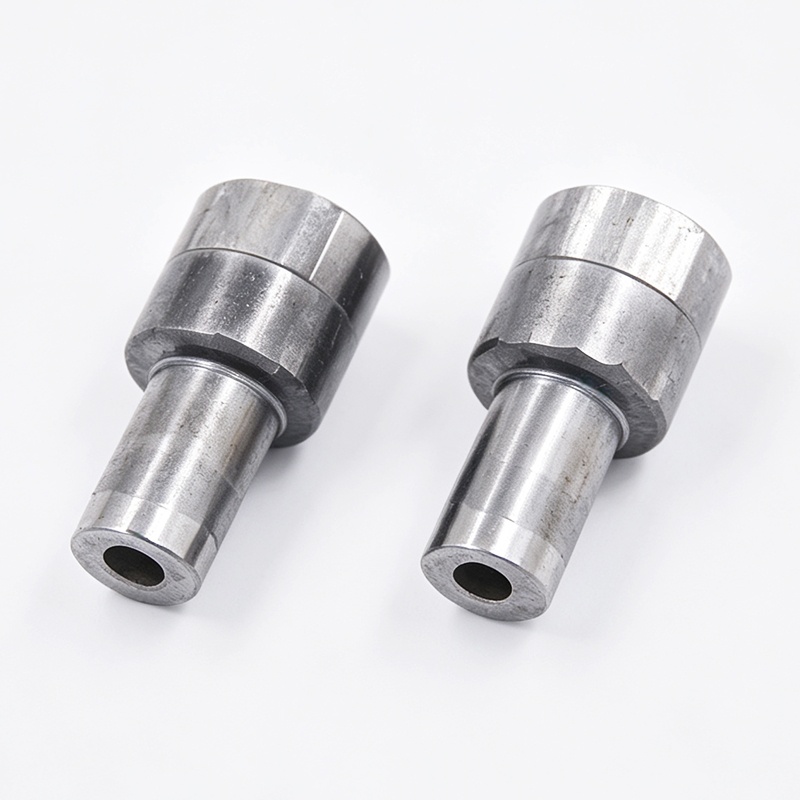 Cold-Bent Stepped Hollow Shaft Sleeve
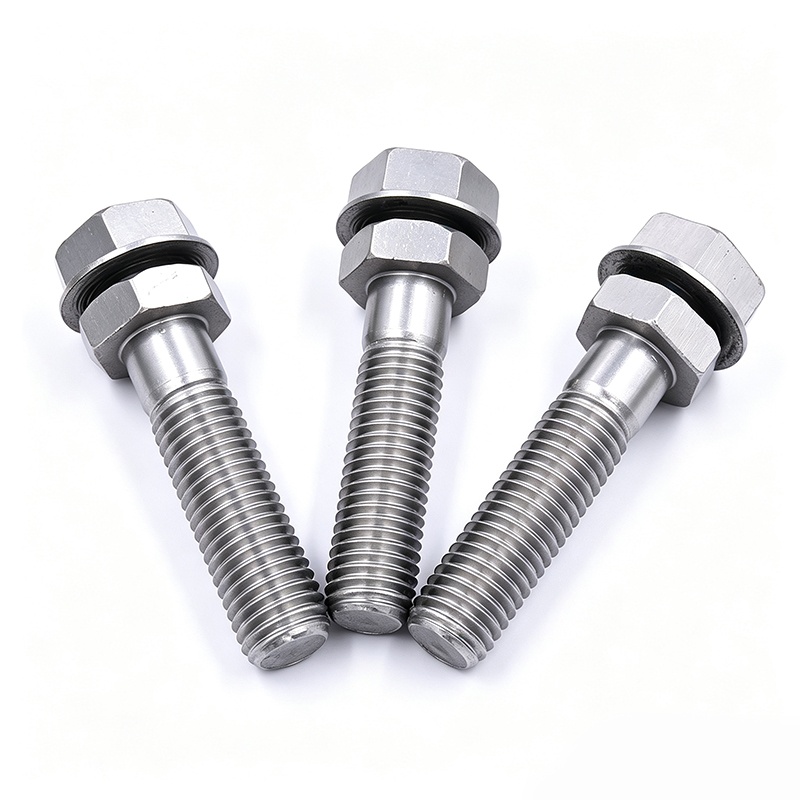 Aluminum Alloy Flange Bolt
Latest News
-
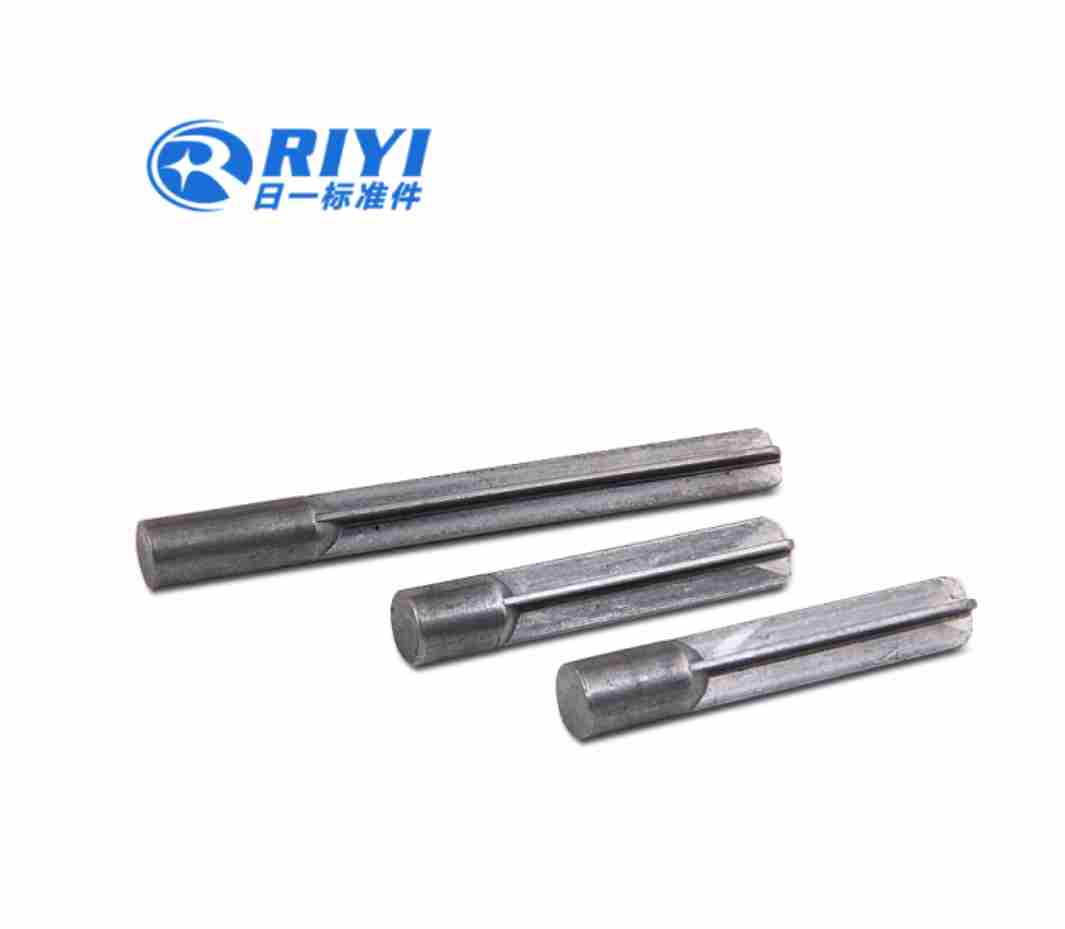
Cold Heading Components: High-performance Fastener Solutions from Wenzhou Riyi Standard Parts Co., Ltd
2026-09-29Cold heading processing shapes metal wire under strong pressure at room temperature without cutting raw materials. Unlike traditional CNC machining, this technology preserves the continuous metal grain flow inside cold heading parts.
-
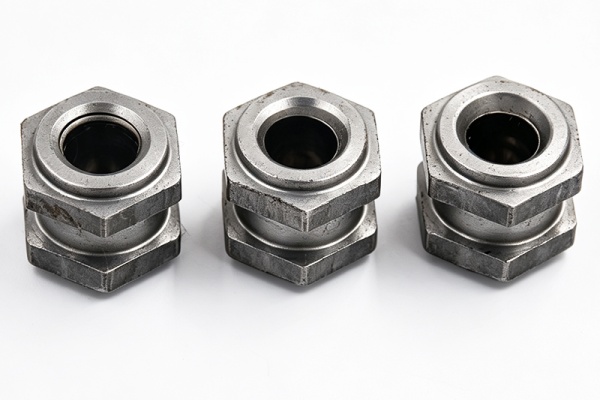
Special-shaped Bolts and Stainless Steel Double-ended Bolts from Wenzhou Riyi Standard Parts Co., Ltd
2026-09-23In modern mechanical manufacturing, construction engineering and equipment assembly, high-quality fasteners are the invisible foundation that guarantees structural safety and product stability.
-
Precision Custom Fasteners from Wenzhou Riyi Standard Parts
2026-09-15Wenzhou Riyi Standard Parts is a reliable Chinese manufacturer focusing on custom non-standard fasteners, located in Wenzhou’s Binhai Economic Zone.
-
Aluminum Alloy Flange Bolts, Ball Head Studs & Dacromet Carriage Bolts – Reliable Fastener Startup Business
2026-09-08Fasteners are essential basic components widely used in machinery, automotive, engineering and equipment assembly industries.