Products


Externally Threaded Fastener With T-Shaped Head Design
T-bolts, also known as T-head bolts or T-slot bolts, are externally threaded fasteners with a T-shaped head. Its core design is that the T-shaped head can be accurately embedded into the T-shaped groove or aluminum profile groove of the slider.
Send Inquiry
Product Description
Product introduction
T-bolts, also known as T-head bolts or T-slot bolts, are externally threaded fasteners with a T-shaped head. Its core design is that the T-shaped head can be accurately embedded into the T-shaped groove or aluminum profile groove of the slider. It can automatically position and prevent rotation during installation, provide stable fixation and effectively withstand lateral forces.
As a key component for connecting aluminum profiles, machine tool worktables and various components, T-bolts are often used in conjunction with flange nuts and are widely used in automation equipment frames, machine tool worktables, solar brackets, wind power generation and other fields. Whether in standard specifications or special sizes, T-bolts often appear in the form of non-standard fasteners or special-shaped fasteners to meet diverse industrial connection needs.
Product design and features
T-shaped head anti-rotation design: This is the core feature. The T-shaped head can be slid into and stuck in the slot, preventing the bolt from rotating when the nut is tightened without the need for additional tools, achieving quick positioning and convenient one-handed operation. The head size and slot width need to match accurately, which is common in standard systems such as DIN 188 and GB/T 37.
Diverse thread types and structures: According to application requirements, various thread forms can be processed:
Coarse thread vs. fine thread: The standard specification is usually coarse thread, but for occasions that require precise adjustment or anti-loosening, fine-thread T-type screws can be customized to provide finer adjustment and stronger self-locking force.
Full thread vs. partial thread: Depending on the thickness of the connection, you can choose between full thread or a specific length of thread section.
Anti-loosening structure: Some designs have holes in the pole, which can be used with cotter pins to achieve more reliable anti-loosening.
Adaptable to a variety of profile systems: T-shaped bolts are specially designed to match aluminum profile grooves of different specifications, such as groove widths of 8mm, 10mm, etc. There are usually positioning grooves at the end, which can visually indicate whether they are correctly positioned in the groove, simplifying the assembly process.
Reusable and flexible adjustment: The T-shaped bolt can slide freely in the T-shaped slot. If you need to adjust the position after installation, you only need to loosen the nut to move. The reusable feature makes it extremely advantageous in equipment that changes frequently.
Materials and application fields
Core material:
Carbon Steel: The most widely used material. Common grades include 1045 medium carbon steel and grade 12.9 and grade 8.8 high-strength steel-2-3-4. Carbon steel T-shaped screws can obtain high strength and good toughness after quenching and tempering heat treatment. The surface is often galvanized and blackened to enhance rust resistance.
Stainless steel: Provides excellent corrosion resistance, commonly used grades include 304 (A2), 316 (A4), etc. -2-4-7. Stainless steel T-shaped screws are the first choice in humid and corrosive environments.
Aluminum alloy: The material is lightweight and has certain corrosion resistance. It is often used in light-loaded structures that are weight-sensitive or do not require extremely high strength. Aluminum alloy T-shaped screws have unique advantages in specific lightweight designs.
Specialty steels/alloys: such as steel Comp 431 that meets the aviation standard MIL-S-18732 and is used in the extremely demanding aerospace field.
Wide application areas:
Industrial equipment and automation: As special-shaped fasteners, T-bolts are standard connectors for aluminum profile frames, robot workstations, and conveyor belt brackets.
New energy and infrastructure: Stainless steel T-shaped screws and carbon steel T-shaped screws are widely used in solar photovoltaic brackets and wind turbines to cope with the harsh environment of long-term outdoor exposure-7.
Heavy machinery and machine tools: T-shaped grooves on machine tool worktables are used to fix workpieces, and the bottoms of heavy equipment such as paper-making machinery and railway vehicles are fixed.
Aerospace: T-bolts that meet strict standards are used in key parts such as aircraft structural parts.
Special customization scenarios: When the standard length is insufficient, T-shaped screws can be customized to meet special span connection requirements. Some non-standard fasteners can also be designed with ultra-thin heads to adapt to components such as cars with limited space.
Quality control and certification system
Comply with international/domestic standards: Production and inspection strictly follow DIN (German standards), GB (Chinese national standards), ISO (international standards), ANSI (American standards) and JIS (Japanese standards) and other systems.
Whole process testing: from raw materials to finished products, core testing links include:
Dimensional and thread accuracy: Use thread passage and stop gauges, optical projectors, etc. to ensure that the thread pitch diameter, T-head size, total length, etc. comply with the drawing tolerances (such as 6g thread grade).
Mechanical performance testing: Verify the tensile strength and yield strength through a universal testing machine to ensure that it reaches the specified performance level (such as level 4.8, level 8.8, level 12.9).
Surface and Corrosion Resistance: Check the thickness of the galvanized/blackened layer and perform a salt spray test on stainless steel T-screws to verify corrosion resistance.
Metallography and hardness: Inspect the internal structure of the material and test the hardness.
Authoritative certification: Leading manufacturers usually hold ISO 9001:2015 quality management system certification, and some companies have industry system certifications such as IATF 16949 (automotive), AS9100 (aerospace), and can provide environmentally friendly material certifications that comply with RoHS and REACH.
Customized services
Dimensional specifications: Customized non-standard total length, thread specifications (such as M3-M36 and inch specifications), T-head thickness and width.
Material and performance: Use designated grades of carbon steel (such as 12.9 grade high-strength steel), stainless steel T-shaped screws (such as 304/316) or aluminum alloy T-shaped screws: specify specific heat treatment status and mechanical performance levels.
Structure and form: Design of ultra-thin head (adapted to small spaces), anti-loosening structure with holes in the head, extended T-shaped screws (extended stem), or fine-threaded T-shaped screws (special pitch).
Surface treatment: Provide galvanizing (blue and white zinc, colored zinc), blackening, Dacromet, passivation, etc. to meet anti-corrosion or aesthetic needs
Customization process suggestions:
Provide clear requirements: Provide detailed drawings or 3D models indicating dimensions, tolerances, materials, performance requirements and final use scenarios.
Evaluate the supplier's capabilities: Check whether it has production equipment such as multi-station cold heading machines and mold development capabilities, and understand the minimum order quantity (usually 10,000 pieces can be customized, and 50,000 pieces can be customized without mold fees).
Sample confirmation: Be sure to ask the supplier to provide samples and conduct physical testing, and mass production can be carried out only after confirmation.
FAQ
Q: What is the core difference between T-shaped bolts and ordinary bolts?
A: The core difference is the head design. The T-shaped head of the T-bolt can be slid into and stuck in the matching T-shaped slot, and automatically prevents rotation during installation. Single-sided operation can be completed without additional tools, while ordinary bolts require the head to be fixed from the other side before tightening.
Q: How to choose suitable T-bolts for aluminum profiles?
A: The key parameter for selection is the profile groove width. Different series of profiles (such as 40 series, 45 series, 60 series) correspond to different groove widths (such as 8mm, 10mm). Make sure that the size of the T-shaped head can just slide into the slot and rotate to lock. At the same time, select the appropriate material (carbon steel T-shaped screws or stainless steel T-shaped screws) and thread specifications according to the load requirements.
Q: What is the usual minimum order quantity and delivery time for customized non-standard T-bolts?
A: Depends on process complexity and materials. For non-standard fasteners that can be produced by cold heading, the minimum order quantity is usually around 10,000 pieces; if mold opening is required, the mold fee is free for more than 50,000 pieces. Standard specifications can be delivered in 7-20 days, and non-standard customization usually takes 15-25 days. Complex designs or special materials (such as extended T-screws or fine-thread T-screws) may have longer lead times.
Q: How to distinguish the quality grade of carbon steel T-bolts?
A: Mainly judged by performance level identification and surface treatment quality. Common grades of carbon steel T-bolts are 4.8, 8.8, 10.9 and 12.9. The higher the number, the higher the strength. At the same time, check whether the surface coating is uniform and free of rust, and whether the threads are smooth and free of burrs.


Latest News
-
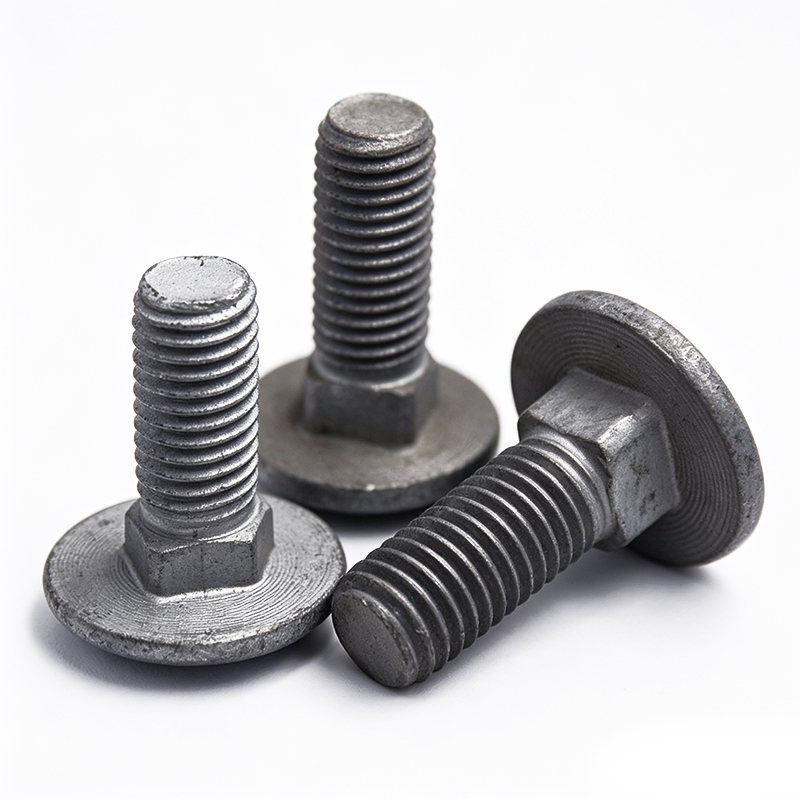
Precision Custom Fasteners from Wenzhou Riyi Standard Parts
2026-09-15Wenzhou Riyi Standard Parts is a reliable Chinese manufacturer focusing on custom non-standard fasteners, located in Wenzhou’s Binhai Economic Zone.
-
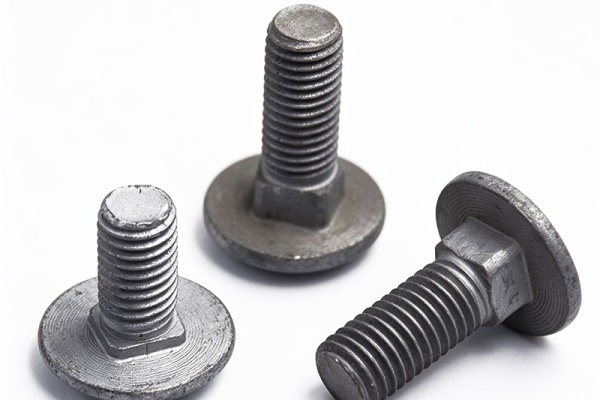
Aluminum Alloy Flange Bolts, Ball Head Studs & Dacromet Carriage Bolts – Reliable Fastener Startup Business
2026-09-08Fasteners are essential basic components widely used in machinery, automotive, engineering and equipment assembly industries.
-
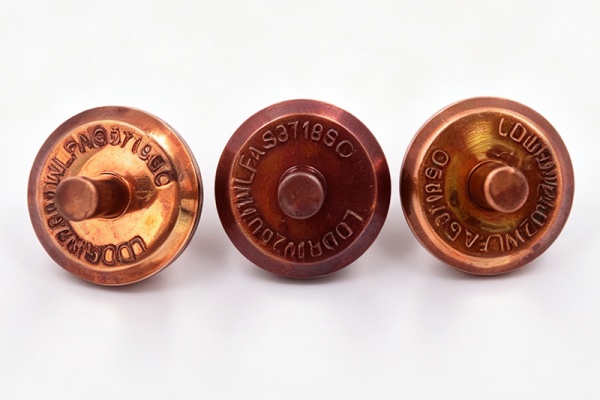
The Key Role of Precision Hardware Parts in Modern Mechanical Assembly
2026-09-04In the fast-developing field of modern mechanical manufacturing and equipment assembly, tiny hardware accessories are often the core factors that determine the stability, durability and safety of the entire device.
-
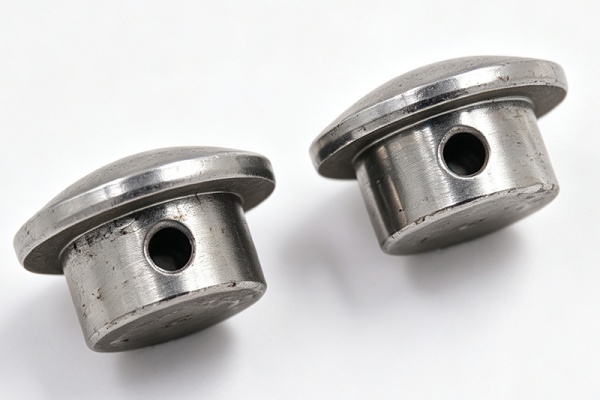
Two Practical Hardware Parts in Mechanical Assembly
2026-08-25Machine manufacturing and equipment assembly all rely on standard hardware parts. They make industrial equipment more stable and better positioned.