Products


Non-Standard Stainless Steel Cold Heading Parts
Non-standard stainless steel cold heading parts are high-precision metal parts that use multi-station cold heading forming technology, using high-quality stainless steel as raw materials, and are plastically formed in one go through the mold.
Send Inquiry
Product Description
Product introduction
Non-standard stainless steel cold heading parts are high-precision metal parts that use multi-station cold heading forming technology, using high-quality stainless steel as raw materials, and are plastically formed in one go through the mold. Different from traditional cutting processing, the cold heading process uses the plastic deformation of metal at room temperature to make the material flow and fill the mold cavity to obtain the desired shape. This process is particularly suitable for mass production of customized stainless steel non-standard parts with complex shapes and precise dimensions.
Product features
Integrated cold heading molding: Using a multi-station cold heading machine, it can complete automated and continuous production of cutting, heading, accumulation, forming, chamfering, thread rolling and other processes. The metal streamlines are continuously distributed along the contour of the part, without cutting and cutting, and the product strength is 20%-30% higher than that of turned parts;
High material utilization rate: The cold heading process is almost cutting-free, and the material utilization rate can reach 90%-95%, significantly reducing raw material costs;
Excellent dimensional accuracy: the dimensional tolerance of cold heading parts can reach ±0.05mm, the surface finish is high, and some parts can be used directly without secondary processing;
Complex shape forming capabilities: can form complex geometric features such as head special shapes, rod steps, multi-section diameters, hollows, flanges, knurling, flat positions, etc.;
High mass production efficiency: the multi-station cold heading machine can produce 100-300 pieces per minute, suitable for large-scale and stable supply;
Excellent internal quality: cold heading molding makes the internal structure of the material dense, without casting defects such as pores and blisters, and the mechanical properties are stable.
Materials and application fields
304 stainless steel non-standard parts: general-purpose austenitic stainless steel, with good corrosion resistance and comprehensive mechanical properties, suitable for most indoor and outdoor environments, excellent cold heading forming performance, and is the most commonly used stainless steel cold heading material;
316 non-standard parts: Added molybdenum element, stronger resistance to chloride ion corrosion, suitable for high-corrosion environments such as coastal areas, marine engineering, chemical equipment, and medical equipment;
303 stainless steel: high sulfur content, excellent cutting performance, suitable for complex parts that require secondary precision processing after cold heading;
410/416 stainless steel: martensitic stainless steel, which can increase hardness through heat treatment and is suitable for scenes with special requirements for strength;
304L/316L: Low carbon version, suitable for occasions where corrosion resistance needs to be maintained after welding;
Duplex stainless steel (2205, etc.): high strength, high corrosion resistance, suitable for extreme corrosive environments.
As non-standard stainless steel parts, it has a wide range of applications
Medical devices: surgical instrument parts, implant accessories, diagnostic equipment precision structural parts;
Electronic communications: connector terminals, shielding cover fixings, internal structural parts of mobile phones;
Automobile manufacturing: sensor housings, oil pipe joints, precision components of ABS systems;
Ship and marine: deck accessories, valve parts, seawater pipeline connectors;
Food machinery: food processing equipment parts, packaging machinery precision parts;
Instruments: precision instrument shaft parts and adjusting mechanism components;
New energy: photovoltaic connector components, battery module structural components.
Quality control and certification system
Raw material control: All stainless steel materials come with material certificates, and the composition is verified by a spectrum analyzer to ensure compliance with 304, 316 and other brand standards; each batch of 304 stainless steel non-standard parts or 316 non-standard parts can be traced back to the original furnace number;
Cold heading process control:
Mold precision control: Using high-precision cold heading molds, key dimensional tolerances are controllable;
Forming speed and lubrication control: ensure uniform metal flow and prevent defects such as folding and cracks;
Online inspection: equipped with an optical image inspection system to monitor key dimensions in real time;
Dimensional accuracy control: Key dimensions are fully inspected or AQL sampled using professional measuring tools such as image measuring instruments, three-dimensional coordinate measuring machines, and projectors. The precision tolerance can reach ±0.03mm;
Metallographic inspection: Check the distribution of metal streamlines, grain size, and whether there are internal defects such as folding or micro-cracks;
Mechanical property testing: including tensile strength, yield strength, and hardness testing to verify the material properties after cold heading;
Corrosion resistance test: Provide neutral salt spray test, intergranular corrosion test and other reports according to the application environment requirements;
System certification: The company has passed ISO 9001 quality management system certification. Medical device products can meet the requirements of ISO 13485, and automotive products can meet the requirements of IATF 16949, ensuring that each batch of cold heading non-standard parts has complete traceability.
Customized services
Shape customization: Customize and develop special-shaped stainless steel screw parts according to customer drawings or samples, including but not limited to:
Head shape: round head, countersunk head, flat head, pan head, hexagonal head, T-shaped head, knurled head, flange head, special-shaped head;
Rod shape: stepped rod, tapered rod, flat rod, knurled rod, hollow rod, multi-section diameter;
Tail shape: bunched tail, flat tail, pointed tail, chamfered tail;
Size customization: diameter range φ0.8mm to φ20mm, length range 2mm to 200mm, tolerance can be controlled within ±0.03mm to ±0.10mm;
Material customization: Choose 304, 304L, 316, 316L, 410, 416, 2205 and other stainless steel materials according to corrosion resistance, strength, non-magnetic, temperature resistance and other requirements;
Surface treatment customization: stainless steel natural color, passivation, electrolytic polishing, wire drawing, mirror polishing, black chrome plating, PVD plating, etc.;
Thread customization: can process metric, inch, and American threads, as well as self-tapping threads, high and low threads, threadless tails, etc.;
Packaging methods: Bulk, bagged, pallet packaging, tape packaging (suitable for automatic assembly lines), anti-static packaging, etc. are available.
FAQ
Q: What is the difference between cold heading parts and turned parts? Which one is better?
A: Cold heading parts are formed in one step through metal plastic deformation. They have continuous metal flow lines, high strength, and high material utilization rate (90%-95%). They are suitable for mass production and have lower costs. Turned parts are formed by cutting materials and are suitable for small batches, complex shapes or parts with extremely high tolerance requirements, but the material utilization rate is low (30%-50%) and the cost is high. For medium and large quantities of non-standard stainless steel parts, the cold heading process is a more economical and reliable choice.
Q: Is this product a standard part?
A: No. Non-standard stainless steel cold heading parts are non-standard stainless steel parts, which are completely customized and developed based on the drawings or samples provided by customers. There are no unified standard specifications in the market.
Q: What is the accuracy of cold heading parts?
A: The tolerance of conventional cold heading parts is ±0.05mm to ±0.10mm; the tolerance of precision cold heading parts can reach ±0.03mm. If higher precision (such as ±0.01mm) is required, precision turning or grinding processes can be added after cold heading.
Q: What special shapes can be produced by the cold heading process?
A: As cold heading non-standard parts, the special-shaped stainless steel screw parts that can be produced include: multi-step rods, knurled heads, flat rods, hollow parts, flange surfaces, T-shaped heads, spherical heads, special-shaped heads, bunched tails, pointed tails and other complex geometric features. It is recommended to provide drawings and we will conduct process feasibility assessment.
Q: Are cold heading parts stronger than turned parts?
A: Yes. The cold heading process causes the metal streamlines to be continuously distributed along the contour of the part without cutting, so the tensile strength and fatigue resistance are 20%-30% higher than that of turned parts. This is particularly important for non-standard stainless steel parts that are subject to alternating loads.
Send Inquiry
Related Products
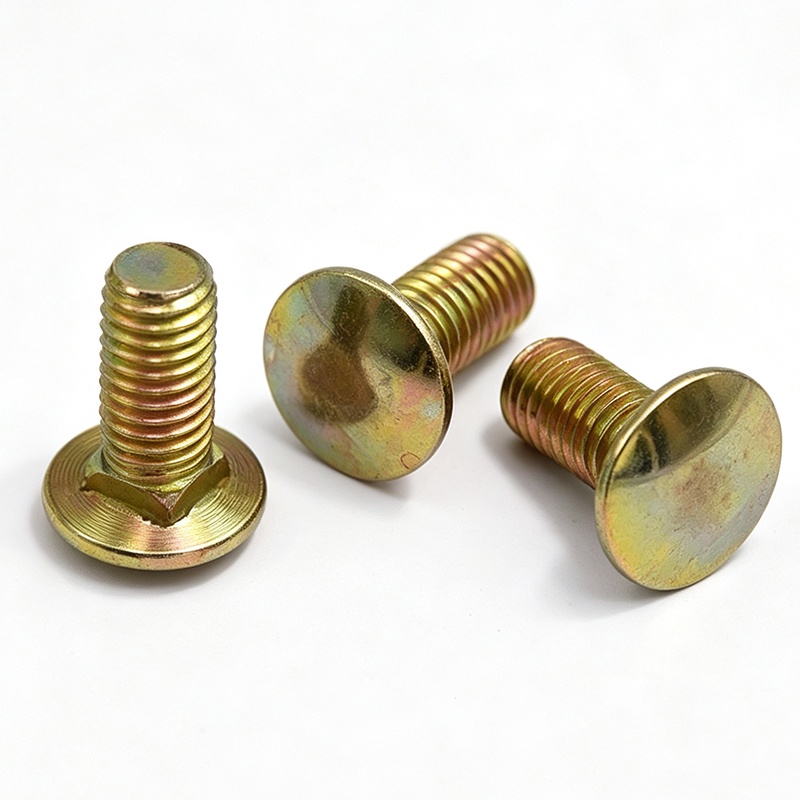 Stainless Steel Carriage Bolts with Corrosion Resistant Square Neck Bolts for Metal
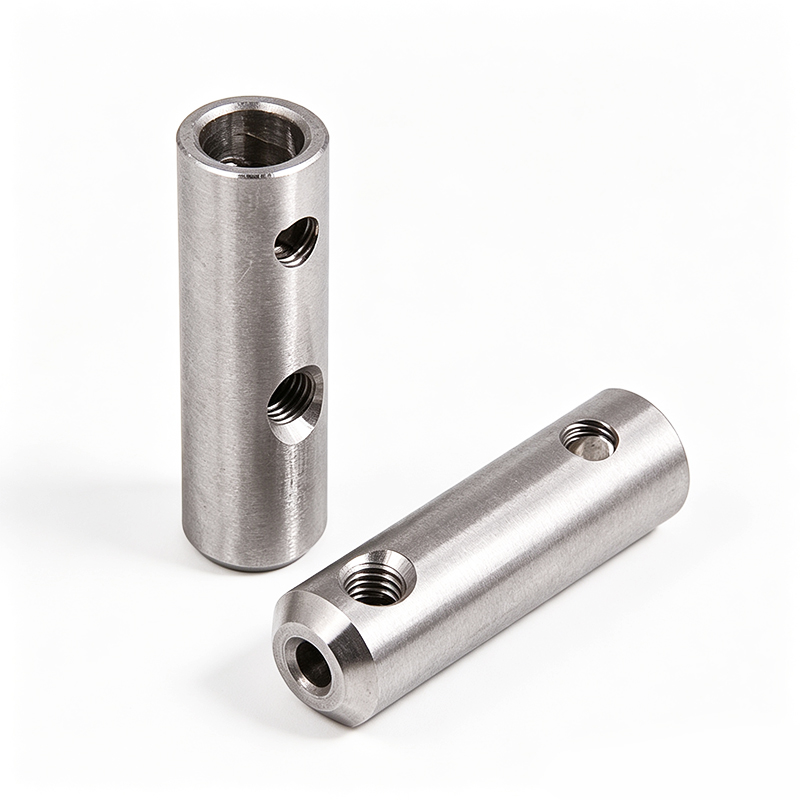 Stainless Steel Cylindrical Connector with Threaded Cross Holes
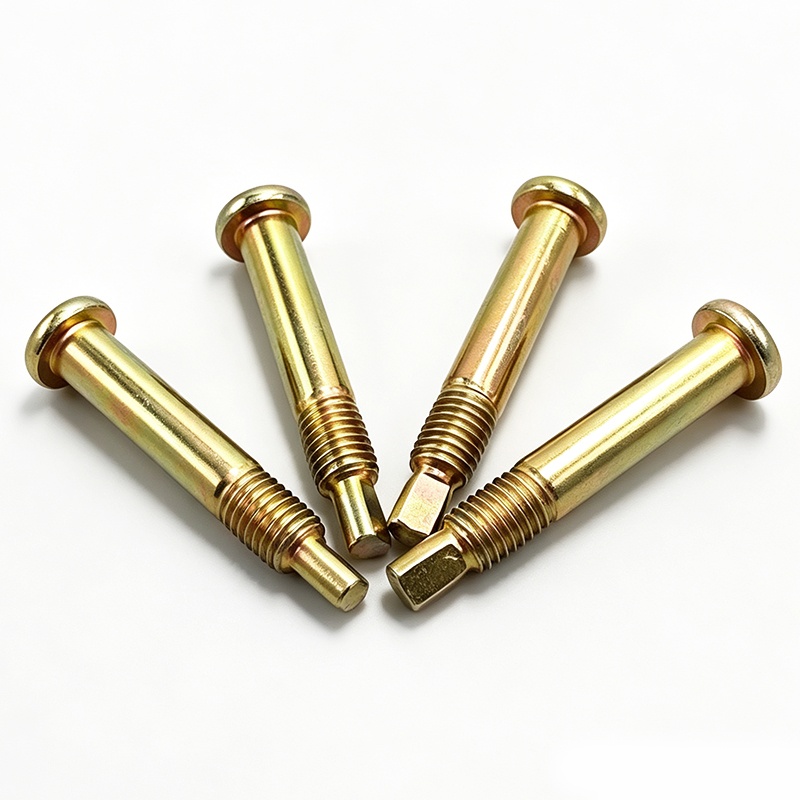 CNC Machined Stainless Steel Round Head Shoulder Bolts
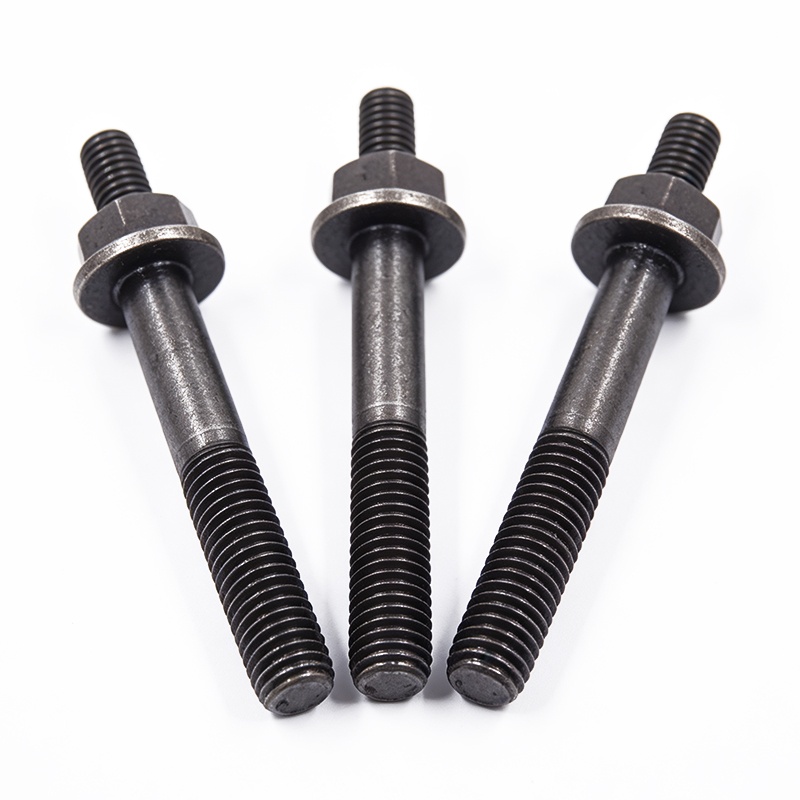 CNC Machined Stainless Steel Hex Flange Double Ended Stud Bolts for Industrial Fastening
 CNC Machined Bronze Flanged Bushing with Self Lubricating Wear Resistance
 Dacromet Disc Head Square Neck Carriage Bolt
Latest News
-
Precision Custom Fasteners from Wenzhou Riyi Standard Parts
2026-09-15Wenzhou Riyi Standard Parts is a reliable Chinese manufacturer focusing on custom non-standard fasteners, located in Wenzhou’s Binhai Economic Zone.
-
Aluminum Alloy Flange Bolts, Ball Head Studs & Dacromet Carriage Bolts – Reliable Fastener Startup Business
2026-09-08Fasteners are essential basic components widely used in machinery, automotive, engineering and equipment assembly industries.
-
The Key Role of Precision Hardware Parts in Modern Mechanical Assembly
2026-09-04In the fast-developing field of modern mechanical manufacturing and equipment assembly, tiny hardware accessories are often the core factors that determine the stability, durability and safety of the entire device.
-
Two Practical Hardware Parts in Mechanical Assembly
2026-08-25Machine manufacturing and equipment assembly all rely on standard hardware parts. They make industrial equipment more stable and better positioned.